Can I Put Water Softener Salt in My Toilet Tank? 10 Big lies!

Can I put water softener salt in my toilet tank? The short answer is no — and the internet is full of confident-sounding advice saying otherwise.
Water softener salt belongs in a water softener, not in a toilet. Dropping it in the tank does not soften your water, does not clean the bowl, and can quietly damage the parts that keep your toilet working. Here are the 10 biggest myths about it, debunked one by one.
1. “It Softens the Water in the Toilet”
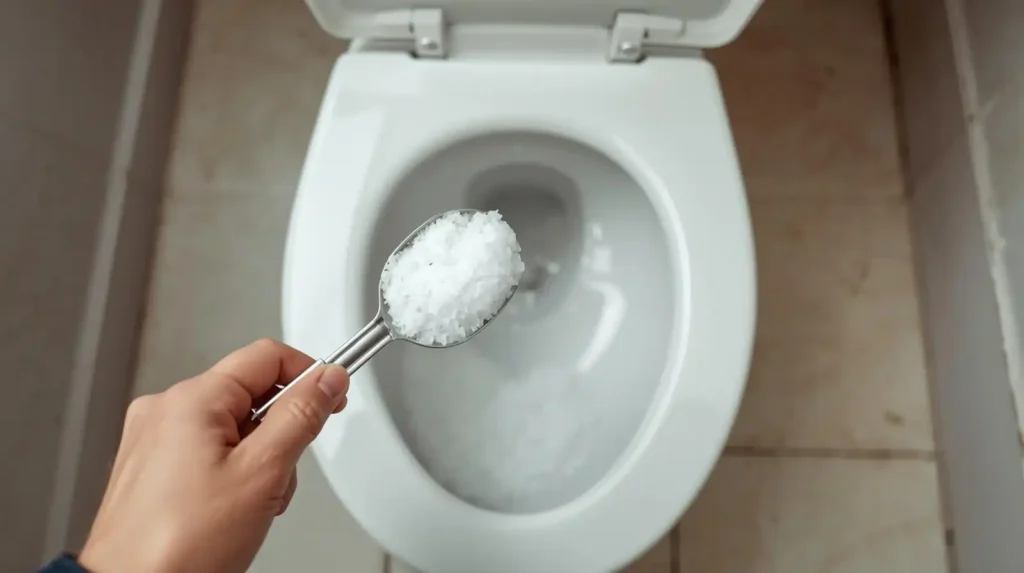
The lie: Adding salt to the tank softens the water that fills the bowl.
The truth: Water softening is an ion-exchange process that needs resin beads, a brine cycle, and a controlled flow — none of which exist inside a toilet tank. Salt sitting in the tank just dissolves into the flush water and goes straight down the drain. It changes nothing about the water’s hardness, and it certainly doesn’t protect your pipes or fixtures from mineral buildup.
2. “It Cleans and Disinfects the Bowl”
The lie: Salt in the tank keeps the bowl clean and kills germs with every flush.
The truth: Salt is not a disinfectant at toilet-tank concentrations. It will not kill bacteria, remove stains, or prevent mould. A toilet bowl cleaner or a diluted bleach-based cleaner does that job — salt just sits there, slowly corroding metal parts while doing nothing for cleanliness.
3. “It Prevents Limescale Buildup”

The lie: Salt stops limescale from forming on the bowl and the tank walls.
The truth: Limescale forms when hard water evaporates and leaves calcium behind. Adding salt to the tank does not remove calcium from the water — it adds sodium chloride to it. The only thing that prevents limescale in a toilet is actually softening the water before it reaches the bathroom, or cleaning the bowl regularly with a descaler.
4. “It Is Safe for All Toilet Parts”
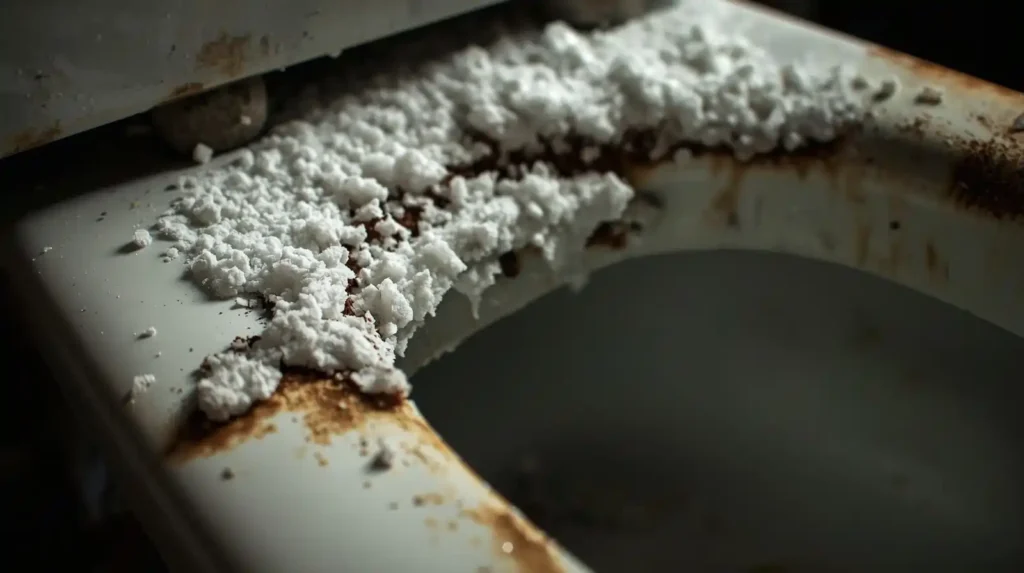
The lie: Salt is harmless to the flapper, fill valve, and seals.
The truth: Salt water is corrosive. Over weeks and months, it degrades rubber flappers and seals, corrodes metal bolts and the fill valve, and can cause the flapper to warp — which leads to a toilet that runs constantly and wastes hundreds of litres of water. The repair costs far more than any supposed benefit.
5. “It Dissolves Completely, So It Can’t Clog Anything”

The lie: Salt dissolves fully in water, so there is nothing to clog.
The truth: Water softener salt pellets and crystals dissolve slowly, and in the cool, still water of a toilet tank they often don’t dissolve fully at all. Undissolved grains settle at the bottom, get sucked into the fill valve and the flush valve, and can jam the mechanism or block the small jets under the bowl rim — leading to weak flushes and expensive repairs.
6. “It Makes the Flush Stronger”

The lie: Heavier, saltier water flushes with more force.
The truth: Flush strength comes from water volume, tank height, and the design of the bowl’s jets — not from dissolved salt. If anything, salt residue narrowing the rim jets makes the flush weaker over time. If your flush is weak, the cause is usually a low water level, a worn flapper, or mineral-clogged jets, and salt fixes none of those.
7. “It Stops the Toilet From Smelling”

The lie: Salt in the tank deodorises the toilet.
The truth: Toilet odours come from bacteria in the bowl, a dry trap, a failed wax ring, or poor ventilation — not from the tank water. Salt does not kill odour-causing bacteria at these concentrations. Cleaning the bowl, checking the wax seal, and making sure the trap stays full of water are the real fixes for a smelly toilet.
What to Do Instead
If hard water is the real problem, install a proper water softener on the main supply line — that protects every fixture in the house, including the toilet. For a stained or smelly bowl, use a toilet bowl cleaner, a pumice stone for mineral rings, or a vinegar soak. For a weak flush, check the tank water level, clean the rim jets with a wire, and replace a worn flapper. All of these cost less than the repairs that salt in the tank eventually causes.
What If You Already Put Salt in the Tank?
Don’t panic — but act now. Turn off the water supply to the toilet, flush to empty the tank, and scoop out any undissolved salt. Wipe the tank walls with a cloth, then refill with fresh water and flush several times to rinse the system. Inspect the flapper and fill valve for corrosion or damage, and replace them if they look worn. If the toilet starts running constantly or flushing weakly afterward, call a plumber before the problem gets worse.
Final Thoughts
Can you put water softener salt in your toilet tank? Technically you can — but you shouldn’t. It doesn’t soften water, clean the bowl, prevent limescale, or fix a weak flush. What it does do is corrode seals, clog valves, and turn a cheap myth into an expensive repair. Keep the salt in the softener, and keep the toilet tank for plain water only.