Chocolate Truffle Recipe
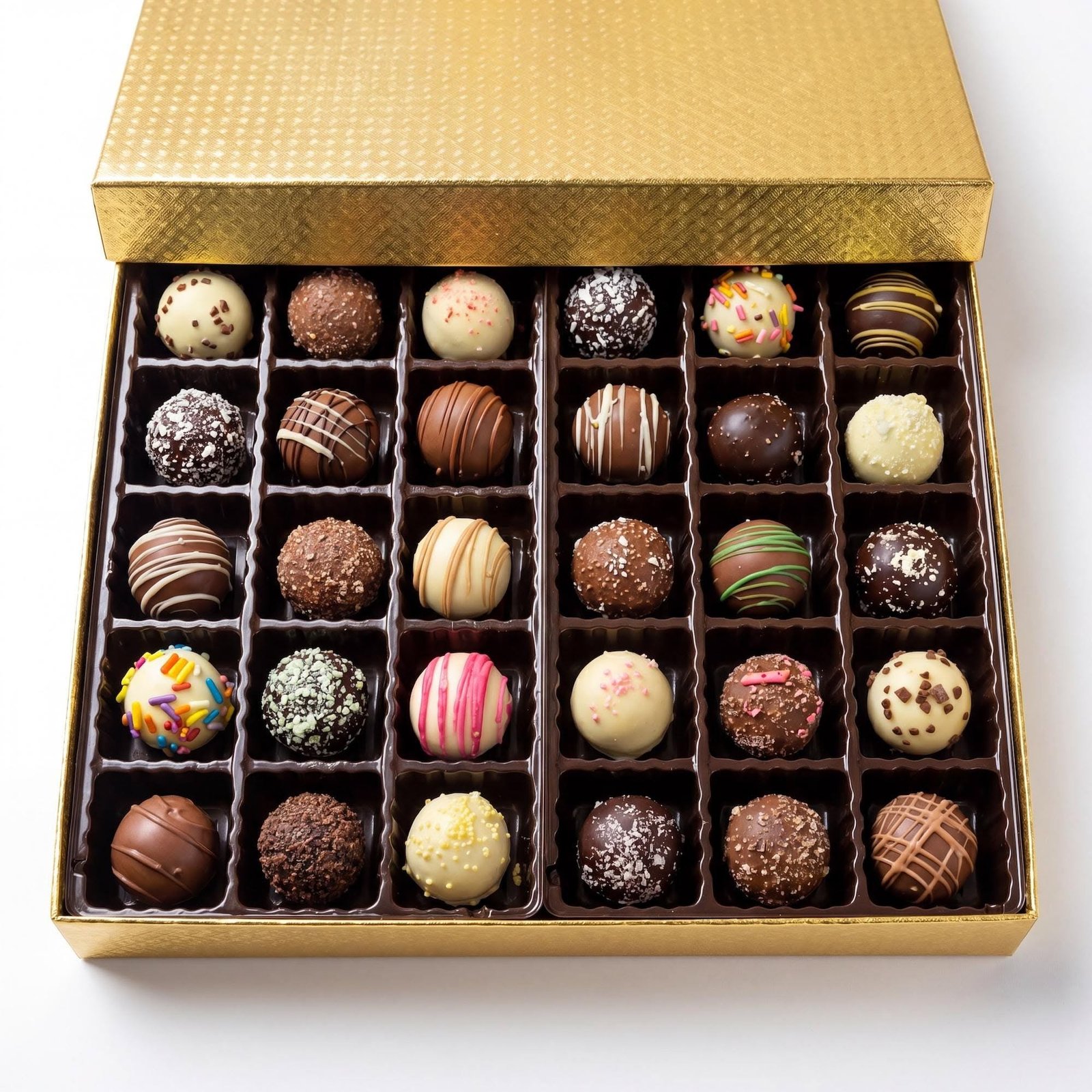
Chocolate truffles sound fancy, and they taste fancy, but at heart they are one of the simplest sweets you can make. Good chocolate, warm cream, a little butter, and a pinch of salt — that is all it takes to make a truffle that melts on your tongue. Roll the chilled mixture into small balls, coat them in cocoa, chopped nuts, or sprinkles, and you have a gift-worthy treat that looks like it came from a chocolate shop, with no special equipment and no candy thermometer.
These truffles are perfect for Christmas because they do so many jobs at once. They are a lovely dessert after dinner, a pretty addition to a cookie tray, and a thoughtful homemade gift when packed in a small box with tissue paper. You can make a big batch in one afternoon, keep them in the refrigerator, and pull them out whenever guests arrive. Change the coatings and you have a whole assortment from one simple base — cocoa-dusted, nut-rolled, sprinkle-covered, and coconut-coated truffles all from the same bowl of ganache. I like to make a double batch in early December, keep half for the house, and pack the other half as gifts.
The key is patience with the chilling. The ganache needs time in the refrigerator to firm up enough to roll, and your hands need to work quickly once you start, because the warmth of your palms will soften the chocolate. A small scoop, cold hands, and a light touch make all the difference. If the ganache gets too soft while you are rolling, put the bowl back in the refrigerator for fifteen minutes — it is not a failure, it is just chocolate doing what chocolate does in a warm kitchen.
Servings: 30 truffles | Prep time: 20 minutes, plus 2–3 hours chilling | Cook time: 5 minutes | Total time: About 3 hours, mostly hands-off | Serve: slightly cool, at room temperature for 10–15 minutes before eating, with coffee or tea.

Ingredients
- 12 ounces semi-sweet or dark chocolate, finely chopped (about 2 cups)
- 3/4 cup heavy cream
- 2 tablespoons unsalted butter, at room temperature, cut into small pieces
- 1 teaspoon pure vanilla extract
- 1/4 teaspoon fine salt
For rolling and coating (choose one or several):
- 1/3 cup unsweetened cocoa powder
- 1/2 cup finely chopped toasted hazelnuts, pistachios, or almonds
- 1/2 cup chocolate sprinkles or festive red, green, and white sprinkles
- 1/2 cup shredded coconut, toasted lightly if you like
- 1/3 cup finely crushed candy cane

How to Make It
- Prepare the chocolate. Place the finely chopped chocolate in a medium heatproof bowl. The smaller the pieces, the more evenly and quickly they will melt, so take a moment to chop well. A serrated knife works nicely on a chocolate bar. If you are using chocolate chips, that is fine too — they melt a little more slowly because of the stabilisers in them, but they still work. Do not use chocolate with a very low cocoa content for the base, or the ganache will be too soft to roll.
- Heat the cream. Pour the heavy cream into a small saucepan and warm it over medium heat until it just begins to simmer around the edges, with small bubbles forming. Do not let it come to a rolling boil, or the chocolate can seize and turn grainy. You want it hot enough to melt chocolate, not boiling. If you have a thermometer, about 180°F is right.
- Make the ganache. Pour the hot cream over the chopped chocolate. Let the bowl sit undisturbed for 2 to 3 minutes so the heat can soften the chocolate all the way through. Then stir gently from the centre outward with a spatula, in slow circles, until the mixture is smooth, dark, and glossy. Stirring from the centre helps the emulsion form and keeps the ganache from splitting. Stir in the butter, one piece at a time, then the vanilla extract and salt. The butter makes the finished truffle softer and gives it a silky finish.
- Check the texture. The ganache should look like thick, glossy chocolate sauce. If you see a few unmelted pieces, let the bowl sit for another minute and stir again. If it looks oily or separated, add a tablespoon of warm cream and stir gently — it will usually come back together. If it looks grainy, the cream was too hot or the chocolate was overheated; it will still taste good, but the texture will be less smooth.
- Chill until firm. Cover the bowl with plastic wrap, pressing it directly onto the surface of the ganache so a skin does not form, and refrigerate for 2 to 3 hours, or until the mixture is firm enough to scoop and hold its shape. It should feel like soft fudge when you press it — not runny, and not rock hard. If it gets too firm, let it sit at room temperature for 15 minutes before rolling. If it is still too soft after 3 hours, give it another hour; a warm refrigerator or a shallow bowl can slow the setting.
- Set up your coatings. While the ganache chills, put each coating you plan to use in its own small, shallow bowl. Line a baking sheet with parchment paper for the finished truffles. Having everything ready before you start rolling matters, because once your hands are covered in chocolate, you do not want to be opening bags.
- Roll the truffles. Use a small cookie scoop or a teaspoon to scoop out portions of ganache, about 1 tablespoon each. Roll each portion quickly between your palms into a smooth ball — quick is the key word. If your hands get warm and sticky, rinse them in cold water and dry them well, or dust your palms very lightly with cocoa powder. Work in small batches of six or eight, and return the bowl to the refrigerator between batches if the ganache starts to soften.
- Coat the truffles. Drop each ball into a coating bowl and roll it gently until it is covered all over. Use a spoon or a fork to lift it out so you do not crush it with your fingers. Place the coated truffle on the prepared baking sheet. Repeat with the rest of the ganache. A mix of coatings from one batch looks generous and thoughtful, and it lets people choose their favourite.
- Chill again to set. Refrigerate the finished truffles for at least 30 minutes before serving, so the coatings set and the centres firm up. Let them sit at room temperature for 10 to 15 minutes before eating, so the chocolate softens to that perfect melt-in-your-mouth texture. Cold truffles taste hard and muted; room-temperature truffles taste like they should.
Tips & Variations
Flavour variations: This base is a wonderful starting point. Stir in 1 tablespoon of orange liqueur, coffee liqueur, or rum with the vanilla for a grown-up version — add it after the ganache is smooth, not to the hot cream. For a peppermint truffle, add 1/2 teaspoon of peppermint extract and roll in crushed candy cane. For a mocha truffle, dissolve 1 teaspoon of instant espresso powder in the warm cream before pouring it over the chocolate. For a spiced Christmas version, add 1/2 teaspoon of ground cinnamon and a pinch of nutmeg to the cream while it heats. For an orange truffle, add 1 teaspoon of finely grated orange zest to the hot cream.
Chocolate choices: Semi-sweet chocolate gives a classic, balanced truffle that most people love. Dark chocolate, 60 to 70 percent cocoa, makes a richer, less sweet truffle for serious chocolate fans. Milk chocolate makes a softer, sweeter truffle — if you use it, reduce the cream to 1/2 cup so the ganache still firms up properly, and chill it for an extra hour. White chocolate truffles need even less cream, about 1/3 cup, and a longer chill, so they are a little trickier for a first batch.
Rolling tips: If the ganache sticks to your hands no matter what, try wearing thin disposable gloves dusted lightly with cocoa powder. It sounds fussy, but it makes rolling much faster and the truffles look neater. Do not roll the balls for too long trying to make them perfect — a slightly rustic truffle looks handmade in a good way, and the coating hides small imperfections.
Gifting: Pack truffles in a small box or tin lined with parchment paper, in a single layer or with parchment between layers. Keep them cool until you hand them over, and include a little note with the flavours and the date you made them. A mix of three coatings in one box looks especially pretty, and a small box of twelve is a generous gift that costs very little to make.
Storage & Make-Ahead
Serving: Serve truffles slightly cool but not ice cold, with coffee, tea, or a glass of milk. One or two per person is a perfect ending to a holiday meal, and a small plate of mixed truffles on a dessert table disappears quickly. If you are serving them at a party, put them out in small paper cups so people can take one without touching the others.
Storage: Store truffles in an airtight container in the refrigerator for up to 2 weeks. Separate layers with parchment paper so the coatings do not stick together, and keep cocoa-dusted truffles away from sprinkle-coated ones if you want the colours to stay clean. They freeze well for up to 2 months in a freezer-safe container; thaw overnight in the refrigerator, then bring to room temperature for 15 minutes before serving. Truffles made with liqueur keep a little longer, up to 3 weeks refrigerated, because the alcohol acts as a preservative.
Frequently Asked Questions
Why is my ganache too soft to roll? The most common cause is too much cream for the chocolate you used, especially if you used milk chocolate or chocolate chips with a lower cocoa content. Chill it longer first — sometimes it just needs another hour. If it is still soft, you can still serve it as a chocolate dip or spoon it into small cups as a mousse. Next time, reduce the cream by 2 tablespoons or use a darker chocolate.
Can I make truffles without heavy cream? Heavy cream is what makes a truffle a truffle — its fat content is what lets the ganache set firm and taste rich. Half-and-half and milk do not have enough fat and will make a ganache that stays soft. Coconut cream, the thick part from a can of full-fat coconut milk, can work as a dairy-free swap, but the ganache will be softer and will taste faintly of coconut, so chill it longer.
How far ahead can I make these for gifts? Make them up to a week ahead and keep them refrigerated in an airtight container. Pack them into gift boxes the day before you give them, and keep the boxes refrigerated until you hand them over. Add a note saying to keep them cool and eat within two weeks.


