How To Get Rid Of Squash Bugs On My Pumpkins In 1 Day

Have you ever stepped into your pumpkin patch first thing in the morning, mug in hand, and noticed the leaves looking yellow and tired?
It feels like watching weeks of hard work fade right in front of you. The culprits are usually squash bugs — quiet, fast-breeding insects that drain the life out of your vines before you even spot them.
So how do you get rid of squash bugs on your pumpkins? This guide walks you through spotting them early, understanding how they breed, and using natural remedies that actually save your harvest.
How to get rid of squash bugs on my pumpkins by Identifying Signs and Symptoms

Catching squash bugs early changes everything. The sooner you notice them, the easier they are to control.
Squash bugs are flat, shield-shaped insects roughly half an inch long. Their grey or brown colouring blends perfectly with soil and stems, which is why they are so easy to miss.
Their eggs are tiny, shiny and bronze-coloured, laid in tidy clusters on the undersides of leaves.
They are quick crawlers that hide beneath leaves and between vines. Watch for these warning signs:
- Leaves turning yellow even though the plants are getting enough water.
- Crispy, browning edges appearing on pumpkin leaves.
- Small brown spots spreading along the vines.
- Plants suddenly wilting or collapsing while the soil is still moist.
If you spot any of these, do not panic. You have caught the problem early, and that gives you a real advantage.
Life Cycle of Squash Bugs: Understanding Their Behavior

Knowing how your enemy lives gives you the upper hand. Squash bugs are most active from late spring through early fall — exactly when your pumpkins need the most care.
They shelter in dead leaves, garden debris and old vines. Once the weather warms up, the adults come out, mate, and start laying hundreds of eggs on pumpkin leaves.
Those eggs hatch in about 10 days into nymphs — small, greyish bugs that move quickly and feed aggressively.
Within about six weeks they become adults and the whole cycle starts again. That is why one missed batch of eggs can become a full invasion within a month.
Your job is to break that cycle. Destroy eggs early, control nymphs before they grow, and make your garden unwelcoming for adults. That is the real secret to getting rid of squash bugs on your pumpkins — not just treating the problem, but stopping the next generation before it hatches.
Natural Remedies to Repel Squash Bugs

Nature usually has what you need — you just have to know where to look.
Instead of chemical sprays that can harm pollinators, try organic deterrents that are both safe and powerful.
My top three are neem oil, garlic spray and diatomaceous earth. Neem oil disrupts the bugs’ hormones, making reproduction impossible.
Garlic spray smells pleasant to you but awful to them — like nature’s own perfume working in reverse.
And diatomaceous earth is a microscopic warrior that dries bugs out on contact.
Used consistently, these natural remedies can cut an infestation down in under two weeks.
When and How to Handpick Squash Bugs
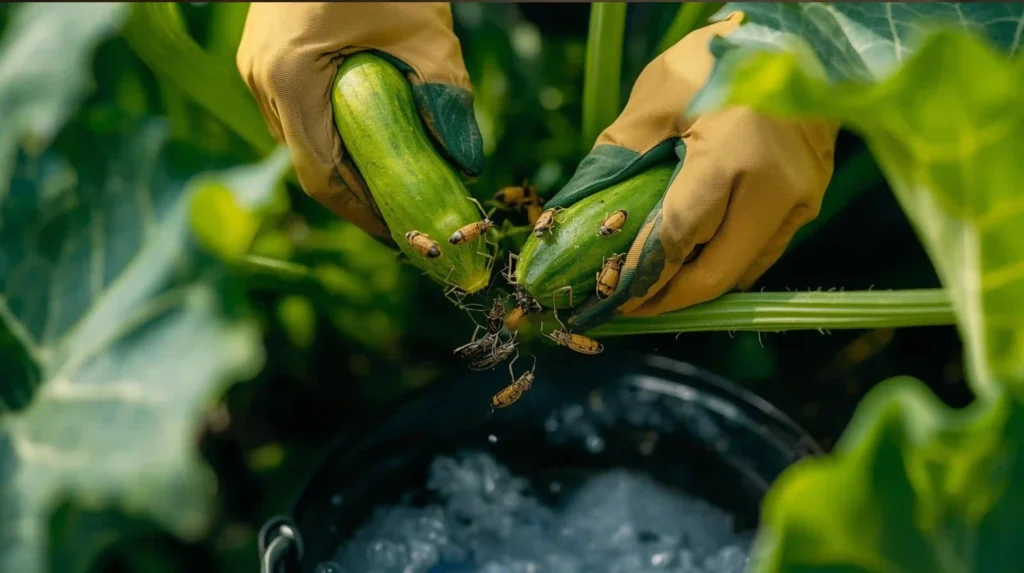
Sometimes the simplest solutions work best. Yes, it is a little hands-on. But it works.
If you can spare a few minutes each morning or evening, handpicking can make a huge difference.
Squash bugs are slow and sluggish in cooler temperatures — use that to your advantage. Wear gloves, flip the leaves over and check underneath.
If you find eggs, scrape them off gently with a butter knife or a piece of tape. Drop the adults into a jar of soapy water.
Handpicking combined with neem spray can reduce visible squash bugs by up to 80% in just two weeks.
Best ways to get rid of squash bugs on my pumpkins

Here are the best ways to get rid of squash bugs on your pumpkins:
1. Early Morning Sweep
Make it a daily ritual — coffee in one hand, gloves in the other. Early mornings are when squash bugs move slowly. Flip the leaves, catch them, and drop each one into soapy water. Just three days of this habit can transform your patch. It is calm, satisfying, and the simplest form of organic pest control.
2. Neem Oil Spray
Neem oil is not just a treatment; it is prevention in a bottle. Mix one teaspoon of neem oil and a little mild soap in a litre of water. Spray weekly, coating both sides of the leaves. It stops the squash bug growth cycle naturally and keeps your pumpkins glowing. Think of it as your plant’s invisible armour against future attacks.
3. Trap Boards by Night

Before sunset, lay small wooden planks near the pumpkin vines. Overnight, squash bugs crawl underneath them for warmth and shelter. In the morning, lift the boards and destroy the pests hiding there. It is simple, non-toxic, and fun to involve kids in. With just patience and consistency, you will cut the population without a single drop of pesticide.
4. Garlic-Chili Spray Defense
Blend garlic, chili and water, then strain the mixture into a spray bottle. Apply it under the pumpkin leaves — bugs hate the pungent smell and run instantly. This spicy defense also repels aphids and beetles. It is a zero-cost, all-in-one organic weapon that turns everyday kitchen ingredients into a powerful protective shield for your garden.
5. Diatomaceous Earth Dust Barrier
Sprinkle food-grade diatomaceous earth lightly around vines and leaf bases. The fine powder pierces insect shells, dehydrating them naturally while staying safe for pets and plants. Reapply after rain or watering. Within days, you will see fewer bugs crawling under the leaves. It is one of nature’s most elegant, chemical-free pest eliminators.
6. Floating Row Covers

Young pumpkins need protection early. Use floating row covers that let in sunlight and moisture but block pests. Keep them on until the flowers bloom, then remove them for pollination. This simple barrier keeps adult squash bugs from landing on your plants. It is like giving your pumpkins a breathable safety net during their most delicate growth stage.
7. Companion Plant Power
Grow herbs like mint, dill or catnip beside your pumpkins. Their strong scents confuse squash bugs and attract ladybugs and lacewings — nature’s pest police. It is beauty and defense combined: your patch smells wonderful, looks lush, and stays naturally protected. A little strategic planting brings powerful organic pest control rewards.
8. Crop Rotation Routine
Squash bugs remember their feeding grounds. Break their memory by rotating crops each season. Move pumpkins to a different bed every year, away from last year’s soil. This disrupts overwintering bugs and strengthens soil health. A simple annual shift not only confuses pests but keeps your pumpkins vibrant and disease-free every season.
9. Smart Mulching

Choose light, breathable mulch like straw instead of dense bark. It keeps soil moist but prevents bugs from nesting. Avoid thick, damp layers — those are their hiding paradise. Smart mulching balances soil temperature, supports roots, and discourages pests. Think of it as home design for your pumpkins: light, safe and clean.
10. The Winter Cleanup Rule
Once harvest ends, clear your pumpkin patch completely. Remove old vines, leaves and debris — that is where squash bugs hibernate. Compost only clean material, or safely dispose of the rest. A spotless bed ensures no eggs survive the winter. This cleanup habit guarantees your next season starts fresh, healthy and bug-free.
11. Invite Predators
Ladybugs, lacewings and ground beetles are your pumpkins’ natural protectors. Attract them by planting dill, alyssum or fennel nearby. These tiny warriors devour squash bug eggs before they hatch. Skip harsh sprays and let nature’s pest patrol handle the heavy lifting. It is a partnership that rewards you with balance and beauty.
12. Decoy Planting Strategy

Plant a small patch of zucchini or yellow squash near your pumpkins. Squash bugs prefer these decoys, sparing your main crop. Once you see them crowding the decoy plants, remove and dispose of those leaves. It is smart, sacrificial gardening — giving up one patch to protect your prized pumpkins all season long.
13. Handheld Vacuum Hack
Who knew a household gadget could save your pumpkins? Use a handheld vacuum to suck squash bugs and eggs off the leaves. Empty them into soapy water afterward. It is quick, satisfying, and perfect for larger infestations. You will cover more ground in less time — a modern, mess-free twist on organic pest control.
14. Baking Soda Shield
Mix one tablespoon of baking soda, a drop of dish soap and a litre of water. Spray weekly on the leaves. It dries out bug eggs, repels adults, and prevents fungal diseases — three wins in one mix. This humble kitchen remedy strengthens your vines naturally, creating a healthy, pest-resistant pumpkin patch with ease.
15. Consistency Wins Battles
No single trick beats persistence. Combine daily checks, weekly sprays and post-harvest cleanups into one steady rhythm. Over time, the bugs disappear, the vines flourish, and your pumpkins grow bold and bright. Gardening success is consistent care. Small actions, repeated frequently, build the most beautiful and resilient patches.
Preventative Measures: Preparing Your Pumpkin Patch

Think of prevention as your first and strongest defense. Before planting season begins, do a deep clean of your garden.
Old vines, dry leaves, or even small piles of mulch are comfortable winter shelters for squash bugs.
Here is what works best:
- Rotate your crops yearly. Never plant pumpkins in the same area for two years in a row.
- Introduce companion plants like mint, catnip and marigold. Their scents naturally repel pests.
- Keep soil loose and dry, as squash bugs dislike dry, airy environments.
- Mulch wisely. Thick wood mulch can harbour pests. Instead, use straw or shredded newspaper.
A clean, well-structured garden makes squash bugs lose interest and move on.
Common Mistakes to Avoid When Managing Squash Bugs

Even seasoned gardeners sometimes get tripped up by these clever pests.
Here are the most common missteps:
- Only killing adults. Leaving eggs behind means a new generation arrives in 10 days.
- Skipping winter cleanup. Old vines serve as perfect pest hotels.
- Using too many chemical pesticides, which kill pollinators and weaken the soil.
- Ignoring timing — missing the early stages gives bugs time to reproduce.
Success lies in consistency, not aggression. A gentle, smart routine always beats one-time panic spraying.
Real-World Proven Results
According to the University of Minnesota Extension, consistent manual removal and organic sprays can reduce squash bug infestations by up to 75% in one season.
Gardeners who practise crop rotation report 30% higher yields and healthier vines.
Even home gardeners who followed just 3–5 of these tricks reported visible improvements within two weeks. That is the real power of consistency.
Final Thoughts

Your pumpkin patch is more than soil and leaves. It is your time, care and patience taking shape. Do not let squash bugs steal that from you.
With these methods, you can regain control naturally — no chemicals, no guilt. Just smart, steady gardening.
Remember: squash bugs thrive on neglect. The moment you start observing daily, you have already won half the battle.
The other half? Following these 15 tricks and sticking with them. Stay patient, stay gentle, and stay curious.
FAQs: how to get rid of squash bugs on my pumpkins

1. What kills squash bugs instantly?
A mix of soapy water and neem oil can kill squash bugs on contact. It coats their shells, suffocating them naturally.
2. How often should I spray my pumpkin plants?
Spray weekly and after every rainfall to maintain protection. Consistency prevents eggs from hatching.
3. Are squash bugs harmful to humans?
No, they do not bite or spread disease. But they can destroy entire pumpkin crops fast, so act early.
4. Can vinegar help control squash bugs?
Yes, mix one part vinegar with three parts water and spray directly on leaves. It dries out eggs naturally, but avoid overuse.
5. What do squash bugs hate most?
Strong scents like garlic, mint and chili. Use these in sprays or companion plants to keep them away.
6. Can squash bugs survive winter?
Yes, adults hide in garden debris. That is why winter cleanup is crucial to break their cycle.
7. What’s the best natural pest control for pumpkins?
Neem oil, diatomaceous earth and companion planting are the golden trio for safe, organic pest management.
Call Of Action

This season, do not let squash bugs win. Walk your garden daily, get to know your plants, and act early.
Your pumpkins deserve that level of care, and you deserve the joy of a thriving harvest.
Start today. Pick one trick, apply it consistently, and watch your pumpkin patch transform.