How To Protect Plants From Frost: 30 Tips That Really Work!

I still remember the first hard frost of last winter. I stepped outside early, the grass crunched white under my shoes, and my favourite basil plant was lying flat on the soil.
I just stood there, not knowing what to do. That morning I made myself a promise: I would finally learn how to protect plants from frost properly.
Since then I have tried all kinds of tricks in my own backyard, and a few of them genuinely surprised me. Want to know which ones actually worked?
Keep reading, because protecting your plants from frost is far easier than most people think.
How to Protect Plants from Freezing Before the Cold Arrives

Good planning comes first. These habits will get you ready long before the cold night arrives.
1. Learn Your First Frost Date Before It Surprises You
Every area has a typical date for its first frost. Look yours up online, or ask a gardening neighbour who keeps track. Write the date on your calendar and set a reminder two weeks ahead. I did this last year and felt so much calmer, because nothing caught me off guard. Knowing the date gives you time to gather covers and make a plan.
2. Check the Night Weather Every Evening
A day can feel warm while the night turns freezing fast. During the cold season, check your weather app each evening and look at the lowest overnight temperature. If it is heading for 32°F (0°C), take action that same day. I keep the forecast on my phone so I never forget. This ten-second habit is the foundation of protecting plants from frost.
3. Find Out Which of Your Plants Are Tender
Not every plant fears frost equally. Kale and carrots shrug it off, while tomatoes and basil turn to mush overnight. Make a short list of your tender plants and keep it near the door. When a cold night is coming, you will know exactly which plants need help first. This small step saves a lot of wasted effort.
4. Walk Your Garden to Find the Cold Spots
On a chilly morning, walk around your garden at sunrise and feel the air. You will notice that some spots are much colder than others. Low areas collect cold air the way a bowl holds water. Mark those spots with a stick, keep your most delicate plants away from them, and put hardy plants there instead. This little walk teaches you more than any book.
5. Keep a Little Frost Diary in Your Kitchen
Grab an old notebook and write down the date and the lowest temperature on each cold night. Note which plants were hurt and which stayed fine. After one season you will have a personal guide made just for your garden. I laughed at this idea at first, but now I treat my diary like treasure. It gives you real facts instead of guesses.
6. Give the Soil a Deep Drink in the Afternoon
Here is a surprising trick: moist soil holds heat better than dry soil. On the afternoon before a freezing night, give your beds a gentle, deep watering. The soil stores warmth during the day and releases it slowly overnight. Do not water at night, though, because wet leaves can freeze. Afternoon watering is simple, costs almost nothing, and your plants will feel the difference by morning.
How to Cover Plants for Frost the Right Way
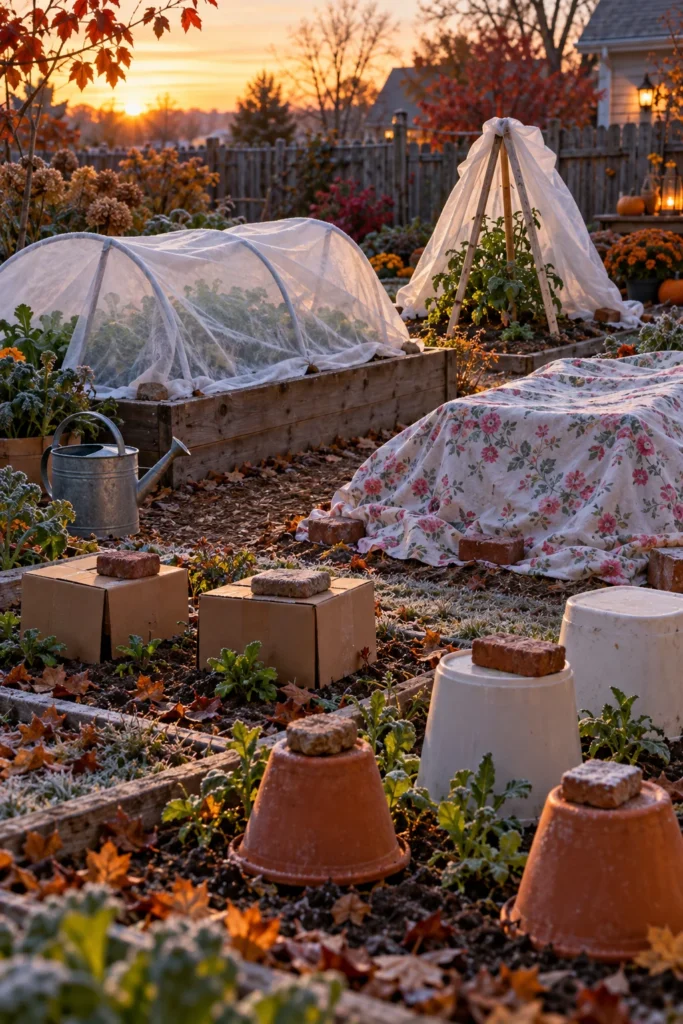
Covers are the heart of frost protection. Here are six ways to use them well.
7. Buy a Roll of Frost Cloth Once and Use It Forever
Frost cloth is a light fabric made for cold nights. It lets air and water pass through while holding warmth in. Drape it loosely over your plants in the evening, and choose a thicker one for very cold nights. I bought one roll three years ago and still use it. It folds up small and stores easily in a drawer, and your plants will sleep safe and sound.
8. Use Old Bedsheets and Blankets for One Cold Night
No money for fancy covers? Use what you already have. Old bedsheets and thin blankets work really well for a single night. Throw them over your plants just before sunset so they trap the warmth rising from the ground. Avoid heavy, wet blankets because they crush stems. Pin the edges down with rocks or bricks. I once saved my roses with a faded flower sheet, and nobody minded the funny-looking garden.
9. Cover Small Seedlings with Cardboard Boxes
For small seedlings, place a strong cardboard box upside down over each one. The box blocks cold air and keeps a little warmth inside. Add a brick on top so the wind cannot blow it away, and remove the box in the morning so the plant gets sunlight. It is cheap, takes only a minute, and tiny seedlings feel safe under it.
10. Turn Buckets and Flower Pots into Tiny Houses
Empty buckets and flower pots are hiding in every garden shed. Turn them upside down over young plants and shrubs and they act like tiny houses. Block any drain holes with a stone so cold air cannot sneak in, and take them off after sunrise. I once covered my whole herb corner with mismatched buckets. My neighbours thought it looked funny, but it worked, and it was completely free.
11. Use Stakes So the Cover Never Touches the Leaves
A cover that touches the leaves can pass the cold straight into them. Push stakes or tall sticks into the soil around your plant first, then lay the cover over the stakes so it forms a tent. This keeps a pocket of air between cloth and leaves, and that air acts like a warm jacket. It also protects soft stems from breaking under the weight. Setup takes about two minutes.
12. Cover Down to the Ground and Remove It in the Morning
Many people cover only the top and then wonder why their plants still froze. Heat rises from the soil, so you must trap it. Let the cover reach all the way to the ground and hold the edges down. This is one detail many gardeners miss, and it is a key part of protecting plants from frost. Uncover your plants once the sun warms the air the next morning so they can breathe easily.
Frost Protection for Outdoor Plants in Beds and Borders

These outdoor ideas use simple materials that are easy to find, and they work beautifully in beds and borders.
13. Spread a Thick Blanket of Mulch Around Your Plants
Mulch is like a warm blanket for the soil. Spread three to four inches of straw, dry leaves, or wood chips around your plants, keeping it a little away from the stems so they do not rot. Mulch slows the loss of heat from the ground and protects the roots. It is my first choice for frost protection, and it keeps weeds away too.
14. Stack Straw Bales to Block the Icy Wind
Want a cosy shelter for a whole bed? Stack straw bales around the edges to block the icy wind, and lay an old window or a sheet on top at night for a roof. Wind steals warmth faster than you think, so stopping the wind is part of knowing how to protect plants from frost. The bales can be reused next year or added to the compost. Cosy and cheap.
15. Build Easy Hoop Tunnels Over Your Vegetable Beds
Bend flexible pipes or thick wire into hoops and push them into your vegetable bed. Drape a row cover over the hoops and clip the edges, and you now have a long tunnel that keeps lettuce and spinach safe all winter. Open the ends on sunny days so it does not get too hot inside. This simple idea changed my winter harvest completely, and it is worth the small effort.
16. Turn Plastic Bottles into Mini Greenhouses
Save your empty water bottles or milk jugs. Cut the bottom off and place the bottle over a small plant like a tiny greenhouse. Push it slightly into the soil so it stays in place, and take the cap off during the day to let air in. These little cloches are perfect for baby tomatoes and peppers, and kids love helping with this fun recycling project.
17. Use the Warmth of Walls and Fences
Walls soak up heat during the day and give it back at night. Plants growing near a sunny wall or fence enjoy a warmer spot, so if you have tender plants in small pots, think about moving them close to the house in autumn. Even moving a pot by two feet can make a big difference on a cold night. Simple and free.
18. Wrap Old Style Lights Around Shrubs for Gentle Heat
Old-style Christmas lights give off gentle heat. Wrap them around shrubs and small trees before covering with frost cloth, but never let the lights touch wet wires or standing water. Use outdoor-safe lights and plug them into a safe outlet. Newer LED lights stay cool, so they do not help much. This idea feels festive, and it truly adds a few warm degrees.
How to Keep Plants from Freezing in Pots and Containers

Container plants get cold faster than plants in the ground, so this part needs a little extra love.
19. Carry Your Potted Plants Inside for the Night
The easiest answer is simply to carry your pots inside. Put them in a bright room or near a window, and check that the room is not too hot or too dry. Bring them in slowly over a few days if you can, and look for tiny insects on the leaves before the move. My plants thanked me with fresh leaves.
20. Group Your Pots Together Like a Cozy Family
If your pots are too heavy to carry, push them together in a tight group close to a wall. The pots share warmth and block wind for each other. Put the tallest ones at the back and the tender ones in the middle, then cover the whole group with one big cloth for extra safety. Your plants will love the company.
21. Wrap Pots with Bubble Wrap or Old Towels
Roots in pots feel the cold from every side. Wrap the pot with bubble wrap, old towels, or burlap and tie it with string, leaving the top open so water can enter. This keeps the soil warmer and stops the pot from cracking. Clay pots especially need this care. Your plant will keep its roots nice and cosy all night long.
22. Lift Your Pots Off the Cold Ground
Cold travels up from concrete and stone floors. Place pots on small wooden blocks, an old pallet, or plant stands. Even one inch of space makes a real difference, because the gap acts as a cushion of air. I use cut pieces of old wood for this and it costs me nothing. Your pots will stay warmer and drain better too. Small change, big result.
23. Use a Garage or Porch or Shed
Do not have indoor space at home? A garage, covered porch, or shed can be enough. These places block frost and wind even without heat. Put plants near a wall and away from the door, and water lightly since they need less in cold weather. This is another easy option for people with small homes. Even a cold room helps.
24. Wrap Young Tree Trunks with Burlap
Young trees and shrubs have thin bark that can split in cold weather. Wrap the trunk with burlap or tree wrap from the bottom up and tie it gently with soft garden string. For small shrubs, make a cage of stakes, fill it with dry leaves, then wrap burlap around it. Remove the wrap in spring so the bark can breathe. Little trees need this care the most.
Protecting Garden Plants from Frost with Smart Care Habits
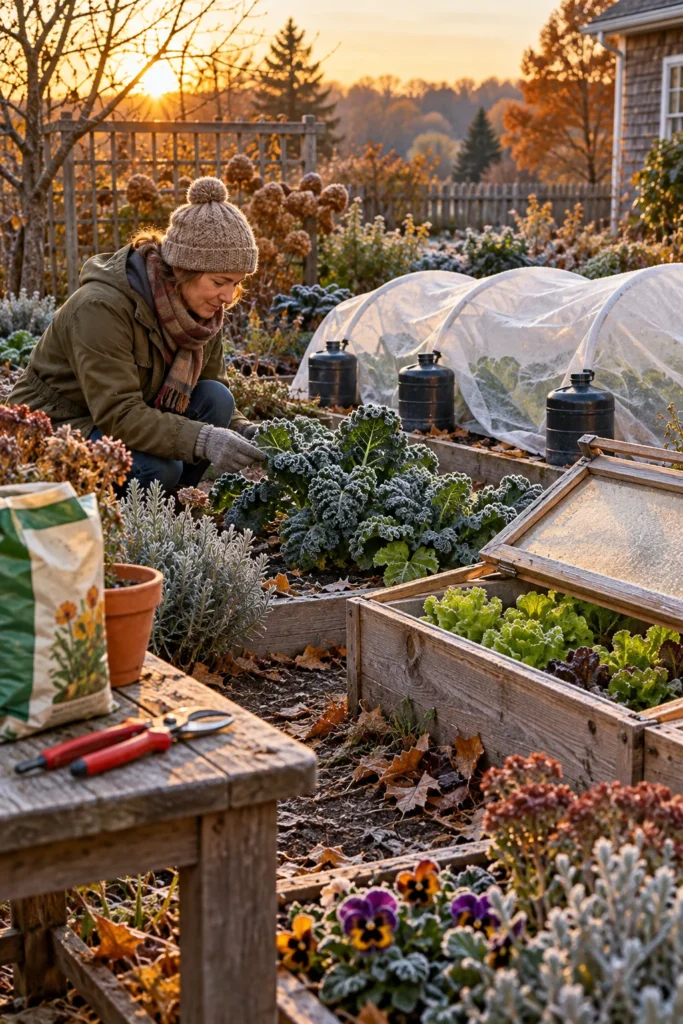
Small daily habits finish the job and keep your garden strong all season long.
25. Fill Dark Bottles with Warm Water
Fill dark plastic jugs or bottles with warm water and place them near your plants under the cover. The water releases heat slowly through the night. Choose dark bottles, or paint them dark, so they absorb sun during the daytime. I tuck three jugs in my tomato bed and they work like little heaters. Always close the lids tightly to avoid leaks.
26. Build a Cold Frame for Leafy Greens
A cold frame is a bottomless box with a clear lid, and it is my favourite way to protect leafy greens from frost. Build one from old windows and spare wood, or buy a small kit. Set it in a sunny spot over your bed, and prop the lid open on warm days so your plants do not cook.
27. Skip Late Autumn Pruning
Trimming plants in late autumn can wake them up and cause soft new growth, and that new growth is weak and freezes easily. Wait until spring to prune most plants. The old leaves and branches also act like a natural cover for the plant. So put the scissors away for now and let nature help you. Remove only dead or broken parts.
28. Stop Feeding Your Plants Late in the Season
Feeding plants late in the season pushes fresh, soft growth that cannot handle cold. Stop nitrogen fertiliser about two months before your first frost date. This helps plants slow down and toughen up naturally. I learned this after losing a beautiful hibiscus. Think of it as telling your plants it is time to rest. A calm, steady plant has a much better chance of surviving a freezing night.
29. Be Gentle with Plants After a Frost Night
What if frost already hit? Do not panic. Check plants in the morning and keep covers on until the air warms above freezing. Quick sun on frozen leaves can cause damage, so wait a few days before cutting any dark leaves because they may still recover. Knowing how to protect plants from frost includes knowing how to care for them afterwards. Be patient and kind.
30. Choose Hardy Plants and Plant at the Right Time
The best protection starts with smart choices. Pick plants that suit your climate and plant them at the right time. Add hardy flowers and winter vegetables that love cool weather, like kale and pansies. Ask your local nursery which plants survive in your area. Over time you will need fewer covers and enjoy a garden that feels strong and stress-free. Your future self will thank you.
Conclusion: How To Protect Plants from Frost
Now you know how to protect plants from frost with thirty ideas that are simple and kind to your wallet. Start with one or two today and add more as the weather turns cold.
Remember that protecting plants from frost is mostly about small habits done on time. Your garden will reward you with fresh leaves and bright flowers.
Tell me which idea you loved most, because I would enjoy hearing your story. Happy gardening, my dear friend.
FAQ’s About How To Protect Plants From Frost
1. How to protect plants from frost overnight with things I already have at home?
Use old bedsheets or blankets, cardboard boxes, or upside-down buckets. Cover plants just before sunset and let the cover reach the ground. Hold the edges down with stones, and remove everything in the morning when the air warms up.
2. How to protect plants from frost in pots on a balcony or patio?
Move pots against the house wall and group them tightly together. Lift them off the cold floor and wrap each pot with bubble wrap or burlap. Add a frost cloth over the plants for the coldest nights.
3. What temperature needs frost protection for plants and when should I cover them?
Most tender plants get hurt near 32°F (0°C). Cover them when the night forecast is close to that number. Hardy plants like kale can handle colder nights, but young seedlings still need cover.