22 Clothes Storage Ideas for Small Spaces in 2026
When your room is small, clothes seem to take it over fast. One day everything looks fine.
The next day the closet is packed, pants are draped over the chair, and jackets are hanging on the door. Before long it feels like the room is simply too small to keep your clothes in order.
But the size of the room is usually not the real problem. The way the space is being used is.
Even the tiniest rooms can hold a surprising amount of clothing if you know how to store it well.
Looking for better organization? This article explores 20 creative clothes storage ideas to maximize every inch of your space.
Let’s jump in!
What Are the Best Space-Saving Clothes Storage Ideas for Tiny Rooms?
Clothes can take over a tiny area very quickly. A few shirts tossed on a chair turn into a pile, jackets start hanging on the door, and before you know it, the closet is completely full.
It can feel like there is nowhere left to put anything. The good news is that you don’t need a bigger room; you just need to use the space in a different way.
A small room works best when every part of it has a purpose.
You can store a lot more clothes than you think if you use vertical space, hidden storage, and simple ways to organize.
The ideas below will help you keep your clothes tidy without making your room feel too small.
Save this article for later! 👇👇

Closet Zones
A closet feels cramped when everything gets mixed together. Splitting it into clear zones makes it instantly more useful.
Hang your everyday clothes on one rod at eye level so they are easy to reach. Use the top shelf for shoes or anything you don’t wear every day.
Small cubby organizers keep pairs of shoes visible and separate. You can also make use of the floor space.
Place stackable drawers underneath to hold folded clothes, luggage, or accessories. This layout is best for bedrooms with small closets, since it uses every inch of space from top to bottom without making the room feel cluttered.

Photo credit: @extraspace
Split Storage
Closets work much better once hanging and folded clothes are kept apart. Putting double rods on both sides makes room for shirts, jackets, and shorter items without overloading one bar.
A large drawer unit in the middle holds folded clothes, accessories, and the small things that often go missing.
Open shelves above the drawers keep towels or boxes within reach without crowding the hanging space. If doors feel heavy or take up too much room, curtains on both sides work well.
This setup works best in bedrooms with wider closet openings, because it turns one big area into three smaller, tidier sections that are easier to manage.

Photo credit: @ikeacanada
Open Rack
Extra wall space can easily become a full clothing area without needing a closet at all. A freestanding rack with built-in shelves gives you a place to hang your everyday clothes while keeping shoes, purses, and folded items neat below.
Keeping everything in plain sight makes it easier to stay organized, because nothing gets lost in the back.
This setup is best for small bedrooms or studio apartments, since it replaces heavy wardrobes with something lighter and more flexible.
Tucking it into a corner or beside other furniture keeps the space tidy. Adding a few baskets or boxes to the shelves keeps smaller items from looking messy.
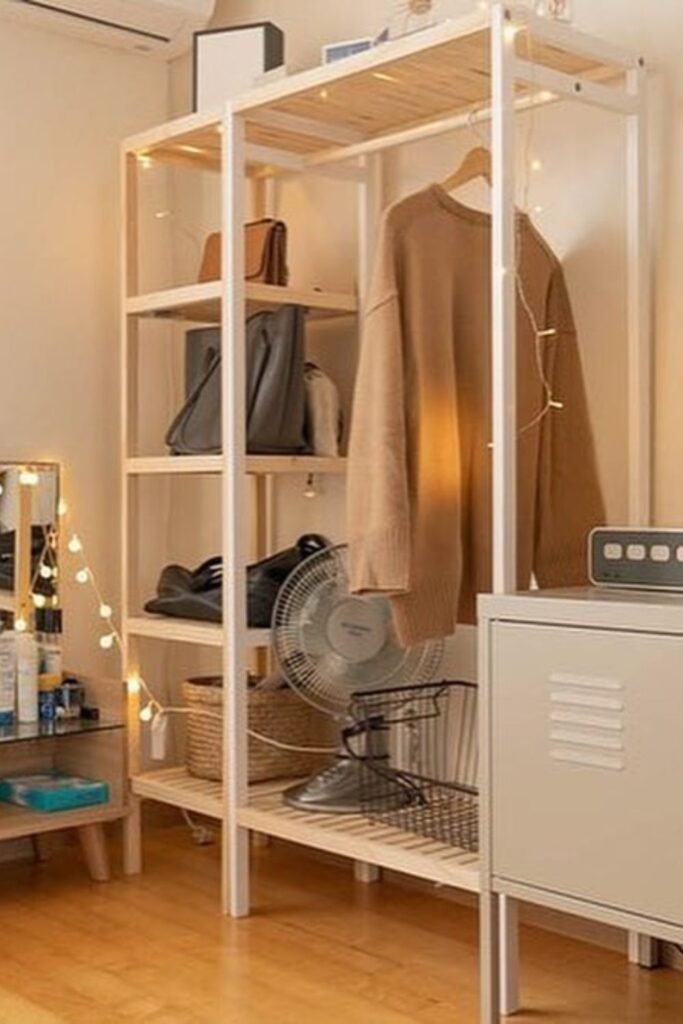
Photo credit: @k__living
Wardrobe System
Clothes start taking over when everything is crammed into one crowded section. Breaking storage into dedicated sections makes a big difference in how much you can really fit.
Use several hanging rods for shirts and shorter items. Keep longer items in a separate compartment so they don’t eat up vertical space.
Add drawers for things that don’t need to be hung, and use open shelves or baskets for shoes and other items. This layout works better with wider walls, because you can spread everything out instead of stacking it.
When each category has its own place, it is easier to stay organized and keep clothes from piling up again.

Photo credit: @ikeauk
Entry Closet
Narrow spaces near entryways often get ignored, even though they can store a surprising amount of clothing.
Turning a small closet into a useful storage spot is a smart move for jackets, coats, and other everyday items.
Adding shelves on one side makes room for bags, folded clothes, or storage boxes while still leaving space for a hanging line for coats.
Shoes can stay neatly lined up at the bottom instead of piling up next to the door. This setup is helpful for homes with limited bedroom storage, because it moves bulky items like coats out of the bedroom and frees up room in the closet where it is needed most.
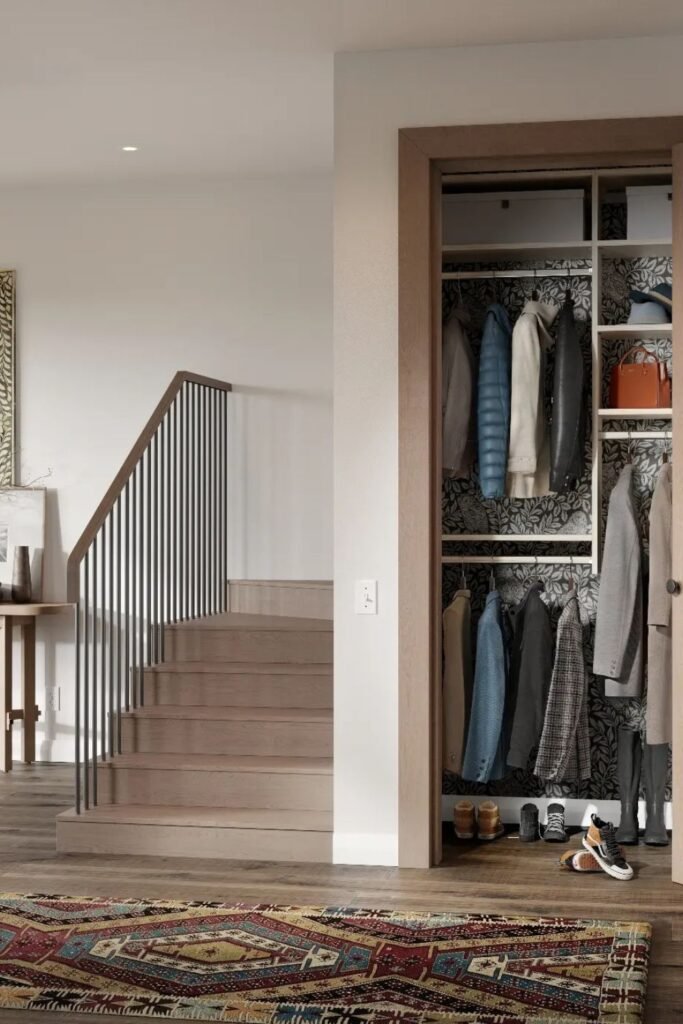
Photo credit: @calclosetsnj
Compact Locker
Small rooms don’t always have space for a full wardrobe, but a narrow locker-style cabinet can hold a lot more than it looks.
Use one side to hang garments like shirts and dresses, and use the other side for shelves for folded clothes, bags, or storage baskets. Wire containers or boxes keep small objects organized and easy to reach.
There is room underneath for shoes or an extra basket for things that don’t fit in the main one.
This setup is best for bedrooms with tight corners or not much wall space, because it gives you both hanging and shelf storage without taking up much room.

Photo credit: @paddingtonstore.nz
Shelf Combo
Empty vertical space inside a closet often goes unused, even though it can hold a large share of your clothes.
Combining shelves, hanging rods, and drawers makes the system more balanced. Put folded clothing like jeans and sweaters on one side of the shelves, and hang your everyday clothes in the middle so you can easily get to them.
Drawers at the bottom help keep small things that often make a mess out of sight. Things you don’t use every day fit perfectly in storage bins on the top shelves.
This setup works best in rooms with shallow closets, because it keeps everything ordered and visible without making piles of clothes.

Photo credit: @ikeauk
Double Hanging
Closet space fills up fast when everything shares one rod. Adding a second rod underneath instantly gives you room for twice as much, especially shorter items like shirts, t-shirts, and slacks that are folded and hung up.
It’s easier to find what you need when you keep similar things together on each level instead of searching through layers.
You can line your shoes up at the bottom so no space is wasted. This solution works best in closets that are tall enough, since it turns empty air space into useful storage without needing any extra furniture.
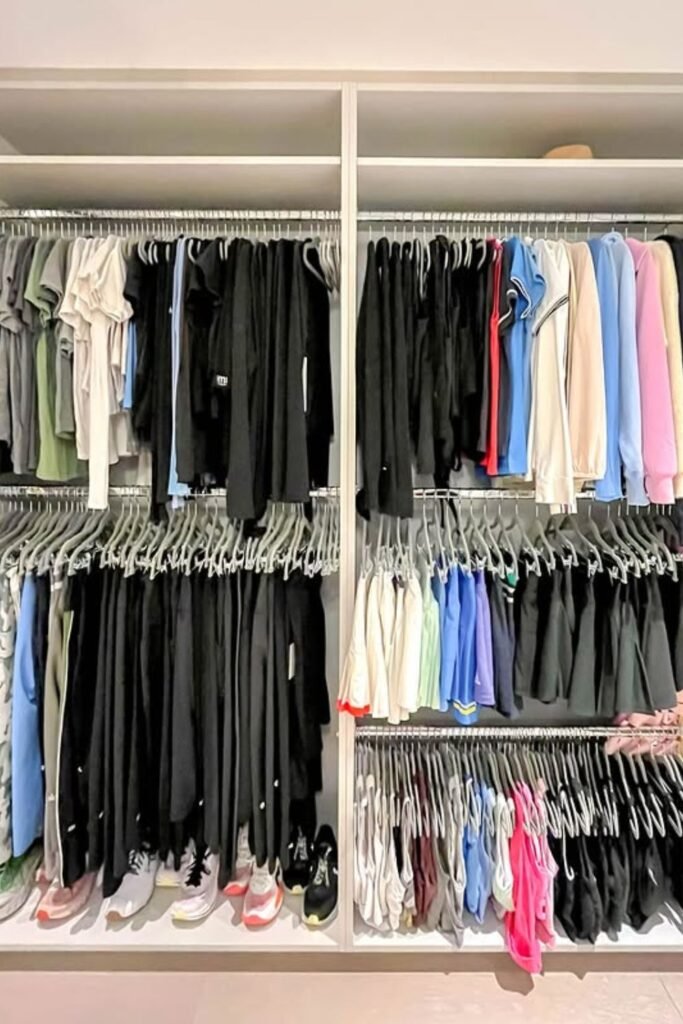
Photo credit: @lessismoreorganizers
Mini Closet
Limited bedroom space doesn’t always allow for a full wardrobe, but a compact closet setup can still handle daily essentials.
Adding thin shelves next to one part for hanging clothes keeps folded goods neatly piled without taking up extra space.
Storage compartments on the top and bottom help keep things tidy and make the most of every inch.
In small spaces where swinging doors would take up too much room, a curtain works nicely instead.
This layout works best in smaller bedrooms, because it creates a full clothing area in a small space without making the room feel crowded.
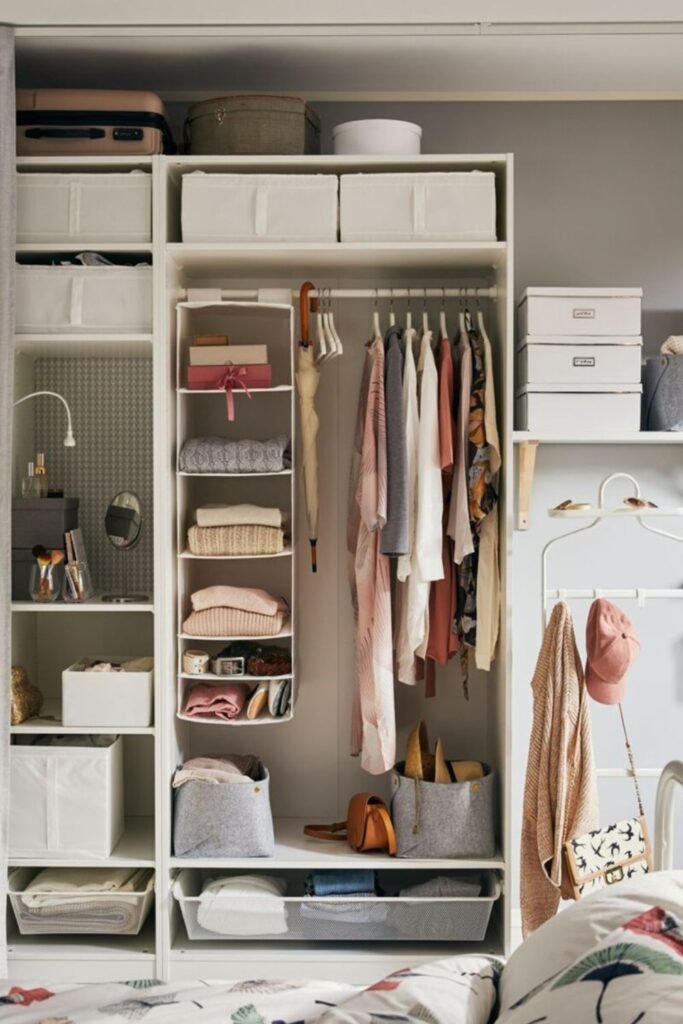
Photo credit: @ikea_australia
Box Storage
Clutter builds up fast when small items don’t have a place to go. Using matching storage boxes on open shelves hides everything yet keeps it easy to reach.
Put clothes, accessories, or extra linens in each box so the shelves don’t look messy. You can quickly find what you need without opening every bin if you label them or use different colors.
This works best in closets with open wire shelves, because the boxes stay in place without slipping through gaps.
It is also easier to clean and rearrange when everything is in boxes, since things stay together instead of spreading out.

Photo credit: @organizing.augusta
Center Drawers
Closets feel crowded when folded clothes compete with hanging items for space. Adding a drawer unit in the center makes things easy to find and keeps everything in its own place.
Hang garments on both sides so you can easily get to them. Use the drawers for t-shirts, jeans, or other small things that don’t need to be on hangers.
Open cubbies above the drawers are great for folded stacks or storage bins, kept out of the way while still being easy to see.
This setup works best for medium to large closet openings, since it breaks the area into smaller sections that are easier to keep clean and stops clothes from stacking up.

Photo credit: @hillhousediy
Rack Drawer
Floor space next to the bed can quietly turn into a useful storage spot. A slim rack with a built-in drawer gives you room to hang your daily clothes while keeping folded garments and other essentials out of sight.
Only putting clothes you wear often on the rack helps keep it from getting too crowded and makes everything look tidy.
The shelf in the middle can hold small things like skincare or accessories so nothing gets lost in the room.
This setup is best for bedrooms that don’t have closets or have very little storage space, since it creates a small, all-in-one garment area without needing big furniture.
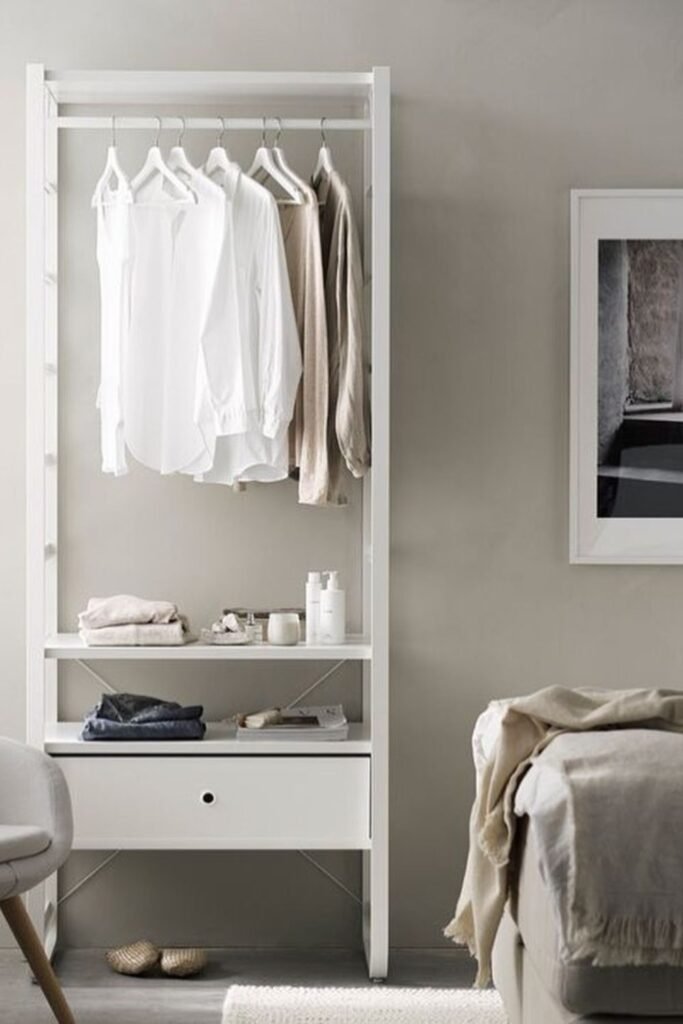
Photo credit: @ikeaswitzerland
Wall Rod
An empty wall can do the same job as a closet area, so you don’t always need one. Putting a single rod above a low dresser makes it easy to keep hanging and folded clothes in one spot.
You can put drawers underneath the rod if you keep it high enough, so you don’t waste any floor space. The dresser handles folded clothes like jeans or t-shirts, while daily outfits stay easy to reach.
If your bedroom doesn’t have a closet or has limited storage, this is the best option, because it turns a blank wall into a useful wardrobe without taking up too much space.

Photo credit: @ikea_australia
Rolling Rack
Limited space often needs something flexible that can move with your layout. A rolling rack with shelves solves that, giving you storage, hanging space, and mobility all in one setup.
Put your everyday clothing on the top bar so you can see it, and use the side shelves for bags, boxes, or folded things. The bottom shelf is a good place for shoes, so they don’t end up all over the floor.
This is best for rooms that need to be rearranged often, because you can move the rack around without having to lift heavy furniture.
Putting everything in one movable unit also frees up room in other parts of the room.

Photo credit: @rickyshomeinteriors
Pipe Shelves
Empty walls can hold far more clothes than most closets when you build upward instead of outward.
A pipe-style rack and long shelves make a whole storage system on one wall. Put your jackets and everyday items on the rods, and your folded garments, bags, and storage boxes on the shelves.
Adding lower cabinets or drawers underneath gives you extra storage space so nothing looks congested. This setup works best in rooms with long, empty walls, since it uses vertical space while spreading things out horizontally.
Separating things by category in each section makes it easy to keep everything clean and keeps garments from piling up.

Photo credit: @pamo.design
Drawer Tower
Clothes get harder to manage when everything is either hanging or stacked in one place. Adding a tall drawer unit in the middle makes it easy to keep track of small things so they don’t go missing.
Leave space on both sides for shirts and coats to hang. Use the drawers for things like t-shirts, undergarments, or folded pants. You can put shoes, books, or storage boxes on open shelves above the drawers without making the main space look messy.
This setup works best in closets that are wide enough, since it breaks the space into smaller parts that are easier to clean and keeps everything neat and visible.

Photo credit: @wardrobewarehousenz
Narrow Wardrobe
Tight rooms don’t leave space for wide storage, but a tall narrow wardrobe can still handle everyday clothing without taking over the whole room.
The top has a hanging space that keeps shirts and coats from getting wrinkled, and the small side shelf section makes room for folded garments or other essentials.
Putting bigger things like bags or backpacks at the bottom helps keep the space balanced without making the hanging area too crowded.
This setup works best in corners or unused gaps in the wall, because it fits into places where bigger furniture wouldn’t. It also doesn’t feel cramped when you only keep clothes you wear often inside.
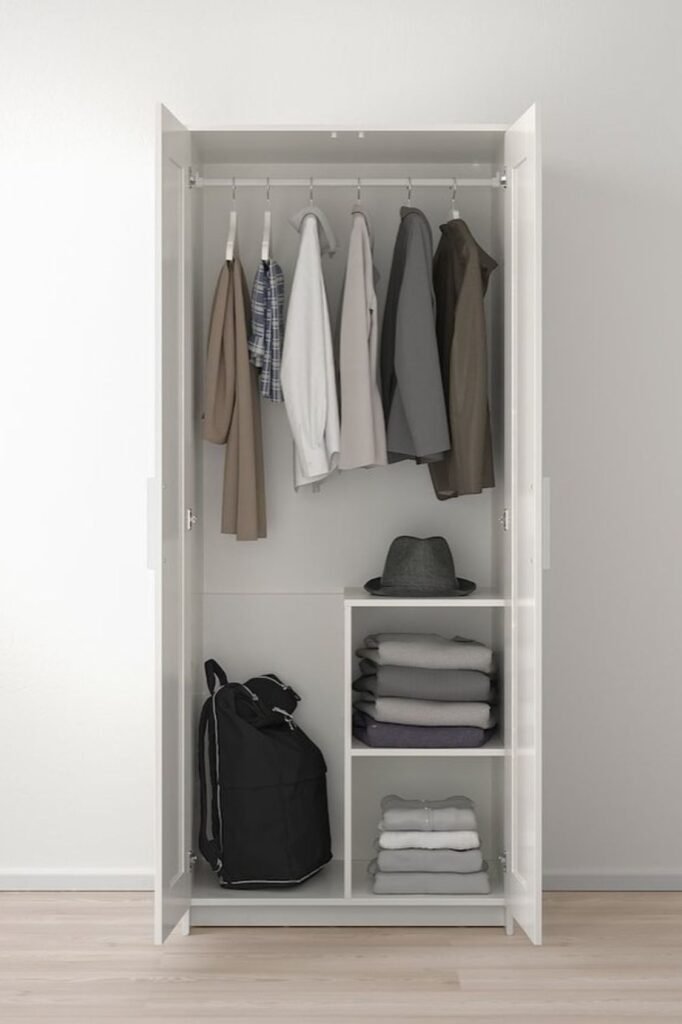
Photo credit: @ty_center_gh
Folded Stacks
Drawers fill up quickly when bulky clothes are stuffed inside without structure. Using open shelves for folded stacks keeps everything in sight and easy to handle.
Put things that are alike in the same place, such as t-shirts in one area and hoodies in another, so they don’t get mixed up. Keeping stacks neat and the same size stops them from falling over.
Shelves with more than one compartment are ideal, since they divide categories on their own and you don’t need extra organizers.
This setup is best for rooms with limited drawer space, since it moves folded garments out of drawers and makes room for smaller objects.
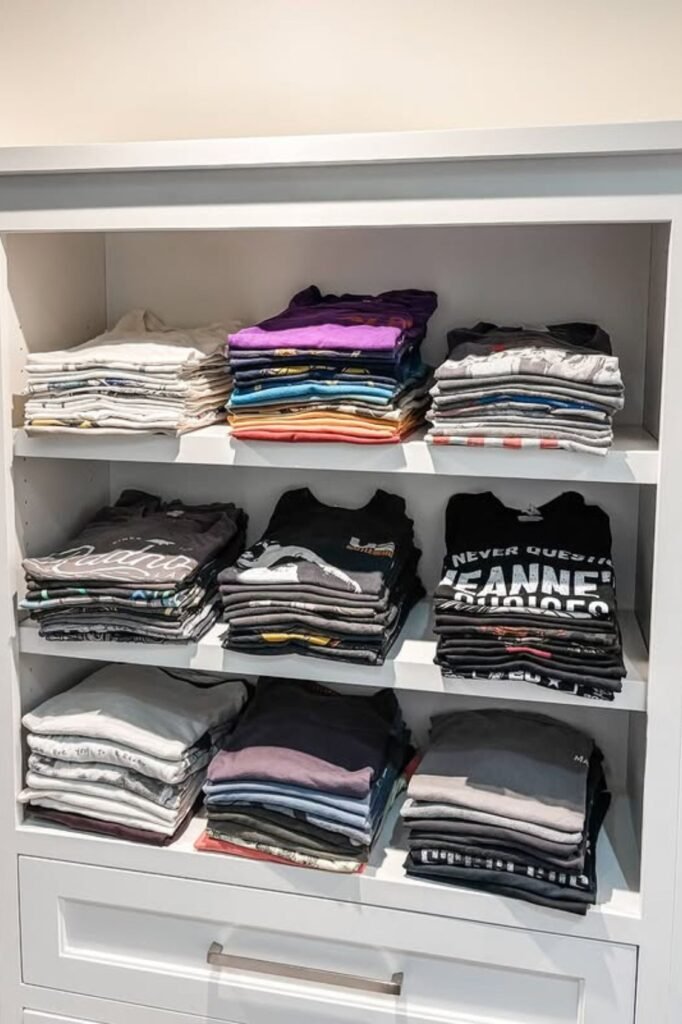
Photo credit: @afreshspace
Corner Setup
Even though they can carry a full wardrobe system, corners generally stay empty. Putting rods on the walls on two sides of the corner turns it into a full wardrobe area.
Put jackets and other heavy things on the upper rods, and everyday clothes on the lower rods. This keeps everything within reach.
Putting a shoe rack under the floor keeps it tidy and stops clutter from spreading. This layout is best for small rooms, since it uses space that would otherwise be wasted while still making everything easy to see and get to.

Photo credit: @mrflared
Shoe Shelves
Shoes often end up all over the floor, wasting space that could be used better. Adding angled or stacked shoe shelves along one side makes it easy to see and grab every pair.
If you keep them at a small angle, you can view everything at once without having to sift through stacks. Putting shoes on the vertical wall space makes room for other things at the bottom of the closet.
This design is best for closets with a lot of shoes, because it keeps everything in one place and makes the rest of the closet look neat and tidy.

Photo credit: @interiorsstorageanddeclutter
Wall Panels
Accessories often get lost in drawers where you can’t see anything at once. Using wall-mounted panels with clear shelves makes bags, sunglasses, and small accessories simple to see and get to.
If you keep everything out in the open, you can find things faster without having to search through boxes. The drawers underneath can hold clothes, and the wall can hold smaller things that tend to make a mess.
This solution works well in corners or tiny closet sections, because it converts vertical space into organized storage without taking up more space.

Photo credit: @tidierspaces
Door Storage
Back-of-door space usually goes unused, even though it can hold a surprising number of items. Installing.
Putting up hanging organizers or mounted baskets on the door gives you more storage space without taking up any floor space.
Use it to keep little things like bags, accessories, and daily necessities from getting in the way of other things on shelves and in drawers.
When you’re in a hurry, it’s simple to grab things you use a lot from the door. This setup is most useful for small closets, since it adds storage space where there wasn’t any before. This helps you keep the main closet area less crowded and more orderly.
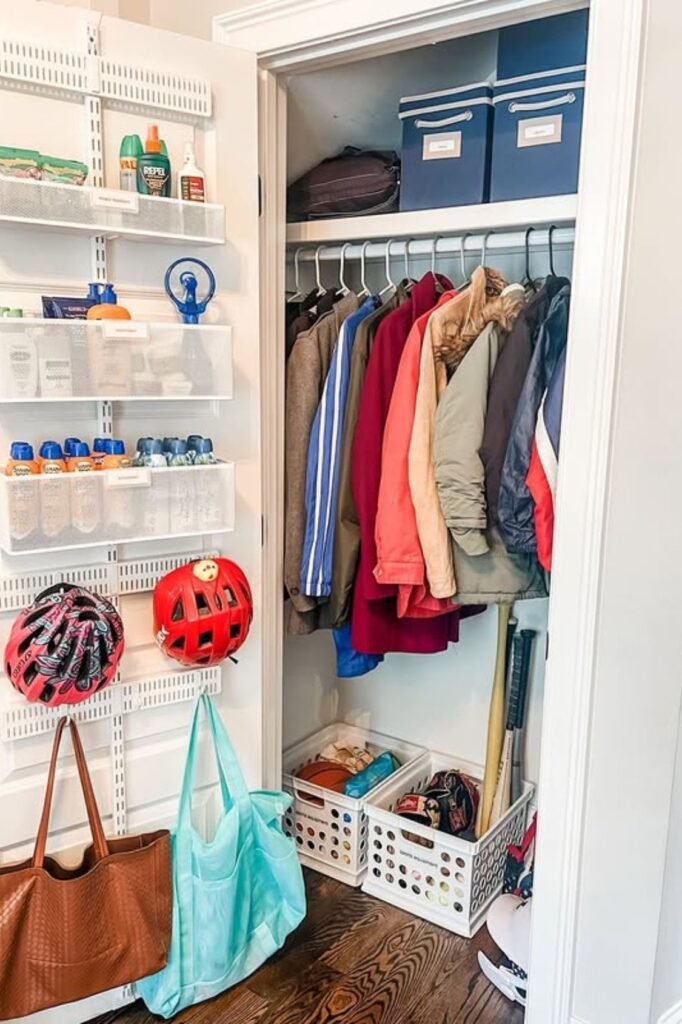
Photo credit: @afreshspace
FAQs
How can you store clothes in a tiny room without a closet?
If you put things up the right way, a small room without a closet can still hold a lot of clothes.
Use a clothing rack with shelves or drawers so you can hang and fold things all in one area. Wall-mounted shelves or rods are also good.
What is the best way to maximize space in a small closet?
Using the height is the best way to make a small closet feel bigger.
Adding a second hanging rod might quadruple the space you have for shorter garments like shirts.
Put things you don’t wear regularly on shelves or in storage bins on top. Putting shoes and other little things at the bottom of the closet keeps it clean and makes it easy to keep clean.
You may like to read!
