21 Trash Can Storage Kitchen Ideas for 2026
If your kitchen looks spotless except for one bin sitting out in the open, you are not alone. A single exposed garbage can can make the whole room feel crowded in an instant.
That matters even more in a compact kitchen, where every inch has a job to do. Plenty of people face the same dilemma: you need the bin close by while you cook, but you do not want it ruining the look of the room or eating up floor space.
The good news is that you do not have to choose between a tidy design and a bin that is easy to reach. A few clever storage ideas can hide your garbage can, free up room, and still keep it within arm’s reach exactly when you need it.
In this guide, you will find 21 smart trash can storage ideas for a tidier, better-organised kitchen — practical fixes you can put to work straight away.
Let us get started!
How Can You Hide a Trash Can in Your Kitchen Without Losing Space?
The trick is not to add more clutter, but to make better use of the space your kitchen already has. Most kitchens have dead spots hiding in plain sight: inside cabinets, under the sink, or beside an appliance.
Tuck your garbage can into one of those spots and it disappears from view without costing you a single square foot of floor. Take the classic example below.
Save this article for later! 👇👇

A pull-out bin fitted inside a cabinet keeps rubbish out of sight, yet it is still right there beside you while you cook.
If your cabinets are already full, a slim bin squeezed next to the fridge or tucked into the pantry can do the same job.
It all comes down to one simple rule: keep the bin close to where the mess is made, and hide it in space your kitchen already has.
Tilt Cabinet
An open bin can swallow your floor space before you know it. A tilt-out cabinet solves that without forcing you to rearrange the whole kitchen.
The bin sits behind a front panel that tips open with a gentle pull, so tossing something away takes a second. It is a great fit for small kitchens and flats where space is at a premium.
Freestanding versions work well too. They can sit flush against a wall or at the end of an island, wherever you have a spare stretch of floor.
To set one up, find a tilt-out trash cabinet sized to your bin, or fit a tilt hinge kit to a plain cabinet you already own. Place it near your prep area so you are not walking back and forth with every peel and wrapper.

Photo: @ohwillofficial
Slim Placement
Tripping around a bulky bin day after day gets old fast. A tall, narrow bin fixes the problem in one move.
It slides into that awkward gap beside your island or cabinet — the strip of space that usually goes to waste.
This is a lifesaver in the tightest kitchens, especially layouts where there is simply no room to hide a bin inside the cabinetry.
Because the bin is slim, walkways stay clear and nobody feels squeezed. The key is getting the fit right: measure the gap beside your island, fridge or cupboard first, then choose a tall, narrow bin instead of a wide one.
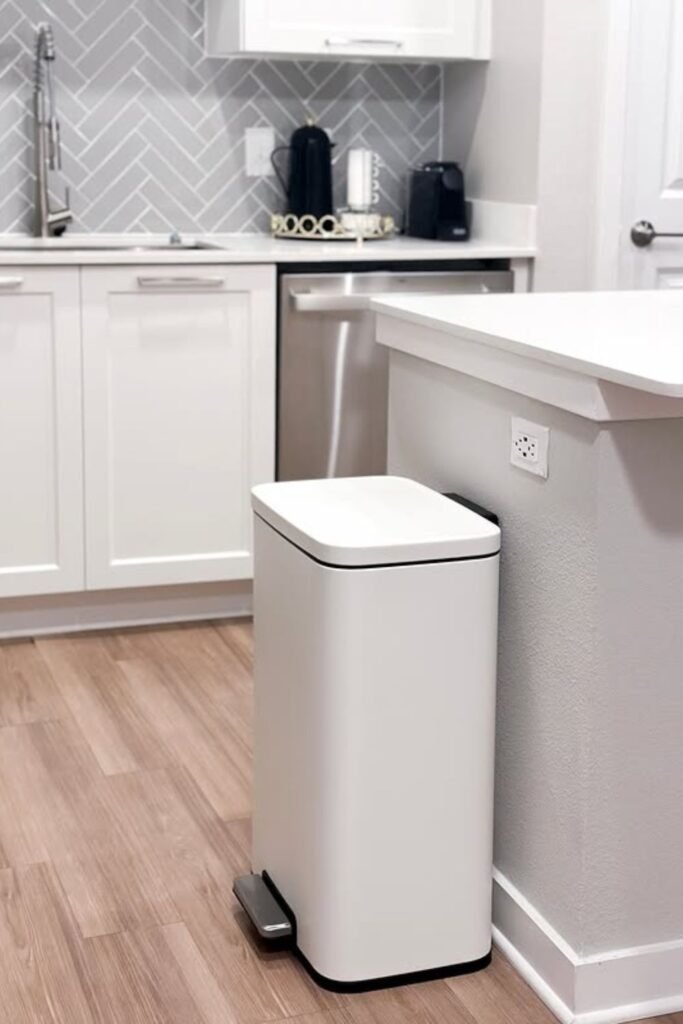
Photo: @eko.living
Pull Drawer
Taking out the trash should not feel like a separate job. A pull-out drawer puts the bin exactly where you already work — just under the counter, beside the sink.
Instead of a bin standing out on the floor, it lives inside a cabinet and the drawer does the work. One smooth pull and it is there; push it shut and the kitchen looks instantly cleaner again.
It works best in base cabinets, above all in the prep or sink zone where most of the waste is created.
You can fit a pull-out frame into a cabinet you already have, or buy a ready-made system matched to your cabinet width. Add a small top drawer for bin bags or paper towels and everything stays in one spot, with no extra clutter.
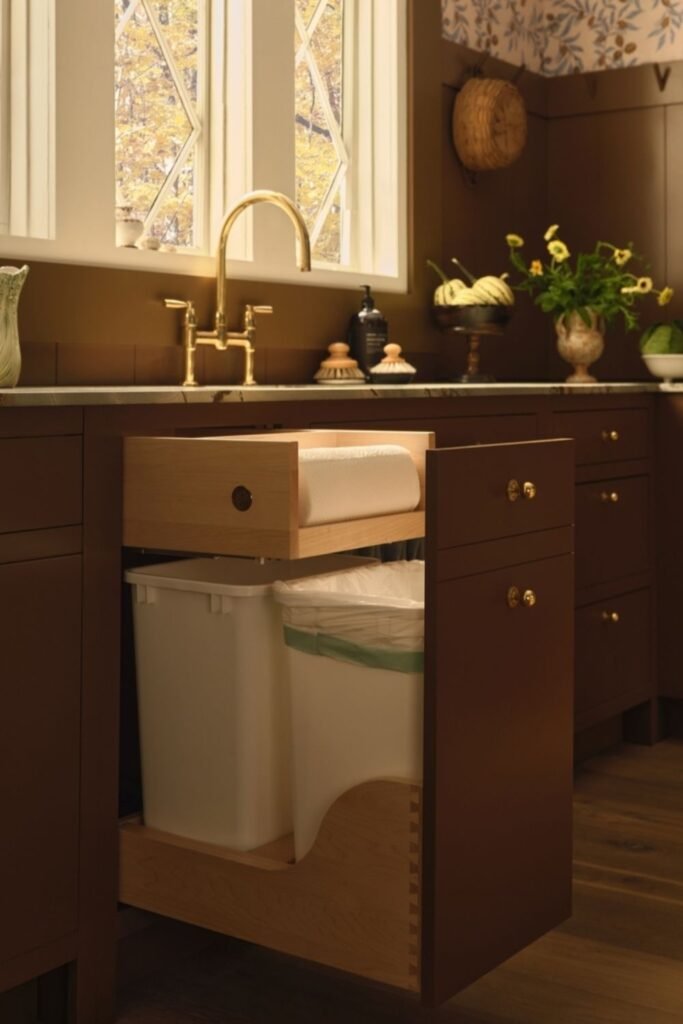
Photo: @theislaporter
Dual Stack
Trying to separate rubbish and recycling can leave you out of room in no time. A stacking bin handles both without spreading bins across your floor.
One level takes the everyday rubbish while the other handles the sorting, all within the footprint of a single bin.
It is ideal for smaller kitchens where a second bin just is not practical. The upright design stays compact but still holds enough for both streams.
Look for a two-tier bin on wheels, so you can roll it closer when you need it and push it back out of the way afterwards. Some even have bags hanging on the sides — handy for quick-access items such as vegetable peelings or recyclables you do not want mixed in with the rest.

Photo: @fatico_group
Double Bin
Keeping rubbish and recycling in one container gets messy quickly. A bin with two compartments keeps the two streams apart without taking up twice the room.
Two lids, two sections, one neat setup. It sits flat against a wall or cabinet, so nothing juts out or breaks your rhythm while you cook.
The foot pedals are a bigger bonus than you might expect — you never have to touch the bin with messy hands in the middle of frantic prep.
This suits medium to larger kitchens, where a visible bin is fine but clutter is not. To copy the look, pick a side-by-side bin in the same finish as your kitchen so it blends in rather than standing out, and keep it near your main work area so sorting becomes automatic instead of a chore.

Photo: @vonhaus.uk
Hidden Combo
Running back and forth for bin bags or paper towels is a real time-waster. A pull-out all-in-one unit saves the trips and clears your counters at the same time.
A drawer on top holds paper towels or liners, with bins below for the rubbish — all tucked away, yet ready to grab in seconds.
There is no more digging under the sink or hunting through several cabinets mid-recipe. It works best around your prep area, where rubbish and quick clean-ups naturally go together.
To recreate it, use a pull-out cabinet system and add a simple divider in the top drawer for rolls or folded towels. Having the basics in one place makes an ordinary bin setup far more useful without taking up any extra room.

Photo: @southerneclectic.home
Island Edge
The side of an island is usually wasted space, yet it is an easy spot for a bin that does not disturb anything else.
Tuck it tight against the panel so it stays out of your main walking route, but still sits right where you prep and cook.
It works well in open kitchens where you cannot hide the bin completely but still want the clutter under control. The design stays clean and simple, so it blends in instead of standing out.
Placement is the key to getting this right. Hold it close to the island or cabinet so it looks deliberate, not accidental. It stays fully within reach, and if you pick a colour that matches your cabinetry or walls, it will almost disappear.

Photo: @simplehuman
Corner Tuck
The moment you stop dropping things in the middle of the floor, the room feels bigger. Sliding a bin into a corner like this does exactly that.
It stays within reach but completely out of your way from day to day. Corners beside cabinets, islands or counters work best, because you are still close to where most waste is created.
Nothing feels hidden, yet nothing feels in the way either. Getting it right is more about position than the bin itself — choose a round or slender style that sits neatly into the corner without sticking out.
You want it to feel like it belongs there, not like something you dropped there at the last minute. Keeping it tight to both walls is what makes that happen.

Photo: @happimess_official
Wall Mount
Counter scraps do not need a full-size bin on the floor. A compact container mounted just under the counter keeps everything within arm’s reach and frees up precious floor space.
It is perfect for quick prep clean-ups — just slide the scraps straight in, with no need to step away.
That matters most in a smaller kitchen, where every inch of walking space counts. Setting it up takes almost no work at all: adhesive hooks or a simple wall-mount fitting on the side of a cabinet or an island panel will do it.
Put two side by side and sorting stays simple without anything getting bulky. Clean, uncomplicated and out of the way — just what a busy kitchen needs.

Photo: @gemhomeaccessories254
Cabinet Hook
Cooking feels faster when you tidy as you go and keep crumbs off the counter. With a hook-on bin like this, you can sweep everything straight in without moving your feet.
It hangs right over a cabinet door, so it is perfect for quick prep sessions, especially beside your chopping board. No bending, no walking across the kitchen.
It is best for tiny or busy kitchens, where speed matters more than hiding things away. Set-up takes seconds: just hook it over the edge of the cabinet, or use adhesive mounts for a cleaner look.
When you are done, empty it out or tuck it away so it never becomes permanent clutter.

Photo: @gemhomeaccessories254
Cabinet Slide
Nothing tidies the look of a kitchen faster than getting the bin completely out of sight. A slide-out cabinet does just that, while keeping it exactly where you need it.
The bin is fitted inside a base cabinet and glides out smoothly. No clutter, no wasted floor space, and no awkward bending every time you want it.
The best spot is near the sink or prep zone, where most waste is made. You would normally do this by fitting a pull-out track system inside a cabinet you already have and choosing a bin that matches the width just right.
This layout also leaves a little extra room beside the bin for cleaning supplies, without taking up any additional space.
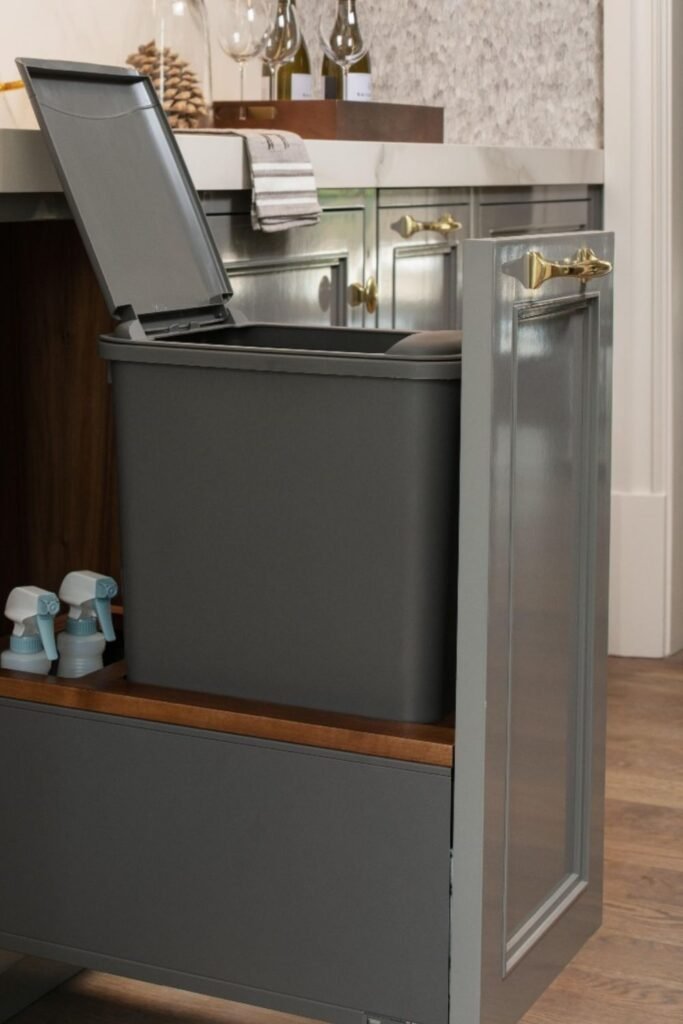
Photo: @revashelf
Sorting Drawer
Piling everything into one bin makes rubbish messy. A built-in sorting drawer fixes that by giving each type of waste its own space, without filling your kitchen with extra bins.
Everything stays tucked away inside the cabinet, but when you pull it out, you can sort straight away. No second-guessing, no extra trips.
It works best directly under the sink or near your main prep area, since that is where most of the sorting happens.
You can copy the idea by installing a pull-out drawer system with divided bins or modular inserts sized to fit the width of your cabinet.

Photo: @hausstrand
Color Blend
Sometimes a bin does not need hiding at all — it just needs to blend in so well that it almost disappears.
Choosing a bin that matches your kitchen colours instantly softens its look, making it feel like part of the design rather than an afterthought.
That is perfect for open kitchens or styled rooms where everything is on show. Instead of fighting to hide it, you work it into your decor.
Pull it off by picking a container in a similar colour family to your cabinets or walls. Soft tones, pastels or neutral shades work best. Tuck it beside the cabinets or into a quiet corner so it never stands out, yet is always within reach.

Photo: @happimess_official
Island Hide
Kitchen islands grab all the attention up top, but the real magic happens underneath. Panels like these tilt out to hide bins behind them, putting space that normally goes unused to work and keeping everything fully concealed.
It is great for open kitchens, where a visible bin would spoil the clean look. You stay right in your prep zone, yet nothing is left on show.
The ideal home for this is a deep island cabinet, or you can pick up a ready-made unit with tilt-out doors and bins already inside.
Two sections within the unit make sorting easy, without needing extra containers anywhere else.
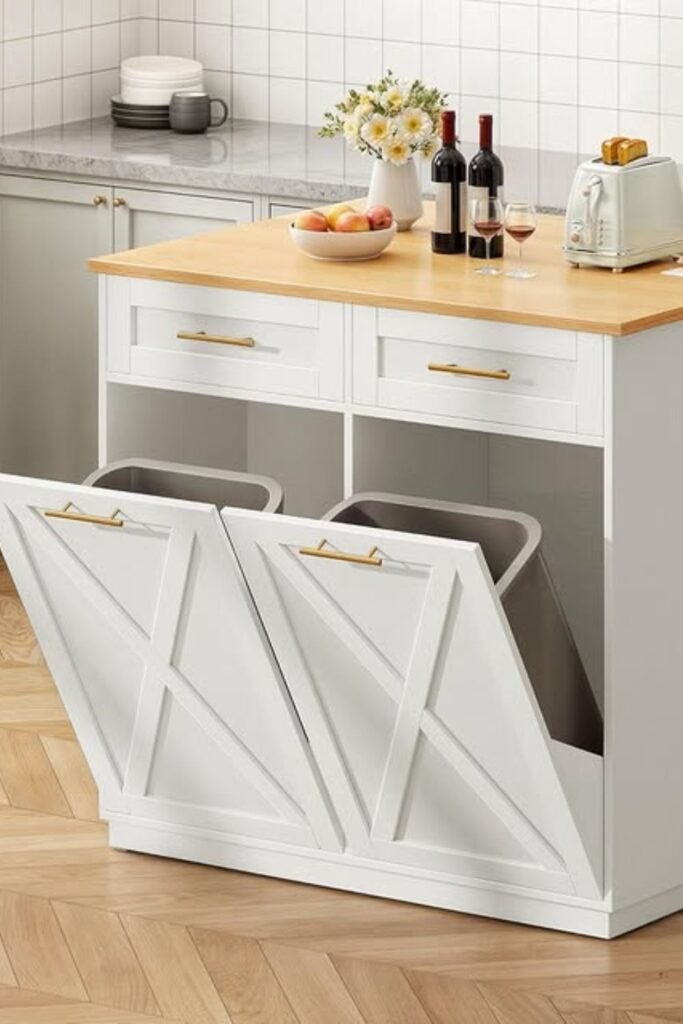
Photo: @noizylady
Vertical Stack
Bins placed side by side soon eat up your floor space. Stack them one above the other and everything fits into a single small footprint without overwhelming the kitchen.
One compartment takes the daily rubbish and the other takes the recycling, so there is no need for several bins scattered around the room.
You can rest it against a wall or along a half-divider like this, keeping it out of the main traffic pattern but still easy to reach.
It suits small kitchens and open plans where you want the bins contained but not necessarily hidden. To copy it, choose a tall dual-compartment bin with separate lids or pull-out sections, and tuck it close to a wall so it feels purposeful and keeps the room looking neat instead of cluttered.

Photo: @vonhaus.uk
Side Pair
Cluttered kitchens happen fast when containers end up scattered everywhere. Two matching bins, side by side in one spot, keep things orderly without breaking up the flow of the room.
Sorting is easy when each container has a job — one for rubbish and one for recycling — and the two never get mixed up.
They stay contained if you place them against the wall or under a counter, instead of letting them drift around the room. This works best in kitchens with a little more width, where hiding the bins is not the issue but neatness still counts.
Choosing the same containers in a soft, neutral colour helps them blend in rather than stick out.

Photo: @organized_home
Island Side
Wasting steps every time you need the bin slows you down. Keeping one right behind your island solves that without messing up your main space.
It sits just outside the seating area, within reach of the cooking zone, but never gets in the way of movement or chairs. It feels hidden away, yet it is always there when you need it.
This works well in an open kitchen with a large island, where you can give up a small portion of space. Choose a small, clean-lined bin so it does not look out of place, but complements the cabinetry instead.
Lining it up with the island edge makes the placement look planned rather than random.

Photo: @songmicshome
Prep Station
Chop, wipe, toss — it all happens in the same spot, so your bin setup should live there too. With bins right under your prep space, you can almost make clean-up feel natural.
One pull and you are into the bin, with the essentials such as paper towels just above it. No going back, no hunting for anything in the middle of cooking. Everything sits in one compact zone.
It is best for long countertops where prep space is the priority. To recreate the layout, add a pull-out bin system and pair it with a shallow drawer above for towels or liners.
Stacking the two like this turns a simple cabinet into a full clean-up station without taking up any extra room.
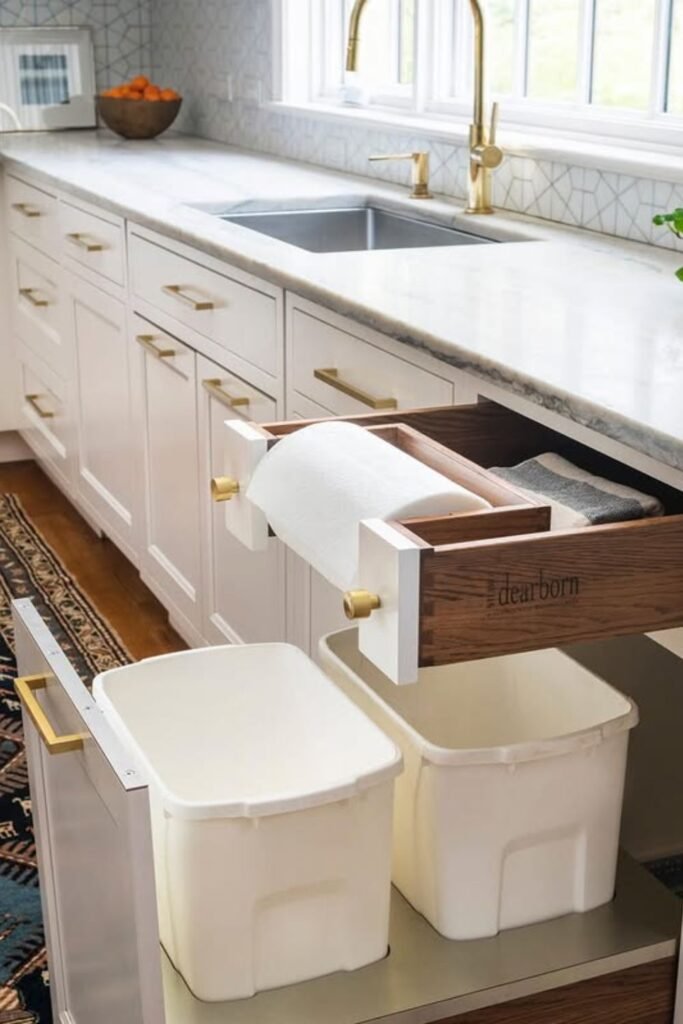
Photo: @studiodearborn
Corner Pull
Corners are usually dead space, but turning a corner into a secret bin zone changes the way your kitchen works.
You can slide bins out of a corner cabinet so everything stays out of sight and within easy reach.
Rather than cramming a bin into the cupboard under the sink, this gives it a home that stays tucked away until you want it. Your main cabinets stay clear for storage at the same time.
It is ideal for L-shaped kitchens with corner cabinets already built into the layout. To recreate it, add a pull-out system made for corner spaces, or build a deep cabinet with sliding rails.

Photo: @masonmartinhomes
Corner Bin
You do not have to let that awkward corner cabinet go to waste. Turn it into a dedicated rubbish space and you get concealed storage without using a single inch of your main cabinet space.
The bins sit deep inside, out of sight, yet you can reach them with a simple door swing. It takes up space that would otherwise be wasted and keeps the kitchen looking tidy.
It is best for tight or L-shaped kitchens, where every cabinet counts. The set-up is easy to copy: just use a standard corner cabinet and fit bins inside, or add a simple pull-out base for smoother access.
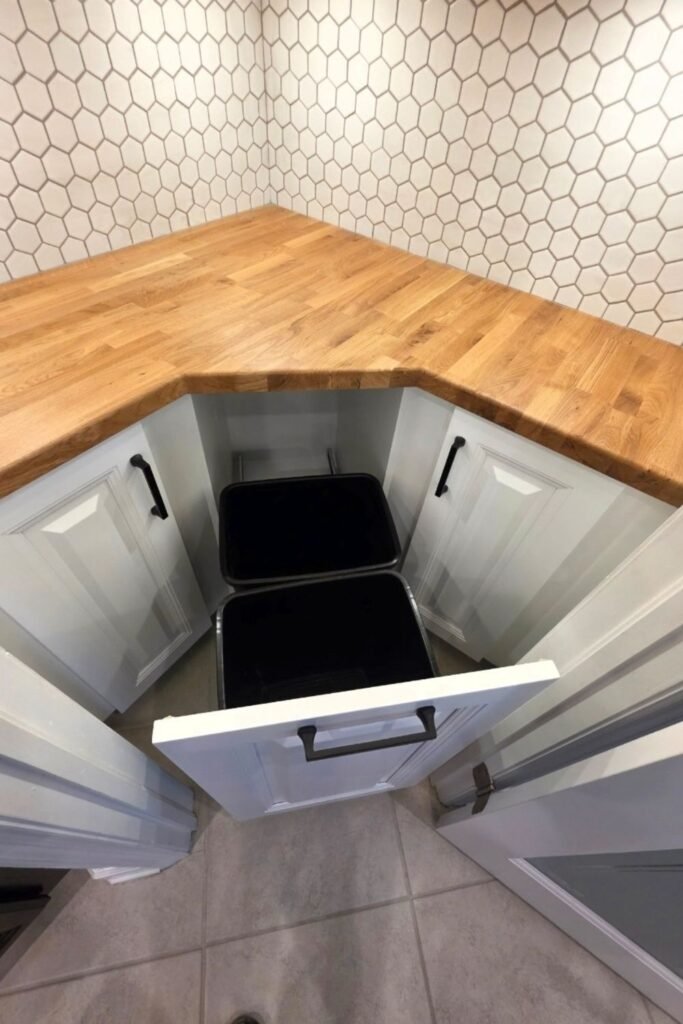
Photo: @mckinnonbuildingservices
Drawer Base
Searching through cabinets for bin bags or tools is a real time-waster. One cabinet can be a complete storage and clean-up system, with bins below and a shallow drawer above.
The bins swing out easily and the essentials stay within easy reach, ready when you need them. No extra cabinets, no wasted steps.
It works best near your main work area, beside the base cabinets. It is usually set up by fitting a pull-out bin frame and placing a basic wooden drawer above it for liners, gloves or small tools.
Stack it all up like this and the space can do far more work without using any more room.

Photo: @homesteadkitchens
FAQs
Where should a trash can go in a kitchen for the best workflow?
Trash is easier to deal with when it sits near the main prep area, because most kitchens naturally create waste around the sink, the cutting area, or the kitchen island.
Putting the bin there cuts down on extra walking. The smoothest set-up is a pull-out cabinet next to the sink or under the prep station.
While you are cooking, you can throw away food scraps, packaging and paper towels right away. Keeping the bin near the work area saves time and stops the counter from getting messy.
What is the best trash can solution for a small kitchen?
For a small kitchen, the best solutions use hidden or vertical space instead of floor area. Cabinet pull-outs, tilt-out bins, or containers fitted on doors keep the rubbish out of sight and the walkways clear.
Slim rectangular bins also work well beside refrigerators or cabinets, because they slot into narrow spaces.
If you do not have much room inside your cabinets, a small rolling bin can move next to the prep area while you cook, then tuck against a wall when you are done.
You may like to read!
