Eggnog Pound Cake
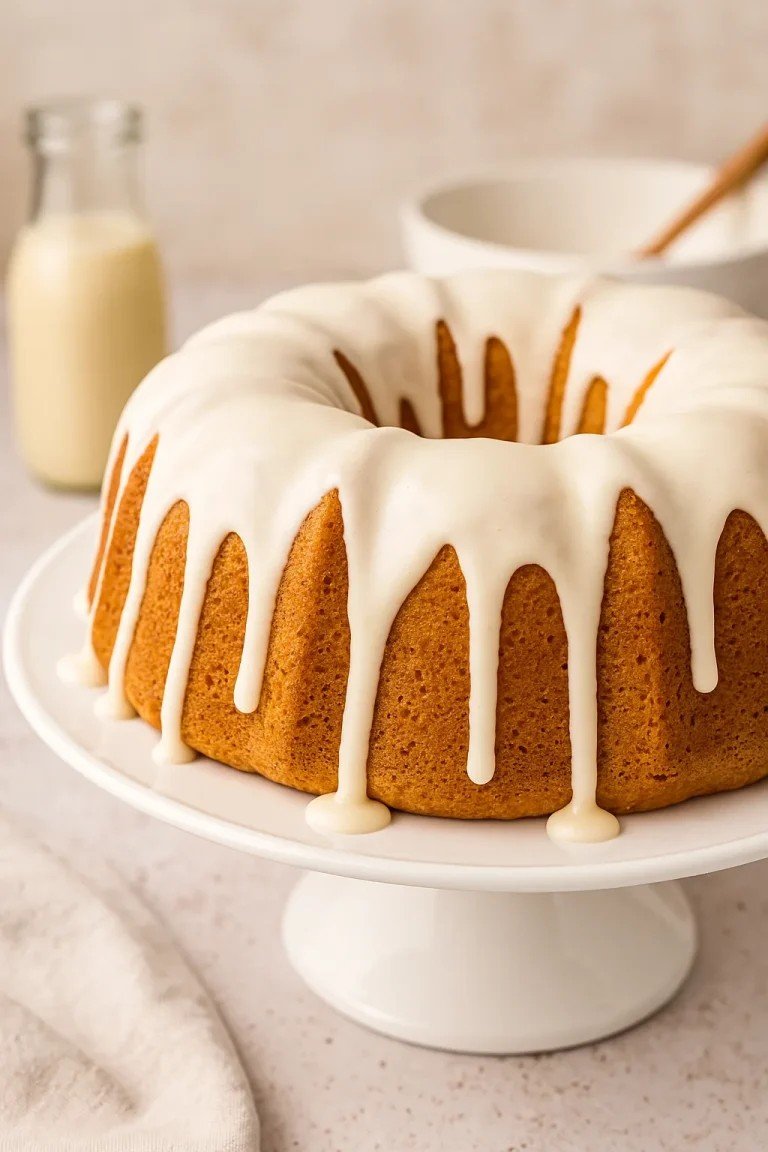
Eggnog pound cake is the cake to bake when you have a carton of eggnog in the fridge and a Christmas gathering on the calendar. It is dense, buttery, and tender, with the warm spice of nutmeg and cinnamon running through every slice, and a sweet eggnog glaze that sets into a thin, crackly coating. It tastes like Christmas in cake form — rich, cosy, and just a little bit indulgent — and it slices beautifully, which makes it perfect for a buffet, a coffee morning, or a quiet afternoon with a cup of tea.
Pound cake is one of the oldest and simplest cakes, traditionally made with a pound each of butter, sugar, eggs, and flour. This version keeps that rich, close crumb, but replaces some of the milk with eggnog, adds nutmeg and a splash of rum extract, and finishes with a glaze made from eggnog and powdered sugar. The result is a cake that is familiar and festive at the same time, and it is much easier than it looks — the hardest part is waiting for it to cool before you glaze it.
This cake also keeps exceptionally well, which matters in December. Bake it on a Monday, glaze it on Tuesday, and serve it on Wednesday, and it will still be moist and flavourful. It travels well, it freezes well, and it makes a lovely homemade gift when it is wrapped in parchment paper and tied with ribbon. If you only bake one cake this Christmas, make it this one.
Servings: 12 slices. Prep time: 20 minutes. Bake time: 60 to 70 minutes. Cooling time: 1 hour. Total time: about 2 hours 30 minutes. Serve at room temperature, sliced, with coffee, tea, or a small glass of eggnog.

Ingredients
For the pound cake:
- 1 cup unsalted butter, softened
- 2 cups granulated sugar
- 4 large eggs, at room temperature
- 3 cups all-purpose flour
- 1/2 teaspoon baking powder
- 1/2 teaspoon fine salt
- 1 teaspoon ground nutmeg, plus extra for dusting
- 1/2 teaspoon ground cinnamon
- 1 cup eggnog, at room temperature
- 1 teaspoon vanilla extract
- 1 teaspoon rum extract, optional
- 1 tablespoon dark rum, optional, for flavour
For the eggnog glaze:
- 1 1/2 cups powdered sugar
- 3 tablespoons eggnog
- 1/2 teaspoon vanilla extract
- 1/4 teaspoon ground nutmeg
- Pinch of fine salt

How to Make It
- Heat the oven to 325°F (165°C). Grease a 10-inch bundt pan very well with butter or cooking spray, making sure to get into every groove, then dust it lightly with flour and tap out the excess. A well-greased pan is the difference between a beautiful bundt and a cake that sticks.
- In a medium bowl, whisk together the flour, baking powder, salt, nutmeg, and cinnamon. Set it aside.
- In a large bowl, beat the softened butter and sugar together for about 3 minutes, until pale, fluffy, and light in colour. This long beating step is important for pound cake — it incorporates air, which helps the dense cake rise and stay tender. Scrape down the sides of the bowl halfway through.
- Add the eggs one at a time, beating well after each addition and scraping down the bowl as needed. The batter should look smooth and creamy, with no streaks of egg visible. Stir in the vanilla extract, rum extract if you are using it, and the dark rum if you like.
- Add the flour mixture in three parts, alternating with the eggnog. Begin and end with the flour, and mix on low speed only until combined. Do not overmix — stop as soon as the flour disappears, or the cake can turn tough. The batter will be thick and smooth.
- Pour the batter into the prepared bundt pan and smooth the top with a spatula. Tap the pan gently on the counter once or twice to pop any large air bubbles and settle the batter into the grooves.
- Bake for 60 to 70 minutes, until a long skewer or toothpick pushed into the centre comes out clean and the top is golden brown. The cake should pull away very slightly from the sides of the pan. If the top starts to brown too quickly, cover it loosely with foil for the last 15 minutes.
- Let the cake cool in the pan for 15 minutes, then turn it out onto a wire rack to cool completely. Do not leave it in the pan for longer than 20 minutes, or it can become damp and stick. Let it cool for at least 1 hour before you glaze it — a warm cake will melt the glaze into a thin, runny coating instead of a thick, white one.
- To make the glaze, whisk the powdered sugar, eggnog, vanilla, nutmeg, and salt together in a medium bowl until smooth. The glaze should be thick enough to coat the back of a spoon, but thin enough to drizzle. Add eggnog a teaspoon at a time if it is too thick, or powdered sugar a tablespoon at a time if it is too thin.
- Drizzle the glaze slowly over the cooled cake, letting it run down the sides in thick ribbons. Dust lightly with extra nutmeg, let the glaze set for about 20 minutes, then slice with a sharp knife and serve at room temperature.
Tips & Storage
Use room-temperature ingredients. Cold butter will not cream properly with the sugar, cold eggs can make the batter curdle, and cold eggnog can make the batter seize. Take the butter, eggs, and eggnog out of the fridge 30 minutes before you start, and the cake will be noticeably lighter and more even.
Grease the bundt pan thoroughly, in every groove and crease. Use a pastry brush to paint softened butter into the pan, then dust with flour and tap out the excess. A missed spot is where the cake will stick, and a stuck bundt is heartbreaking after an hour in the oven. If you use cooking spray, choose one made for baking, with flour already in it.
Do not overbake pound cake. Start checking at 60 minutes, and take the cake out as soon as a skewer comes out clean. A few extra minutes in the oven can dry out a pound cake quickly, and there is no way to add moisture back once it is baked. The cake will continue to cook slightly as it cools in the pan, so err on the side of taking it out a minute early.
Store the glazed cake covered at room temperature for up to 4 days, or in the fridge for up to 1 week. The glaze will soften slightly in the fridge, so bring the cake back to room temperature for 30 minutes before serving. The unglazed cake freezes beautifully for up to 2 months — wrap it tightly in plastic wrap and foil, thaw overnight in the fridge, then glaze on the day you serve it.
Variations
For a cranberry eggnog pound cake, fold 1 cup of fresh or frozen cranberries, tossed in a tablespoon of flour, into the batter just before you pour it into the pan. The cranberries add a tart pop of colour and flavour, and they look beautiful in the sliced cake.
For a chocolate swirl version, remove half a cup of the batter, stir in 2 tablespoons of cocoa powder and a tablespoon of eggnog, then spoon the chocolate batter into the pan in dollops and swirl it gently with a knife before baking. The marbled effect is pretty, and the chocolate flavour pairs well with the nutmeg.
For a mini version, bake the batter in a lined muffin tin for 20 to 25 minutes, then glaze each small cake individually. They make lovely single servings for a party, and they are easier to pack into a gift box than a whole bundt.
Frequently Asked Questions
Can I make this without eggnog? Yes, though the flavour will be less festive. Use whole milk with an extra half teaspoon of nutmeg and a teaspoon of vanilla in place of the eggnog, in both the cake and the glaze. The cake will still be a good pound cake, but it will taste more like a vanilla pound cake than an eggnog one.
Why did my pound cake sink in the middle? The oven was probably too hot, or the cake was underbaked in the centre. Check your oven temperature with a thermometer if you have one, and bake until a long skewer comes out completely clean — a toothpick is too short to reach the centre of a bundt. Let the cake cool in the pan for 15 minutes before turning it out.
Can I use store-bought eggnog? Yes, and it works perfectly. Choose a full-fat eggnog, not a light version, for the richest flavour and the best texture. If you make your own eggnog, use it at room temperature, and make sure it is well mixed before you measure it.
How do I know when the glaze is the right thickness? Lift the whisk out of the glaze — it should fall in a thick ribbon that holds its shape for a second before melting back into the bowl. If it runs off the whisk in a thin stream, add more powdered sugar. If it clumps on the whisk, add eggnog a teaspoon at a time.


