14 Natural Ways To Get Rid Of Carpenter Bees At Home

Dealing with carpenter bees can feel overwhelming, especially when those quiet little drillers start turning your home’s wood into Swiss cheese.
As the old saying goes, “A stitch in time saves nine,” and that could not be more true when it comes to these silent destroyers.
I spotted the damage later than I should have, but you do not have to make the same mistake.
Let me show you exactly how I got the problem under control quickly, naturally, and without paying for an expensive exterminator.
What Are Carpenter Bees?

Before I did anything, I did my homework, and I am glad I did. I discovered that those big “bumblebees” buzzing around my porch were actually carpenter bees.
Unlike termites, they do not eat wood. Instead, they tunnel into it to build their nests, especially in wood that has not been treated or painted.
You will find them drilling neat, round holes in decks, eaves, and railings.
Over time, that tunnelling weakens the structure, and the damage gets worse when the same tunnels are used again and again.
If you want to know how to get rid of carpenter bees, the key is to act early, before the damage turns expensive.
Suggested read: How To Keep Cockroaches Out Of Your Kitchen Drawers (12 Tips)
How I Realized I Had a Carpenter Bee Infestation
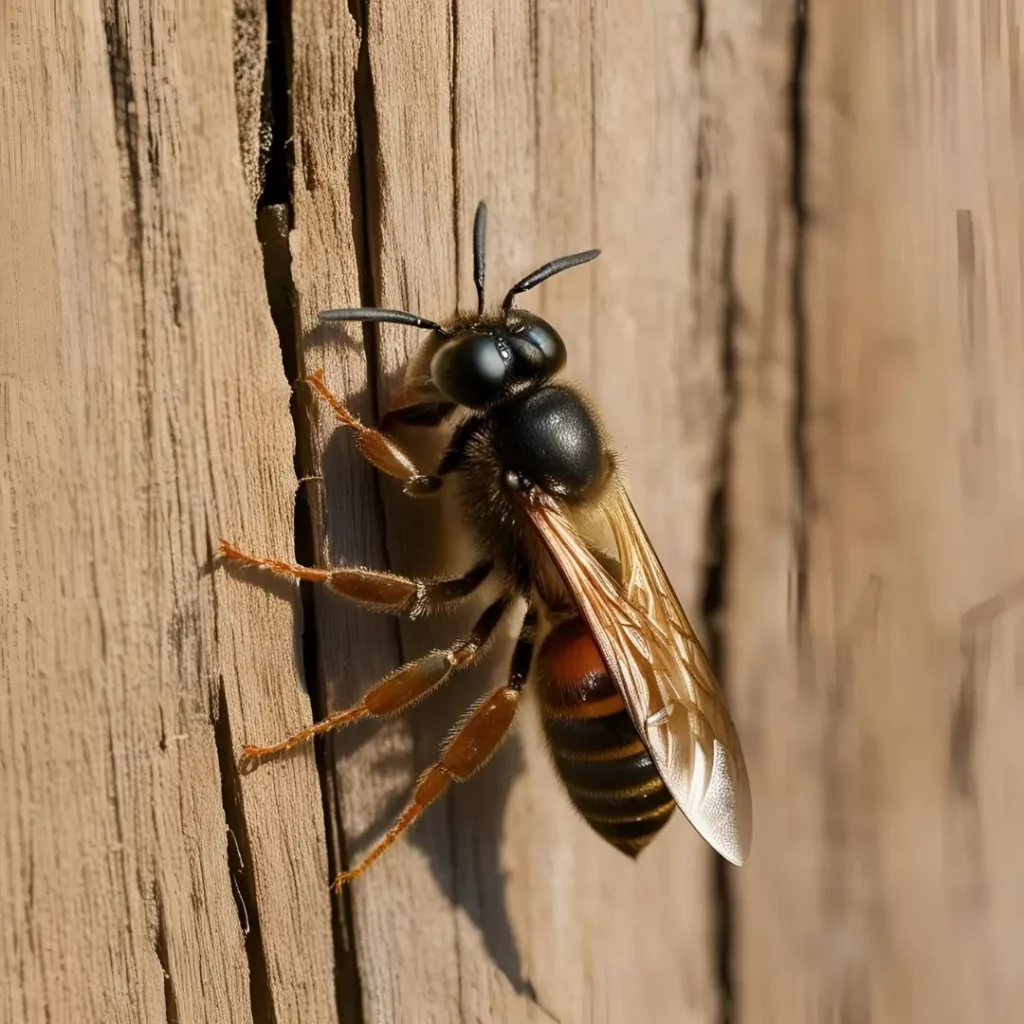
The first clue was a set of tidy, round holes on my back porch.
Then I began noticing fine sawdust scattered on the floor beneath the beams.
Eventually, I even saw a lone bee hovering beside one of the holes.
When I looked closer, I found several holes, and a few had fresh wood shavings around them, which meant the infestation was active.
I knew I had to act fast, before they multiplied or caused damage I could not undo.
Suggested read: Can Bed Bugs Live in Leather Couches? You’ll Be Shocked!
The First Line of Defense: How to Get Rid of Carpenter Bees
I spent a few days studying their habits. I learned that carpenter bees are most active in spring.
That is the best time to act, because you can stop them from laying eggs and starting a new cycle.
They also prefer unpainted, weathered wood, which is exactly why my old cedar deck had become their target.
That little bit of knowledge helped me put together a plan that combined physical removal with natural repellents.
Suggested read: 19 Effective Homemade Roach Killer Tips That Work Instantly!
How to Get Rid of Carpenter Bees: My Step-by-Step Elimination Plan

Step 1: Apply Insecticidal Dust
I bought a bee-safe insecticidal dust made for carpenter bees. In the evening, when the bees were inactive, I used a duster to puff the dust deep into every hole I could see. Timing matters here: doing it during the day can stir the bees up and make the treatment less effective. The dust sticks to the bees as they come and go, and it wipes them out without you having to kill each one directly.
Step 2: Plug the Holes to Get Rid of Carpenter Bees
After dusting, I waited about 72 hours to make sure every bee inside had been exposed. Then I sealed each hole with wooden dowels and wood filler. You can push steel wool in first for extra protection. Once sealed, I sanded the patches smooth and painted over them. Sealing matters not only because it blocks re-entry, but because bees often return to the same tunnels, and a sealed hole discourages them from trying again.
Suggested read: How To Get Rid Of Earwigs: 27 Quick Fixes You Can’t Miss!
Step 3: Install Carpenter Bee Traps
These traps are surprisingly simple. They are made of wood with a hole much like the ones bees drill, leading into a plastic container where the bees get caught. I set a few near the old nesting spots, and within a week I had trapped several carpenter bees. I kept the traps up all season and put them back out every spring.
How to Get Rid of Carpenter Bees Naturally: 10 Ways I Tried to Deter!

Because I wanted to avoid chemicals as much as possible, I also tried natural remedies.
Here are the 10 methods I found most effective:
1. Citrus Oil Spray
Carpenter bees hate the smell of citrus. I boiled citrus peels (lemons, oranges, and limes) in water for about 10–15 minutes, let the mixture cool, then strained it and poured it into a spray bottle. I sprayed it on wood surfaces and inside the nest holes.
2. Almond Oil to Get Rid of Carpenter Bees
The scent of almond oil drives carpenter bees away. I soaked a few cotton balls in almond oil and tucked them into the holes. The strong smell sent the bees fleeing from the area.
Suggested read: 45 Crazy Ways How To Get Rid Of Wood Boring Bees Overnight
3. Vinegar Spray for Carpet Bees

I mixed equal parts white vinegar and water in a spray bottle and used it to spray directly into nesting holes and over wooden surfaces. The sharp vinegar smell irritated the bees and discouraged them from sticking around.
4. Peppermint Essential Oil to Get Rid of Carpenter Bees
Peppermint oil is another natural deterrent. I mixed 10–15 drops of peppermint oil with water and sprayed it generously over my wooden structures. The bees could not stand the smell, and before long they moved on.
5. Tea Tree Oil Spray
Tea tree oil is a powerful remedy. I mixed it with water and sprayed the solution around my deck and anywhere I could see holes. The scent drove the bees off without causing them harm.
6. Garlic and Vinegar Mix
I crushed several cloves of garlic and soaked them in white vinegar for about two days. The pungent smell created an environment carpenter bees disliked. I used this homemade spray on my porch and on the beams they had been targeting.
7. Cinnamon Powder to Get Rid of Carpenter Bees

I sprinkled cinnamon powder around the spots where I saw carpenter bees going in and out. Cinnamon works as a preventive measure too, and the bees hate its strong aroma, so they stay away.
8. Eucalyptus Oil to Get Rid of Carpenter Bees
Eucalyptus oil is another bee-repelling scent that worked for me. I diluted it with water and sprayed it near the nesting sites. It kept the bees at bay and stopped them from nesting there again.
9. Boric Acid Powder
Boric acid powder is more aggressive than the other methods, but it works well for severe infestations. I carefully put small amounts into the holes after the bees had gone quiet for the night. The powder coats the bees and eventually kills them.
10. Noise and Vibration
This was a more unusual method, but it worked! I placed a small vibration device near the nesting site to bother the bees. The vibrations irritated them enough that they went looking for somewhere else to nest.
Suggested read: How To Get Rid Of Blister Beetles: 24 Insane Tricks To Work!
11. Preventing Future Infestations

Once I had dealt with the infestation, I turned my attention to prevention. Carpenter bees are persistent, and unless you make your home less inviting, they will come back.
12. Paint and Seal All Exposed Wood
I painted every inch of the deck, railings, and even the undersides of boards with high-quality, oil-based paint. Painted surfaces are far less attractive to carpenter bees than stained or raw wood.
13. Use Harder or Synthetic Materials
For the areas that needed replacing, I used pressure-treated lumber or composite decking, which carpenter bees find much less appealing.
14. Maintain Regular Inspections to Get Rid of Carpenter Bees
Now, every spring, I inspect my whole property. If I spot a new hole, I repeat the dusting and sealing process before it can turn into a bigger problem.
Suggested read: Does Bleach Kill Spiders? Learn How Effective And Safe It Is
When to Call a Professional

In my case, I managed it myself with time and patience. But if:
- You’re allergic to bee stings
- The infestation is widespread
- There are bees inside the walls or in high areas
It’s best to call pest control professionals.
They have stronger treatments and equipment to handle infestations safely.
Suggested read: 15 Indoor Plants That Keep Roaches Away: The Ultimate Fix!
Final Thoughts: How to Get Rid of Carpenter Bees

Getting rid of carpenter bees is not about destroying nature; it is about keeping a balance. These bees are excellent pollinators and they have their place in the ecosystem. But that place is not inside your deck posts or porch rafters.
The combination of learning their habits, using natural deterrents, removing them physically, and preventing them long-term worked for me. If you are facing the same problem, I hope my experience gives you a clear, practical path to protect your home without giving up your values.
Suggested Reads:
Are Silverfish More Common In Summer? Here’s What I Found!
Can Clorox Kill Spiders? Get Rid Of Spiders In 30 Seconds!
Baby Roaches In Bathroom: 10 Easy Steps To Get Rid Of Them!
Do Spiders Eat Ants? Why It’s More Common Than You Think!