Gingerbread Cookies

Gingerbread cookies are the smell of Christmas in a cookie. The moment they go into the oven, the whole house fills with ginger, cinnamon, molasses, and cloves, and it feels like December even if it is still November. These gingerbread cookies are soft in the middle, crisp at the edges, and sturdy enough to hold their shape when you cut them into gingerbread people, stars, trees, and snowflakes. They taste warmly spiced without being too strong, and they are sweet enough for kids and interesting enough for adults. Decorate them with simple royal icing, or leave them plain — they are good either way.
I have baked gingerbread cookies every December for as long as I can remember, and the recipe has barely changed. The dough is a classic molasses dough: butter, brown sugar, molasses, egg, flour, and a generous hand with the spices. It needs a chill before rolling, and it needs to be rolled to the right thickness — too thin and the cookies burn, too thick and they stay soft and pale. Get those two things right, and the cookies come out perfect every time. They are the cookies I make for cookie swaps, for decorating parties, and for hanging on the tree with a ribbon through a hole in the top.
What I love most about gingerbread is that it is a cookie you make together. Rolling the dough, cutting the shapes, and decorating them is a whole afternoon activity, and the cookies themselves are just the excuse. If you have kids, let them cut the shapes and decorate with icing and sprinkles — the cookies do not need to be perfect to be wonderful. And if you are baking on your own, put on some music, make a pot of tea, and enjoy the slow, happy work of it.

Recipe at a Glance
- Servings: about 36 cookies (depending on cutter size)
- Prep time: 25 minutes, plus 1 hour chilling
- Bake time: 9 to 11 minutes per batch
- Decorating time: 30 to 60 minutes (optional)
- Total time: about 2 hours, plus decorating
- Serve: at room temperature, decorated or plain
Why This Recipe Works
The flavor of gingerbread comes from molasses and spice, and the ratio between them is what makes a good cookie. Molasses gives the cookies their dark color, their chew, and a deep, almost caramel flavor that sugar alone cannot provide. The spices — ginger, cinnamon, nutmeg, and cloves — give them warmth and complexity. Ginger is the star, and this recipe uses a full tablespoon of it, which is enough to taste clearly without overwhelming the other flavors. A little black pepper is an old-fashioned addition that sharpens the spice; it sounds odd, but it makes the ginger taste more gingery.
The texture comes from the chill and the roll. Chilling the dough for an hour firms the butter, so the cookies hold their shape in the oven instead of spreading into blobs. Rolling the dough to a quarter inch thick gives you cookies that are crisp at the edges and soft in the middle. Thinner, and they bake into hard crisps. Thicker, and they stay pale and doughy. The baking soda in the dough reacts with the acidic molasses to give the cookies a little lift, and it also helps them brown evenly.
Ingredients
- 3/4 cup (1 1/2 sticks) unsalted butter, softened
- 3/4 cup brown sugar, packed
- 2/3 cup unsulphured molasses
- 1 large egg, at room temperature
- 1 teaspoon vanilla extract
- 3 1/4 cups all-purpose flour, spooned and leveled, plus more for rolling
- 1 tablespoon ground ginger
- 1 1/2 teaspoons ground cinnamon
- 1/2 teaspoon ground nutmeg
- 1/4 teaspoon ground cloves
- 1/4 teaspoon ground black pepper (optional)
- 1 teaspoon baking soda
- 1/2 teaspoon salt
- Royal icing, sprinkles, and small candies, for decorating (optional)
A few notes on the ingredients: use unsulphured molasses, not blackstrap molasses, which is bitter and can overpower the cookies. If you only have blackstrap, use half molasses and half honey. Measure the flour by spooning it into the cup and leveling it off — too much flour makes dry, hard cookies. The spices should be fresh; ground spices lose their flavor after about a year, so if your ginger has been sitting in the cupboard since last Christmas, buy a new jar. And use real butter, not margarine — the flavor and the texture both depend on it.
How to Make It
- In a large bowl, beat the softened butter and brown sugar together on medium speed for 2 to 3 minutes, until light and fluffy. Add the molasses, egg, and vanilla extract, and beat until smooth. The mixture will look dark and glossy.
- In a separate bowl, whisk together the flour, ginger, cinnamon, nutmeg, cloves, black pepper if you are using it, baking soda, and salt. Add the flour mixture to the butter mixture in two parts, mixing on low speed just until combined. The dough will be soft and sticky at this point, and that is normal.
- Divide the dough in half and shape each half into a flat disc. Wrap each disc tightly in plastic wrap and refrigerate for at least 1 hour, or up to 3 days. The dough firms up as it chills, and the flavors deepen.
- Heat your oven to 350 degrees F. Line two baking sheets with parchment paper. Lightly flour your work surface and rolling pin.
- Working with one disc at a time, roll the dough out to a quarter inch thick. If the dough is too firm to roll, let it sit at room temperature for 5 minutes. Cut out shapes with cookie cutters, and place them 1 inch apart on the prepared baking sheets. Gather the scraps, re-roll them once, and cut more cookies. Do not re-roll the scraps more than once, or the cookies will be tough.
- Bake one sheet at a time for 9 to 11 minutes, until the edges are firm and the centers look set. Smaller cookies will be done at 9 minutes; larger ones may need 11. The cookies will look slightly soft in the center when they come out, and they firm up as they cool.
- Let the cookies cool on the baking sheet for 5 minutes, then move them to a wire rack to cool completely, at least 30 minutes. Do not decorate until the cookies are fully cool, or the icing will melt.
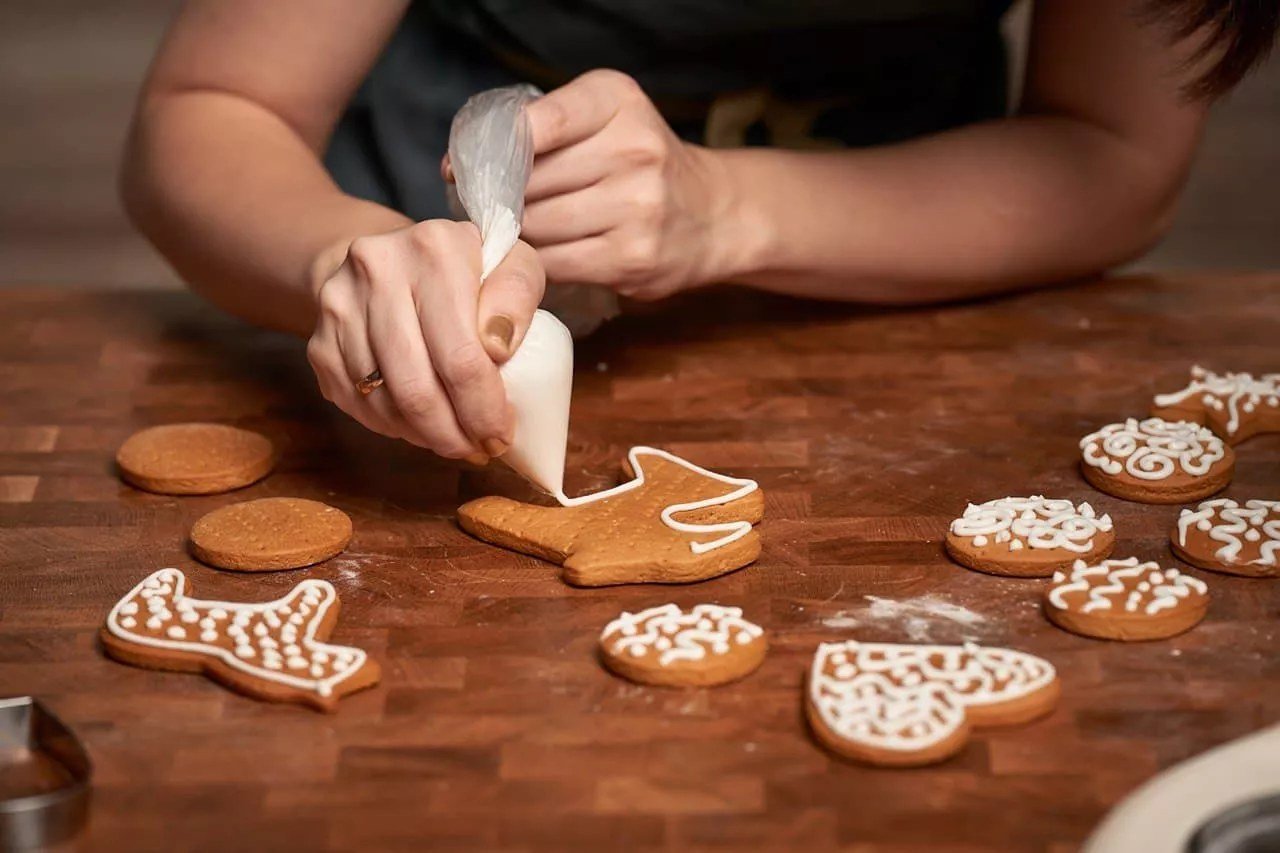
- To decorate, pipe royal icing outlines and details onto the cooled cookies, and add sprinkles or small candies while the icing is still wet. Let the icing dry for at least 1 hour, or overnight, before stacking or packing the cookies.
Tips for Success
Chill the dough for the full hour — warm gingerbread dough is sticky, hard to roll, and spreads in the oven. If your kitchen is warm, chill the cut-out shapes on the baking sheet for 10 minutes before baking; it helps them hold their edges. Roll the dough to an even quarter inch thick, and check the thickness with a ruler if you are not sure. Uneven dough means uneven baking. Do not overbake the cookies: they should look slightly soft in the center when they come out, and they firm up as they cool. A cookie that looks done in the oven will be hard by the time it cools. And if you are making gingerbread people, cut the arms and legs a little thicker than the body — thin limbs burn first.
Variations
You can change these cookies in several ways. For a chocolate gingerbread, replace a third of a cup of the flour with cocoa powder and add half a cup of chocolate chips to the dough. For a citrus gingerbread, add a tablespoon of orange zest to the butter mixture — orange and ginger are a classic combination. For a spicier cookie, add an extra teaspoon of ginger and a pinch of cayenne pepper. You can also make gingerbread bars: press the dough into a greased 9 by 13 inch pan, bake for 20 to 22 minutes, and cut into squares while warm. For a gluten-free version, use a one-to-one gluten-free flour blend — the cookies will be slightly more delicate, so chill the dough for a full 2 hours and handle the cut shapes gently. And if you want to hang the cookies on the tree, poke a hole near the top of each shape with a straw before baking, and thread a ribbon through once they are cool and decorated.
Tips & Storage
Store undecorated cookies in an airtight container at room temperature for up to 1 week. Decorated cookies keep for up to 5 days, as long as the icing is fully dry before you stack them — put parchment between layers. The dough keeps in the fridge for up to 3 days, or in the freezer for up to 2 months; thaw it in the fridge overnight before rolling. Baked cookies freeze well too: place them in a freezer container with parchment between layers and freeze for up to 2 months, then thaw at room temperature. Do not freeze decorated cookies, or the icing can crack and the colors can bleed. Serve the cookies with hot cocoa, mulled cider, or a glass of cold milk. They make a wonderful gift stacked in a tin or a cellophane bag with a ribbon, and they are sturdy enough to mail in cool weather if you pack them tightly with tissue paper.
Frequently Asked Questions
Why did my cookies spread and lose their shape? The dough was too warm, or there was too little flour. Chill the dough for a full hour, chill the cut shapes for 10 minutes before baking, and measure the flour by spooning it into the cup.
Can I make the dough ahead? Yes. The dough keeps in the fridge for up to 3 days, and the flavor actually improves as it sits. You can also freeze the dough discs for up to 2 months.
My cookies are hard. What went wrong? They were probably overbaked, or the dough was re-rolled too many times. Pull them out when the centers still look slightly soft, and re-roll the scraps only once.
Do I need royal icing, or can I use something simpler? You can use a simple powdered sugar glaze — whisk powdered sugar with a little milk and vanilla until it is thick enough to pipe — or just dust the cookies with powdered sugar. Royal icing dries hard and is best if you plan to stack or gift the cookies.


