How to Remove Water Stains From Marble: 12 Brilliant Tricks!

Marble is loved for its timeless look, but water stains can quickly dull its shine. The good news is that most water stains can be removed with simple home methods — once you know what kind of stain you are dealing with.
This guide covers the five types of water stains on marble, a step-by-step cleaning process, 12 DIY removal tricks, and how to prevent stains in future.
What Are Hard Water Stains on Marble?
Hard water stains form when minerals such as magnesium and calcium are left behind after water evaporates. They appear as cloudy white spots or streaks on the marble surface.
Over time, those mineral deposits can turn acidic and wear away the marble’s natural finish, so it is worth dealing with them early rather than leaving them to build up.
Types of Water Stains on Marble
There are five main types. Identifying yours first will help you choose the right treatment.

1. Hard Water Stains
Caused by magnesium and calcium in hard water. They look like cloudy white spots with a streaky pattern, left behind when water evaporates quickly and minerals settle into the stone.
2. Etch Stains on Marble
An etch is surface damage, not just a stain. It looks like a dull spot or ring, most visible in certain light. It is caused by acidic substances — including lemon juice or vinegar — reacting with the calcium carbonate in marble.
3. Rust Stains on Marble
Caused by iron in the water, or by iron objects left in contact with wet marble. They appear as reddish-brown marks where moisture has caused the iron to oxidise.
4. Soap Scum Stains on Marble
A thin white film formed when soap residue mixes with hard water. It builds up when soap is left sitting on the marble for a long time.
5. Mildew and Mould Stains
These appear in damp, poorly ventilated places with little sunlight. They can be brown, green, or black spots, caused by excess moisture feeding mould growth on organic material.
Will a Water Stain on Marble Go Away?
Yes, in most cases. Whether a home remedy works depends on the type of stain and how deeply the minerals have settled. Some stains lift easily, others need a stronger method or a professional. Try the steps below before calling one.
Step by Step: How to Clean Water Stains on Marble

Step 1: Assess the Situation
Look closely at the stain and work out which type it is. Touch it gently to feel how deep it seems, and use the types above to guide you.
Step 2: Start With a Gentle Clean
Add a few drops of dish soap or a mild floor cleaner and clean the surface. If the stain remains, move on to the DIY methods below.
Step 3: Gently Clean and Polish
Use a microfibre cloth or cotton ball and rub the stain gently to lighten it. Never scrub hard — that can scratch the marble. Rinse lightly with water afterwards.
Step 4: Seal the Surface
Once the stain has faded, apply a marble sealant or filler to protect the surface and restore its shine. Sealing also helps prevent future stains.
DIY Methods to Remove Water Stains From Marble: 12 Efficient Methods

1. Hydrogen Peroxide
- How to use: Dab hydrogen peroxide on the stain with a soft cloth. Leave it for 4 to 6 hours, then rinse and dry.
- Why it works: It acts as a gentle bleaching agent, breaking down organic stains without damaging marble.
2. Diluted Ammonia Solution
- How to use: Mix diluted ammonia in filtered water, apply it to the stained area, then rinse.
- Why it works: Ammonia dissolves mineral deposits and fades stains.
- Caution: Ammonia can etch marble if used too strongly, so dilute it well and do not leave it on for long.
3. Baking Soda Paste
- How to use: Mix baking soda with warm water to make a paste. Apply it to the stain and leave it for 24 hours.
- Why it works: Baking soda is mildly abrasive, which helps lift stains from the surface.
4. Cornstarch
- How to use: Dampen a pinch of cornstarch with filtered water, dab it on with cotton, leave for 30 minutes, then wipe off with a soft cloth.
- Why it works: Cornstarch absorbs oils, which loosens the stain’s grip on the marble.
5. White Vinegar
- How to use: Dilute white vinegar in a 1:3 ratio with water, dampen a cloth in the solution, and apply it to the stain.
- Why it works: Vinegar’s mild acidity dissolves settled minerals and fades the stain. Use it sparingly on marble, as strong acid can etch the surface.
6. Acetone
- How to use: Dab a cotton ball in acetone and apply it to the stain with a back-and-forth motion.
- Why it works: Acetone dissolves oil-based stains effectively without damaging marble.
7. Talcum Powder and Hydrogen Peroxide
- How to use: Mix talcum powder with hydrogen peroxide to make a thick paste, apply it to the stain, and leave it for 24 hours.
- Why it works: The paste absorbs moisture and helps break down tough stains.
8. Clay-Based Cleaner
- How to use: Apply a clay-based stone cleaner and let it sit for about 3 hours.
- Why it works: Clay cleaners absorb stains and contaminants without damaging the stone, and often leave a pleasant smell.
9. Milk and Flour Paste

- How to use: Mix raw milk with flour, apply it to the stain, and cover with plastic wrap for 24 hours.
- Why it works: The lactic acid in milk and the absorbent flour help lift the stain.
10. Wheat Flour Poultice
- How to use: Mix wheat flour with distilled water, apply the paste, and leave it for 24 hours.
- Why it works: Wheat flour absorbs moisture and stains from the marble surface.
11. Coconut Oil
- How to use: Put edible coconut oil on a soft cloth and rub it gently in circular motions over the stain.
- Why it works: Coconut oil lifts stains and polishes marble without abrasive action.
12. Glycerin and Water
- How to use: Mix glycerin and water in a 1:1 ratio, apply it to the stain, and rub gently every couple of hours.
- Why it works: Glycerin dissolves stains while staying gentle on marble, reducing the risk of damage.
Prevent Water Stains on Marble: 5 Very Effective Ways
Prevention is better than cure. Here are five habits that protect marble.
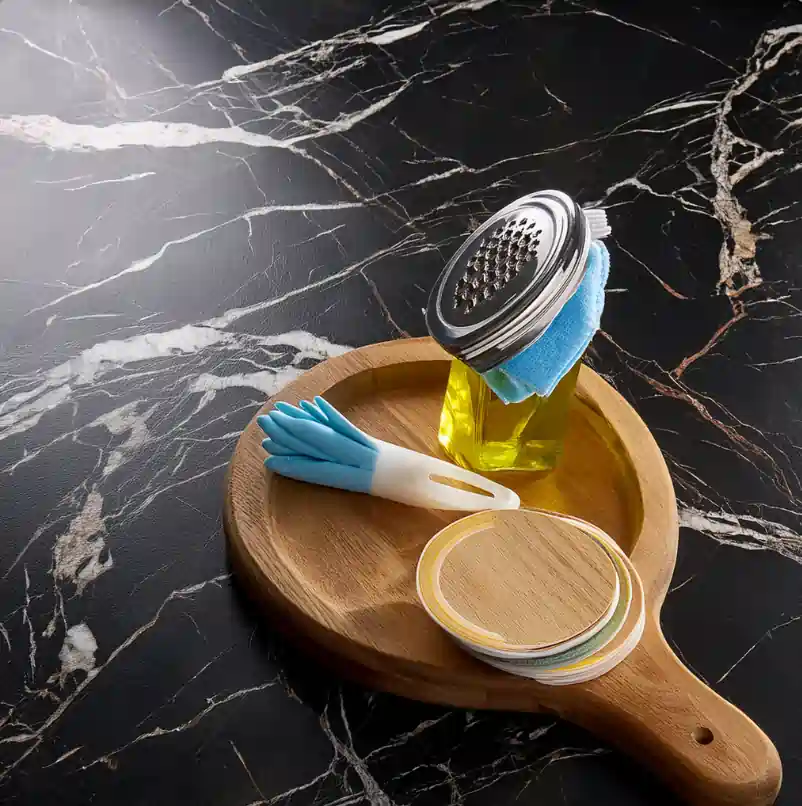
1. Regular Sealing
Use a marble-specific sealer and reapply it every 6 months. Sealing creates a protective barrier that repels water and stains.
2. Immediate Spill Cleanup
Wipe up standing water as soon as you see it with a mop or soft cloth. Quick action stops liquid seeping into the marble and causing stains or etching.
3. Use Coasters and Trivets
Use coasters for drinks and trivets for hot dishes on marble countertops. They protect the surface from stains, heat damage, and etching.
4. Regular Cleaning With pH-Neutral Products
Clean marble regularly with pH-neutral cleansers or mild detergents. They clean effectively without etching or damaging the finish.
5. Place Mats and Covers
Put mats and protective covers where spills are likely. They add a layer of protection and reduce direct contact with the marble.
What Cleaners Should Not Be Used on Marble?

Some cleaners do more harm than good on marble:
1. Acidic Cleaners
Strong vinegar, lemon juice, and other acidic cleaners can etch marble. The acid reacts with calcium carbonate, causing dullness and discoloration.
2. Abrasive Cleaners
Scouring powders, scrubbers, and abrasive pads can scratch the surface. Use a microfibre cloth or cotton mop instead.
3. Hard Bleach
Bleach is too harsh for marble and can cause discoloration or weaken the stone. Avoid it entirely.
4. Lab-Grade Ammonia
Undiluted ammonia is a strong stain fighter, but it should only be used, if at all, on a sealed surface and in very diluted form. Overuse can damage the marble’s appearance.
5. Heavy Oil-Based Cleaners
Many oil-based cleaners leave a shiny residue that is harder to remove than the original stain.
6. Glass Cleaners
Glass cleaners often contain alcohol and strong ammonia, which can damage marble. Do not use them as a marble cleaner.
7. Unnamed or Harsh Cleaners
Avoid ordinary cleaners with harsh chemicals that can be abrasive and damage marble over time.
How to Remove Water Stains From a Marble Coffee Table?

Marble coffee tables are especially prone to spills. First, work out what the stain is. For a water stain, rub a potato slice over it thoroughly, then rinse with a soft cloth. If the stain persists, apply a baking soda paste and rinse with distilled water.
How to Remove Water Stains From a Marble Shower?
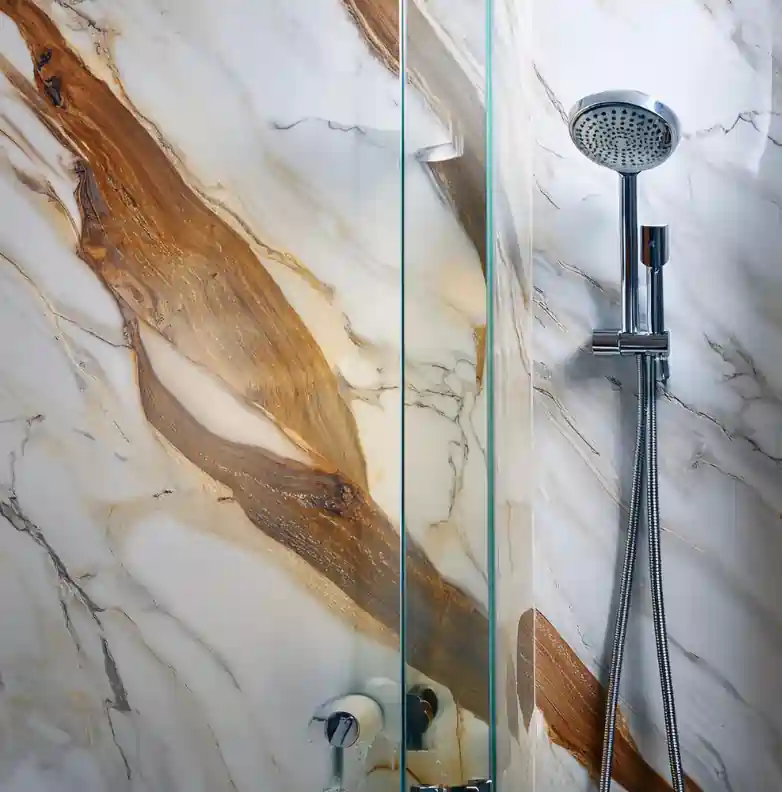
Use a pH-neutral stone cleaner or mild soap mixed with lukewarm water. Spray it directly on the stain and rub with a soft cloth. Let it dry and repeat 2 to 3 times until the stain fades.
When to Call a Professional to Remove Water Stains From Marble
If DIY methods fail, consult a professional, especially for expensive stone such as onyx — do not keep trying strong treatments on it. Professional maintenance every 6 months also helps keep marble looking its best.
FAQs on How to Remove Water Stains From Marble

1. Why is drying your marble surface important?
Yes, quick drying helps prevent deep water stains and etching. Wipe surfaces dry after use.
2. What is the difference between a stain and an etch on marble?
A stain is discoloration from an external substance. An etch is direct surface damage from acidic contact.
3. How do I get water rings out of marble?
Gently buff the area with a soft cloth and marble polishing powder, then rinse and dry.
4. What is the easiest way to clean marble?
Use a pH-neutral cleaner or mild dish soap mixed with water and a soft cloth.
5. Can I prevent water stains with daily maintenance?
Yes. Wipe up spills immediately and dry the surface regularly to prevent water stains.