22 Under Sink Organization Kitchen Ideas for 2026
Go ahead and open the cupboard below your sink right now. Tell the truth: are bottles tipping over, plastic bags stuffed at the back, or is there a water stain you never really looked at?
You shuffle things around, shut the door, and hope it will somehow look tidier the next time you attempt to “organize” it.
That is not your fault. The space itself is awkward. Pipes run straight through the middle, and there is barely any shelf room to work with.
Random bins never seem to keep the clutter away for long either. But when you arrange the space around the pipes instead of fighting them, it actually stays neat.
In this article, I will walk you through 26 creative Under Sink organization ideas you can use.
Let’s jump in!
What Are the Best Storage Solutions for Under Sink Organization?
The best storage solutions are the ones that stay out of the pipes’ way. Dropping odd baskets into the cabinet might make it look nice for a week.
Then it slides right back into chaos. What you really need are solutions that use the height, split the space into zones, and let you pull things out instead of fumbling around in the dark.
That usually means stackable shelves that fit around the plumbing, drawers that slide out so nothing gets forgotten at the back, and plain bins that keep similar items together.
Add a tension rod for spray bottles and a rack on the door for extra storage, and that strange little cabinet will finally start working for you instead of against you.
Save this article for later! 👇👇

Sliding Baskets
Stop fishing through a dark cupboard for one tiny thing. A pull-out basket setup like this one changes how the entire space works.
Rather than stacking everything on the cabinet floor, fit slim metal drawers on either side of the pipe. The plumbing stays clear, and you get far more storage out of the same space.
Every basket becomes its own zone. One drawer can hold cleaning or skincare bottles, another can take soaps, and a deeper bin at the bottom can hold bulk items such as wipes or refills.
Labels make it even simpler — no guessing and no digging. Setting it up again is easy too: just measure the gap on each side of the pipe and slide in two narrow drawer towers.
Metal mesh works well here because air moves through it, which stops dampness from building up under the sink.

Image credit: @bluepencilhome
Clear Drawers
Hunting for a sponge or a dishwasher tablet should not mean emptying the whole cabinet.
Clear drawer organizers put an end to that, because you can see exactly where everything belongs.
Instead of piling all your cleaning supplies into one heap, split them into smaller groups and give each group its own acrylic drawer.
Cloths stay folded in one spot, sponges and scrubbers get their own space, and dishwasher tablets are right there when you need them.
Tall bottles do better in a deeper drawer off to the side, instead of falling over at the back.
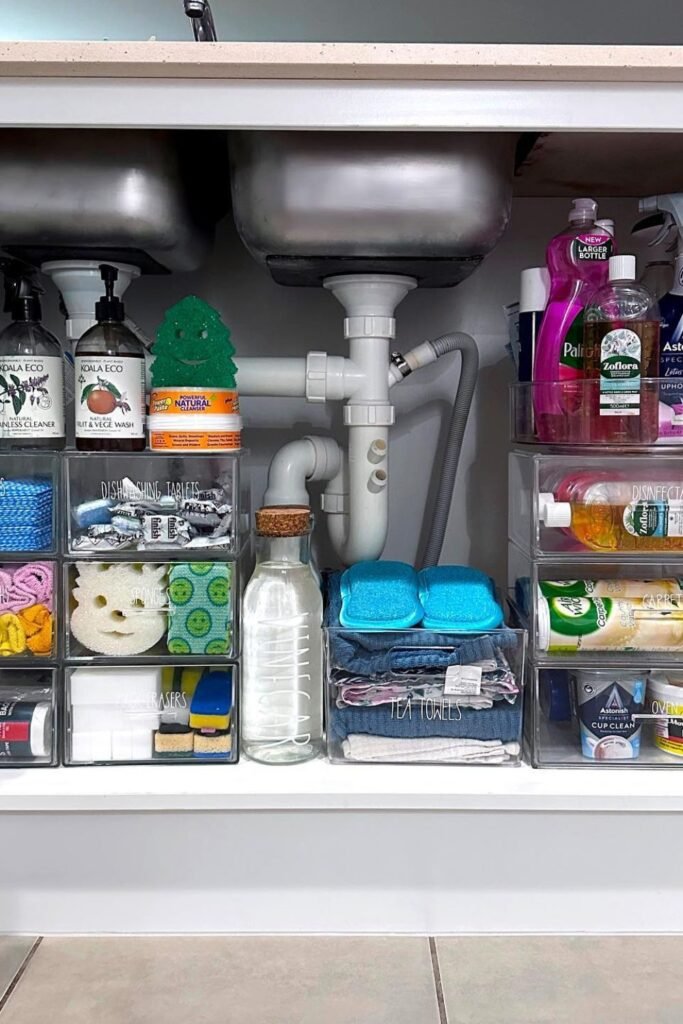
Image credit: @hlb_home
Basket Towers
Wasted space at the sides of the sink cabinet usually happens because everything sits flat on the floor. Tall basket towers change that completely.
Instead of spreading items across the base, stack pull-out mesh baskets on both sides of the pipes, so every inch of height starts working for you.
Each level naturally becomes its own group. Everyday things like cleaning supplies or skincare products go in the middle baskets, where they are easy to reach.
Backups and oversized items go in the lower baskets, while the top baskets are perfect for small things that tend to vanish toward the back.
Slim metal towers fit neatly beside the pipe because they slide straight into the empty gaps at the sides. Measure the space next to the plumbing first.

Image credit: @thoughtfullyorganized
Labeled Bins
Nothing keeps an under-sink cabinet under control like bins with clear labels. Rather than letting supplies spread across the shelf, sort everything into simple categories.
Then give each group its own container. One bin holds paper towels, another holds tea towels, there is a spot for cleaning sprays, and a place where small tools or sponges stay together.
Wide open bins with handles are ideal, since you can pull the whole bin out instead of reaching into the back of the cabinet.
Simple labels or wooden tags make a big difference too. When every bin has a clear purpose, everyone in the house knows where things go.
This setup works best in cabinets that already have a shelf or plenty of horizontal space. Keep similar products in sturdy plastic bins that are easy to wipe clean.

Image credit: @blissfullittlehome
Category Zones
Clutter usually starts when every cleaning item gets thrown into the same space. Setting up clear zones fixes that straight away.
Instead of one big jumble, keep gloves, dishwasher tablets, cloths, sponges, trash bags, and cleaning bottles in separate bins.
This approach works much better with clear acrylic containers, because you do not have to open every bin to see what is inside.
Refilling is easy when each group of products has its own labeled spot. Nothing gets lost at the back.
This setup works best with shelves under the sink. Keep the things you use most, such as sponges, cloths, and dishwasher tablets, on the middle level where they are easy to grab.

Image credit: @fromhousetohome__
Pullout Shelves
Reaching the back of a deep cabinet usually turns into a guessing game. Items slide behind each other, and whatever you need ends up hiding in the darkest corner.
Pull-out shelves fix that right away, because the whole layer of storage comes forward. Under the sink, a two-tier sliding organizer works really well.
The lower basket takes larger bottles or containers, while the upper shelf holds smaller tools like brushes, sponges, or refill jars that you can easily reach.
You do not have to bend down and dig through the mess; just pull the shelf forward and everything comes to you.
This design suits cabinets that are deep but not too wide around the plumbing. Choose a compact metal pull-out rack that slides freely without touching the pipes.

Image credit: @livesimply.us
Shelf Layers
Empty vertical space under a sink often goes unused, even though it can double the storage instantly.
Adding a basic shelf inside the cabinet makes a big difference, since it turns the cabinet into two working levels instead of one packed floor.
Once the space is divided, containers start to make sense. The top shelf holds smaller things like skincare products, masks, and grooming tools that are easy to reach.
Taller bottles and bulk items stay below and do not get in the way of anything else. Bins with handles keep each group together.
That way bottles do not slide around every time the door opens. Labels also help keep the system running smoothly, so nothing gradually slips back into random piles.

Image credit: @ikea_australia
Layered Zones
Flat cabinet floors usually turn into a pile of bottles and random supplies. Adding a second layer fixes that instantly by turning one storage level into two organized zones.
Once the area is separated, each shelf can hold a particular kind of item instead of all of them fighting for the same space.
Smaller containers and drawer organizers carrying things like tablets, scrubbers, or refill packs work well on the upper shelves.
Lower sections are better for taller bottles, sprays, and bulk cleaning supplies that need greater height.
It is much easier with bins that have handles, because you can lift the whole thing out instead of reaching around pipes.
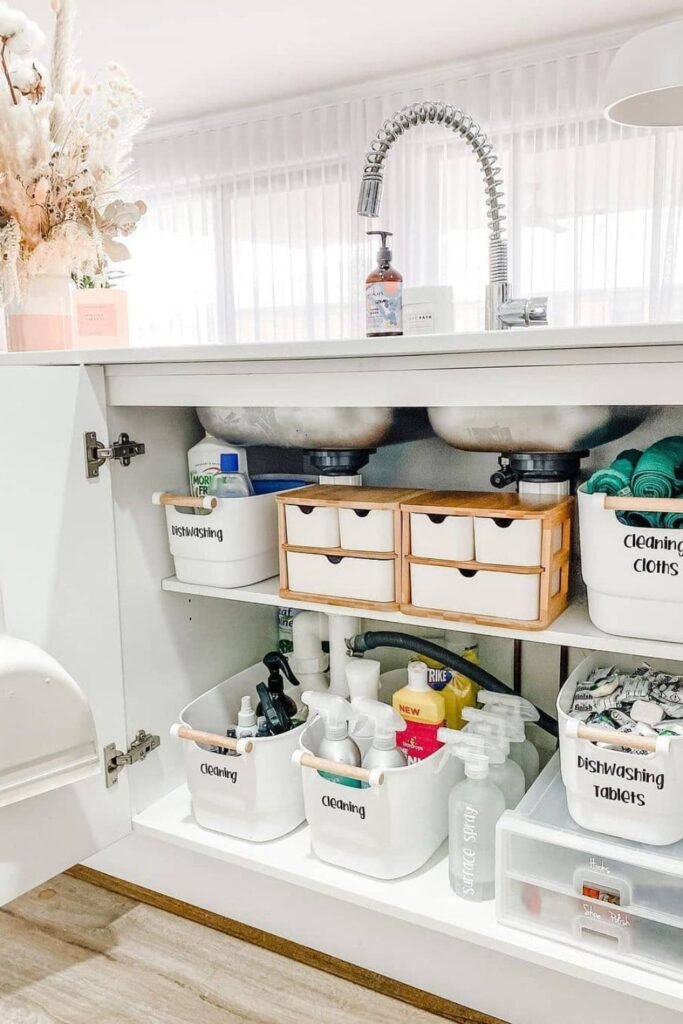
Image credit: @homganize
Tier Racks
Tall bottles and bulky cleaning products can quickly take over the entire cabinet floor. A two-tier rack solves that problem by stacking storage vertically.
Once the rack is in place, the lower tray holds bigger things like detergent or refill bottles, and the upper tray holds smaller things like towels or other supplies that are simple to reach.
Narrow racks fit well beneath the sink because they slide right next to the plumbing and do not get in the way of pipes.
Putting one rack on each side makes two balanced storage areas and keeps the middle space open.
Metal or strong plastic frames are better for holding heavier bottles than flimsy organizers. This matters in cabinets that hold liquid cleansers and detergents.
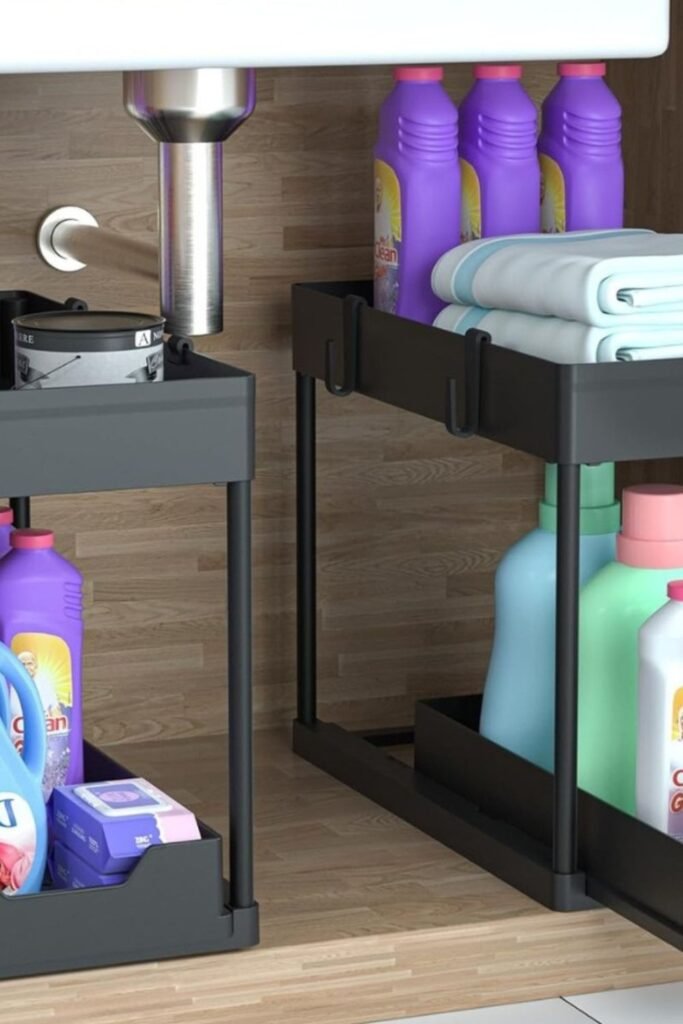
Image credit: @welcomehomeke
Cabinet Pullouts
Deep cabinets make supplies disappear fast. A sliding pull-out basket system solves that by bringing everything forward the moment you open the door.
The whole storage rack slides out instead of you having to lean down and rummage under pipes. This makes it easy to see every bottle and brush.
Wire pull-outs are great for under-sink locations, since they leave room for plumbing while still making strong compartments for heavier things.
The bottom basket holds larger bottles like ammonia or detergent, and the upper rack keeps smaller equipment like brushes, sponges, or dish soap organized and easy to reach.
Putting pull-out racks on both sides of the plumbing keeps the middle region accessible for pipes and doubles the amount of storage space.

Image credit: @trinityinternational
Acrylic Organizers
Mess builds up fast when every cleaning item ends up tossed into the same open space. Clear acrylic organizers fix that by giving each category its own visible home.
While still making the cabinet look neat and tidy. Wide bins are great for big things like dishwasher tablets or folded hand towels.
Slimmer drawers underneath are better for smaller things like scrubbers, brushes, and extra sponges.
Putting these organizers around the front edge of the cabinet makes it easy to get to things you need every day, and the plumbing area in the middle stays free.
This structure is good for cabinets with garbage disposals, since the bins can sit nicely around the pipes instead of battling for space.

Image credit: @themertenshome
Drawer Stacks
Tiny items are the first things to turn an under-sink cabinet into chaos. Cotton pads, makeup tools, refills, and small containers disappear quickly when everything sits in one open bin.
Stacking tiny drawer organizers fixes that by turning the area into a small storage tower. Every transparent drawer turns into its own category.
One drawer can house cotton pads or wipes, another can hold refills for skin care products, and deeper drawers can hold small bottles or grooming items.
Nothing gets buried beneath other things because the drawers glide forward. It works best to keep the stacks on both sides of the piping.
The middle stays open for pipes, and the edges turn into neat vertical zones. Clear acrylic drawers are great for this, because you can see what is within without having to open each one.
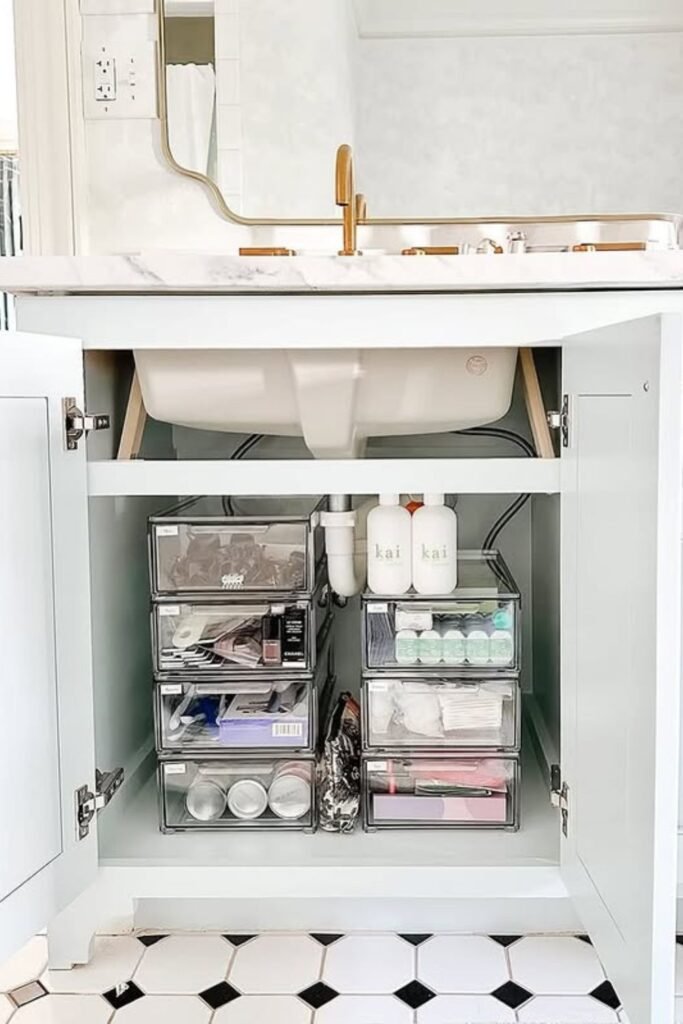
Image credit: @mdesign
Cube Containers
Backstock items often create the biggest mess under the sink. Extra toiletries, travel products, and backup supplies pile up quickly when they do not have a defined space.
Stackable cube containers are a great way to keep those extras organized without making the whole cabinet messy.
The bigger drawers on the bottom are great for storing things like dental backstock or travel bags, and the smaller baskets on top.
Putting these cube organizers on both sides of the plumbing keeps the middle region open for taller bottles and pipes. Clear baskets are also helpful because you can see.
What’s inside right away. When backup items have their own labeled containers, the cabinet stops being a junk drawer and starts to work like a well-organized supply station.
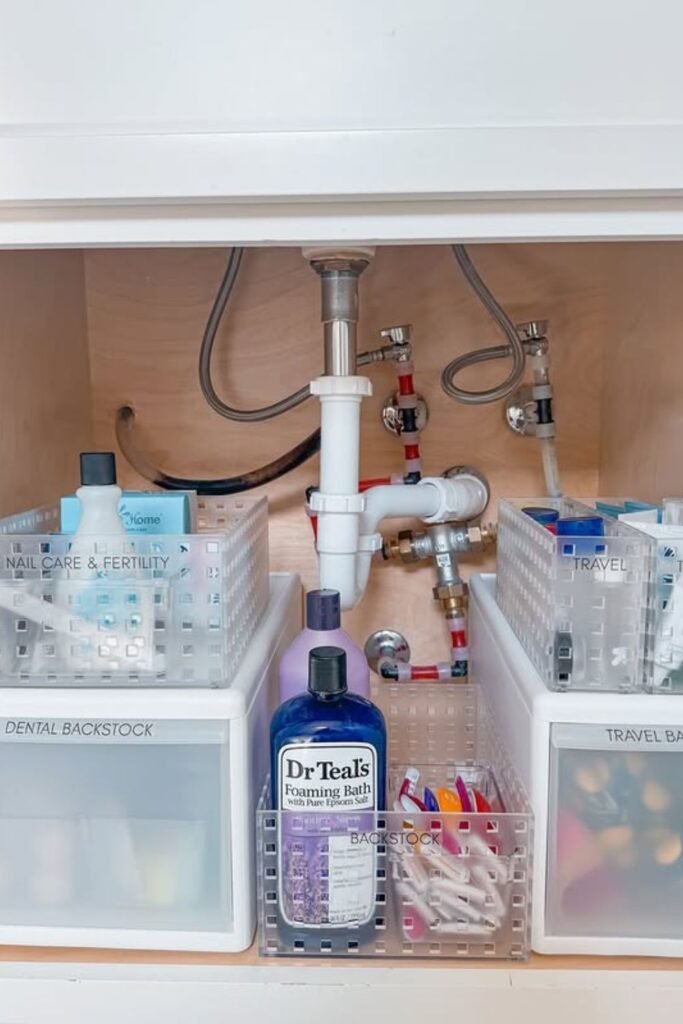
Image credit: @sortandsimplifyorganizing
Front Access
Reaching the back of an under-sink cabinet often turns into a frustrating search mission. Placing everyday items right at the front instantly fixes that problem.
Clear open bins make it easy to get things like brushes, gloves, and spray bottles that you use a lot, without having to move half of the cabinet first.
Wider front containers are great for paper towels and bulk rolls, since they stay visible and do not get squashed behind other items.
The smaller stacked drawers on the side hold goods like dishwasher tablets, wipes, or cloth refills that tend to become scattered on the bottom of the cabinet.
It is also important to keep the core region around the pipes open. The storage fits nicely along the front and sides, leaving the pipes open for use.

Image credit: @clossyco
Stack Drawers
Small cleaning tools disappear quickly when everything shares the same shelf. Stacked drawer organizers prevent that problem by turning one section of the cabinet into a vertical storage tower.
There is one category in each drawer: sponges in one layer, cleaning pads in another, and gloves or wipes in separate compartments.
You can find what you are looking for in seconds instead of having to open several boxes, because the containers are clear.
The layered arrangement also keeps things safe from dampness that can build up under the sink.
Putting these drawer towers on both sides of the plumbing keeps the middle region clear and makes the most of the space along the cabinet walls.

Image credit: @living_an_organised_life
Vanity Drawers
Bathroom cabinets often become the hiding place for random makeup, hair tools, and skincare products.
Without organization, everything gets piled on top of each other, and daily tasks take longer. Clear vanity drawers fix that by making one side of the cabinet into a small beauty station.
Stackable acrylic drawers keep makeup, cotton pads, and small beauty equipment separate, so that nothing gets lost in the bottom of the drawer.
Taller organizers next to them keep hair products, toothbrush supplies, and bottles upright. This stops leaks and makes them easier to grasp.
Putting these organizers around the walls of the cabinet is the best idea, because the plumbing normally runs through the middle.
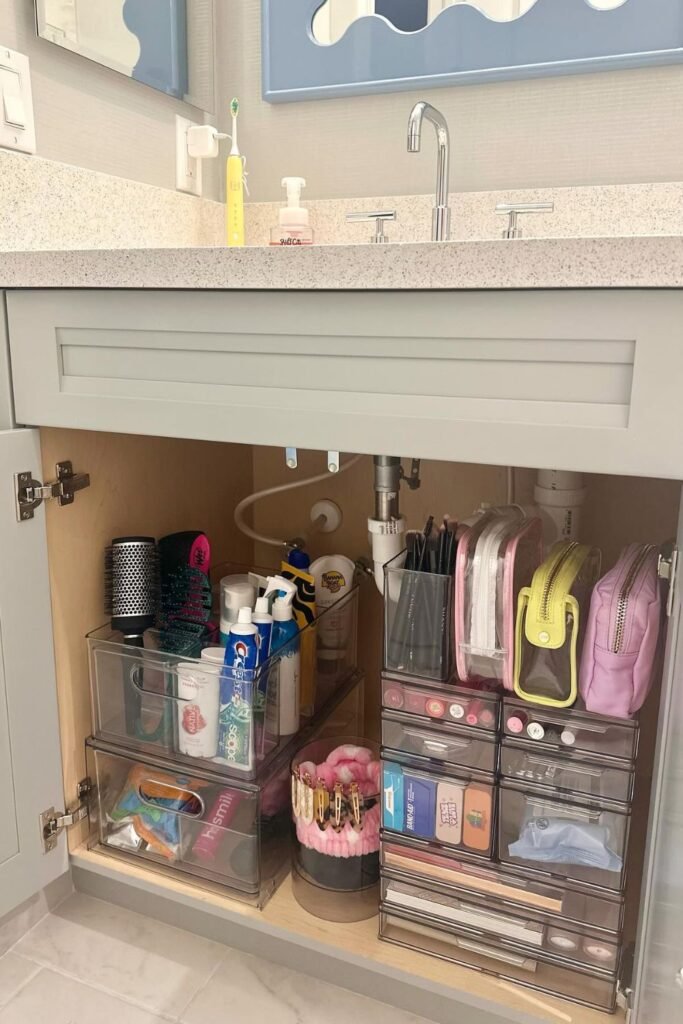
Image credit: @theorganizedorange
Product Rows
Morning routines move faster when everything lines up where you can see it. Grouping everyday toiletries into clean rows prevents the usual under-sink chaos.
Where bottles are stacked on top of one other. This structure works well with clear organizers.
When the cabinet door opens, taller containers keep things like deodorants, moisturizers, and toothpaste from tipping over.
Smaller boxes placed on top of each other hold things that usually get scattered around, such as contact lenses, face towels, wipes, or extra toothbrush heads.
Shelves split the room into two simple levels. The top shelf is where daily items stay, making them easy to get to.

Image credit: @clare_declutterdollie
Door Storage
Most people do not pay much attention to the cabinet doors, even though they might be a great way to store things under the sink.
You can quickly make room for things that generally float around in the cabinet, such as soap bottles, sponges, or dish brushes, by adding a little door rack.
Slim wire baskets fixed to the inside of the door keep light items standing up and easy to grasp as soon as the cabinet opens.
Things you use every day work best here, because you can get to them quickly without having to search through bins in the cabinet.
Simple shelf dividers and thin baskets inside the cabinet help keep cleaning materials, cloths, and extra supplies near the plumbing in order.

Image credit: @home.orga
Clear Layers
Under-sink cabinets often feel messy simply because everything sits at the same level. Creating clear layered storage instantly fixes that problem.
When you stack acrylic organizers, the area becomes numerous visible levels, each with its own spot for each thing.
Upper trays keep things like soap bottles, scrub brushes, and cleaning cloths that you use every day close at hand.
The deeper drawers below are great for holding refills, dishwasher pods, folded towels, or extra sponges that might normally get lost beneath other things.
Keeping the middle of the cabinet free around the pipe also helps keep it balanced. There are storage areas on both sides, and the plumbing is still easy to get to.

Image credit: @mdesign
Label System
Nothing keeps an under-sink cabinet organized longer than a clear labeling system. When every container has a specific purpose, supplies stop drifting into random piles.
Each item, like wipes, gloves, dishcloths, dishwasher tablets, and brushes, is in its own clearly marked organizer, so that anyone can quickly find what they need.
The little acrylic bins on the top shelf hold everyday cleaning products and dishware, while the bigger containers below hold extras and bulk things like trash bags or extra wipes.
Using deeper bins for refills also hides backup supplies while still making them easy to get to.
By putting the organizers around the sink basin and plumbing, you can make the most of the storage space on both sides while still leaving adequate room for pipes.

Image credit: @homesweetusa
Twin Stacks
Balancing both sides of the cabinet instantly makes under-sink storage feel cleaner and more intentional.
Mirrored drawer stacks make two neat storage towers that work around the plumbing in the middle instead of putting everything on one side.
Stacked acrylic drawers hold small things that tend to get lost in a mess, like cotton pads, beauty tools, refills, grooming supplies, and other routine goods.
Putting these things in sliding drawers keeps them from spreading out on the cabinet floor and makes it easy to get to everything.
Putting one stack of drawers on each side of the pipe leaves the central space available for plumbing and taller bottles.

Image credit: @sensiblysorted
Slide Drawers
Traditional cabinets waste a lot of space because everything sits hidden behind the front row of bottles. Slide-out wooden drawers completely change that experience.
The whole storage area slides forward instead of going deep into the cabinet, so you can see everything right away.
The top drawer is great for smaller equipment that usually gets lost in the cabinet, including scrub brushes, sponges, or dishwashing supplies.
The bottom drawer is for bigger things like spray bottles, cleaning chemicals, and storage baskets.
Because both trays slide out easily, you do not have to move everything else first to get stuff. Side pockets are another smart feature.

Image credit: @frontproducts
FAQs
How do you organize under the sink when pipes are in the way?
Pipes make it hard to put cabinets under sinks, but you can get around them by putting narrow organizers on each side instead of trying to fill the middle.
Beside the pipes, you can place slim drawer stacks, pull-out racks, or small labeled bins. This leaves the main section open.
Vertical storage is the best way to help here. You can quadruple the useful capacity right away by stacking drawers or adding a small shelf, and you will not have to touch the pipes.
What should you not store under the kitchen sink?
Do not keep anything that could get ruined by water or leakage. If a pipe spills or condensation builds up, paper products, unopened food.
Tiny appliances can easily get destroyed. Instead, put cleaning products, dishwasher tablets, rags, and scrub brushes there.
These things should be kept near the sink anyhow, and they are normally kept in containers that can withstand some moisture.
You may like to read!
