29 Baby Organization Ideas for 2026
You only realize how badly your changing station is set up when you’re in the middle of changing your baby’s diaper and can’t find the wipes.
The baby is crying now, the cream is sitting in a drawer somewhere, the clean diaper is on the other side of the room — and you’re left wondering why something so simple feels so hard.
It’s not that you need more containers or more decorations. The problem is that your setup doesn’t match the way you actually move when you change a diaper.
In this article, I’ll share 29 clever baby organization ideas you can easily try.
Let’s jump in!
What’s the Smartest Way to Organize a Baby Changing Station?
The best setup isn’t the one that looks the best — it’s the one you can use in the dark with one hand.
Your system is working against you if you have to walk away to fetch a diaper. Having to open drawers mid-change only makes the whole thing take longer.
A smart changing station keeps everything you need in the right order and within reach. Diaper. Wipes. Cream. Trash. Backup.
That’s all.You don’t need 15 boxes. You need to flow. When everything sits where it belongs, changing diapers takes half as long and feels far less stressful.
Don’t design your station around how it looks on Pinterest; design it around how you actually use it.
Save this article for later! 👇👇

Double Rods
Mornings get far easier once clothes stop competing for the same rail. Splitting a closet into two hanging levels instantly doubles the usable space.
It also stops tiny clothes from vanishing behind bigger ones. Short baby clothes don’t often need the full height of a wardrobe.
So a second rod makes it easy to sort things by top and bottom. Keep everyday onesies and pants together on the lower rack so you can grab a full outfit in seconds.
Use the upper rail for jackets, sweaters, or clothes a size bigger than the everyday ones.
Matching hangers stop pieces from snagging and make the closet look less messy, which makes the whole space feel calmer.

Credit: @arteresting
Drawer Zones
The mess clears up fast once every tiny item has its own lane. Diaper changes turn chaotic when socks, wipes, and spare clothes all live in one big drawer pile.
Dividers fix that right away by splitting one drawer into several small sections you can scan quickly.
Instead of stacking baby clothes, roll them up. Rolled onesies, bibs, and leggings are easy to see from above, so nothing gets buried under another layer.
That little switch saves time when you need a quick clothing change. Keep spare onesies, socks, and burp cloths in the top drawer so they’re right there during diaper changes.
Clear dividers stop different groups from getting mixed up, so even a half-asleep parent can grab the right thing without digging around.
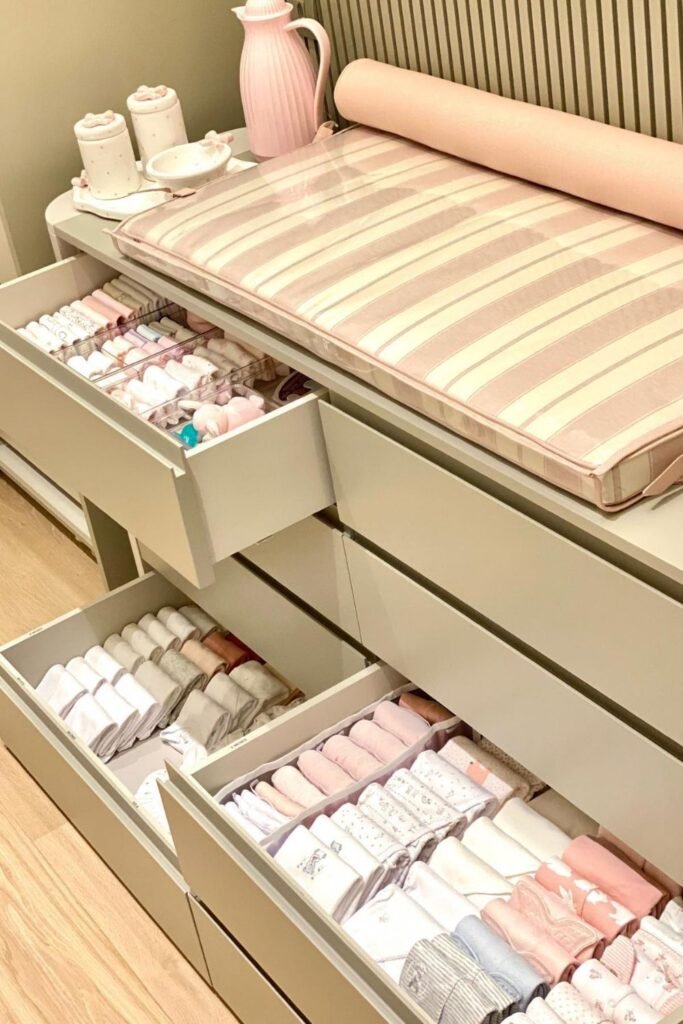
Credit: @carolrosaorganizer
Clear Trays
Fast diaper changes depend on one thing: nothing should be hidden from view. Small clear trays solve that by turning a messy surface into neat, visible sections.
Every essential is easy to see, so grabbing a diaper, cream, or wipe takes only a few seconds instead of a search through a mound.
Instead of lying them flat, stand diapers upright in one compartment. That small change makes it easy to see how many are left and top up before supplies run out.
Keep lotions, rash cream, or grooming tools like a soft brush in a different compartment.
Putting the wipes on top in a container that opens easily makes the routine flow in order: diaper first, wipe next, and cream last.

Credit: @beddibaby
Micro Sections
Drawer chaos disappears once tiny baby items stop sharing the same space. Small compartment trays turn one messy drawer into a series of clean little zones.
Where everything has a place to live. Socks stay with socks, pacifiers stay with pacifiers, and grooming equipment don’t get lost in piles of fabric anymore.
Instead of folding clothes, roll them up so everything stays visible from above. A fast look shows you exactly what’s in each section.
That saves time when you need a quick diaper change or a quick change of clothes. Smaller trays also make it easier to keep bibs, mittens, or headbands separate.
Save some space for everyday necessities like nail scissors, a nasal aspirator, or baby balm.
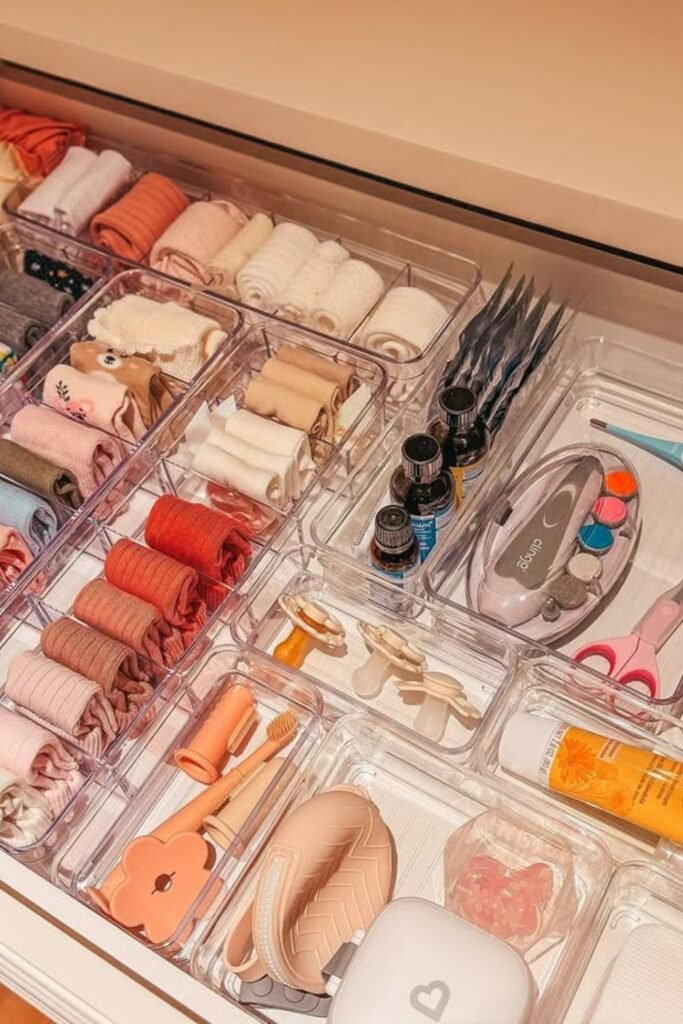
Credit: @carolrosaorganizer
Vertical Folds
Stacked clothes may look neat at first, but the moment you pull one shirt out, the whole pile collapses.
Rolling outfits and standing them up straight fixes that right away. You can see every onesie, shirt, and little pair of pants from above, so you don’t have to rummage through layers while holding a baby who is moving around.
Drawer dividers keep things in their proper sections without making a sound.
One part is for everyday clothes, another is for sleepwear, and a third is for socks or other little items.
Everything stays in its place even after several clothing changes over the day.
The lower drawer has neatly stacked diapers that make it easy to see how many you have at a glance.

Credit: @kimbersansonedesign
Closet Zones
Clothing piles grow fast when everything hangs in one long row. Breaking the closet into simple zones brings instant control to the space.
Dresses, onesies, jackets, and outfits each get their own section, so you can quickly look through the clothes instead of searching for them.
Storage boxes on the top level quietly hold the things babies outgrow the fastest. Extra blankets, next-size clothes, or seasonal clothes stay safe and out of the way until they are needed again.
Labelling those boxes makes it easy to stay organized later. A cube shelf under the bed adds more smart storage without making the closet too full.
Socks, pajamas, accessories, or folded clothes that don’t need hangers can go in baskets within each cubby.

Credit: @maternitycomfort
Grab Baskets
Diaper changes move a lot more smoothly once every essential lives inside easy-reach baskets instead of scattered across the dresser.
Small fabric bins make things instantly organized by grouping together products that are always used together.
One basket can carry diapers and wipes, and the other can hold lotions, creams, and other grooming supplies.
Soft organizers are great to use next to a changing pad since they keep things straight without taking up too much space.
Nothing moves about, and you can get anything you need in seconds, even when you’re changing a wiggling diaper.

Credit: @lukiluhandmade
Basket Sorting
Toy clutter builds quickly once small items start spreading across shelves and floors. Simple plastic baskets fix that problem by creating clear drop zones where toys naturally belong.
Instead of one toy box that is too full, you get several little bins that sort toys into easy-to-manage groups.
One basket can keep rattles and teething toys, another can hold soft toys, and a third can hold sensory toys or activity toys.
Open tops make cleaning up quick because you can just throw the toys back in without having to arrange them carefully.
This design works best with baskets that have holes in them. They are light, and the holes let air flow through them and make it easier to see what’s inside.
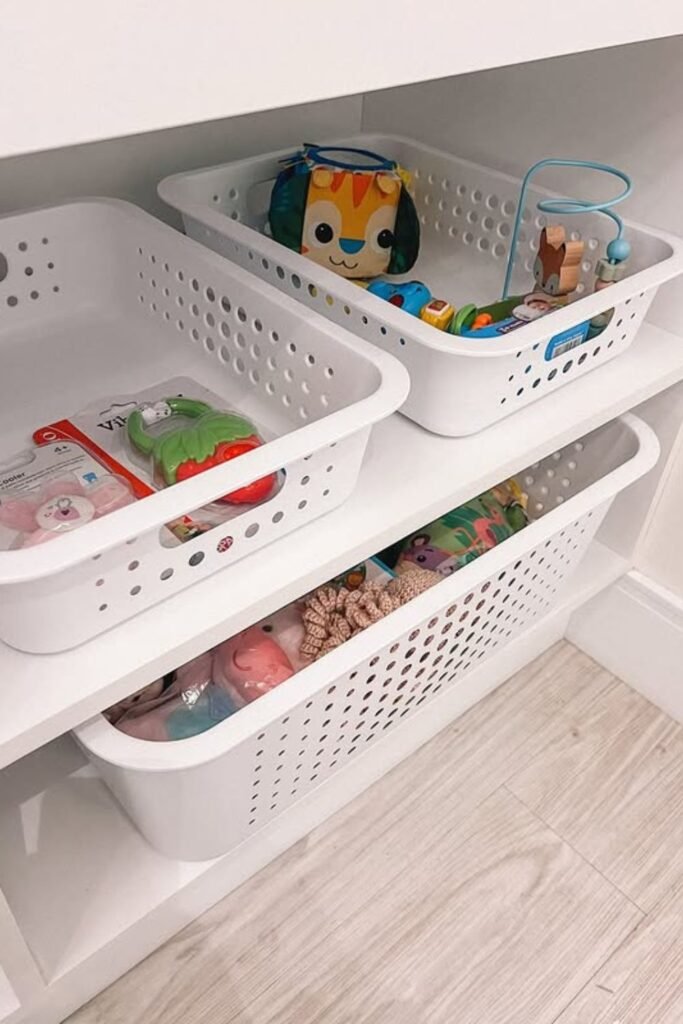
Credit: @maniademariaoficial
Bottle Drawer
Bottle parts have a sneaky way of taking over the kitchen. Nipples roll around, caps disappear, and suddenly assembling one bottle feels like solving a puzzle.
Wide sections can hold full bottles that are ready to use, while smaller compartments keep rings, nipples, and lids separate so nothing gets mixed up.
When you keep identical pieces together, you can grab what you need in seconds instead of having to sift through a bunch.
A wooden organizer is a good choice here because the deeper parts keep the bottles from falling over every time the drawer opens.
Putting the drawer close to the sink or bottle drying rack makes it easy to follow a routine: wash, dry, and then put everything back in its place.

Credit: @desmoinesneat
Display Shelves
Getting baby dressed becomes much easier once outfits stop hiding inside deep drawers. Open shelf compartments turn clothing into a quick visual lineup where every piece is easy to spot.
Instead of having to wade through mounds, folded clothes sit neatly in separate compartments, so you can get them in a matter of seconds.
Hanging clothes above makes it easy to reach rompers or dresses you wear a lot, while the shelves below hold accessories and folded clothes.
Small compartments are great for headbands, little shoes, and mittens because they keep things from getting lost beneath bigger things.
Clear dividers help keep the structure even when you change outfits several times over the day.
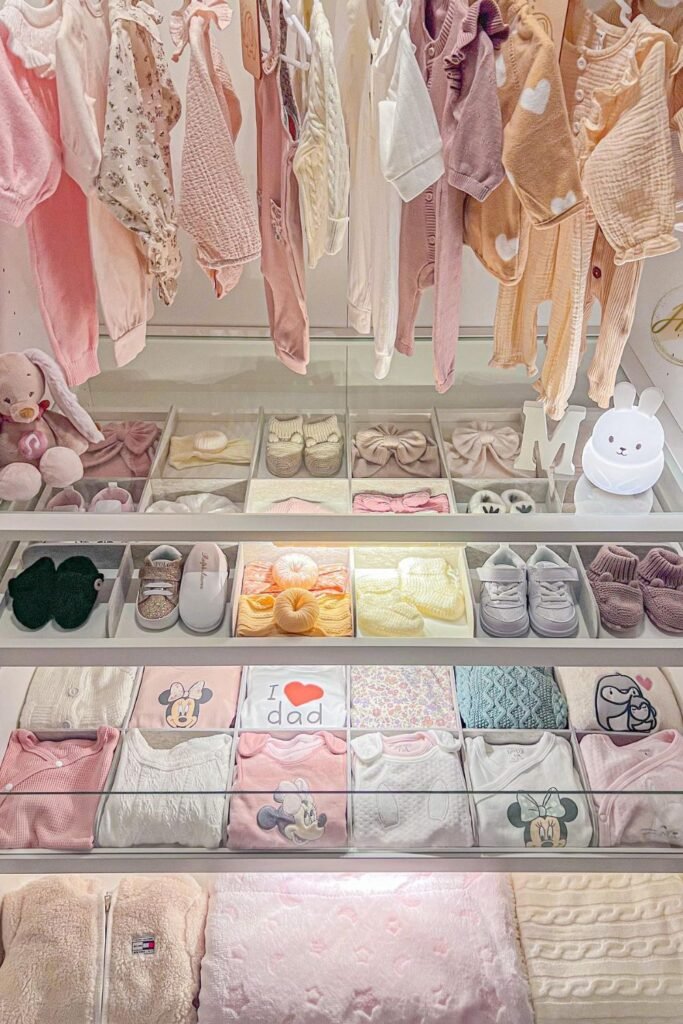
Credit: @hiluu__
Meal Drawer
Feeding gear multiplies fast once babies start solids. Plates, cups, spoons, and snack containers quickly turn one kitchen cabinet into a cluttered pile.
By putting these things in their own drawer, you can always find them in the same area.
Wide drawers are great for this since bigger things like divided dishes and bowls can lie flat without piling on top of each other.
You can quickly grab a whole feeding set before dinner because the cups, snack containers, and lids stay together.
It’s also important to have a modest space for utensils. Because baby forks and spoons are so small, they can get lost amid bigger things.

Credit: @b.clairekids
Rolling Cart
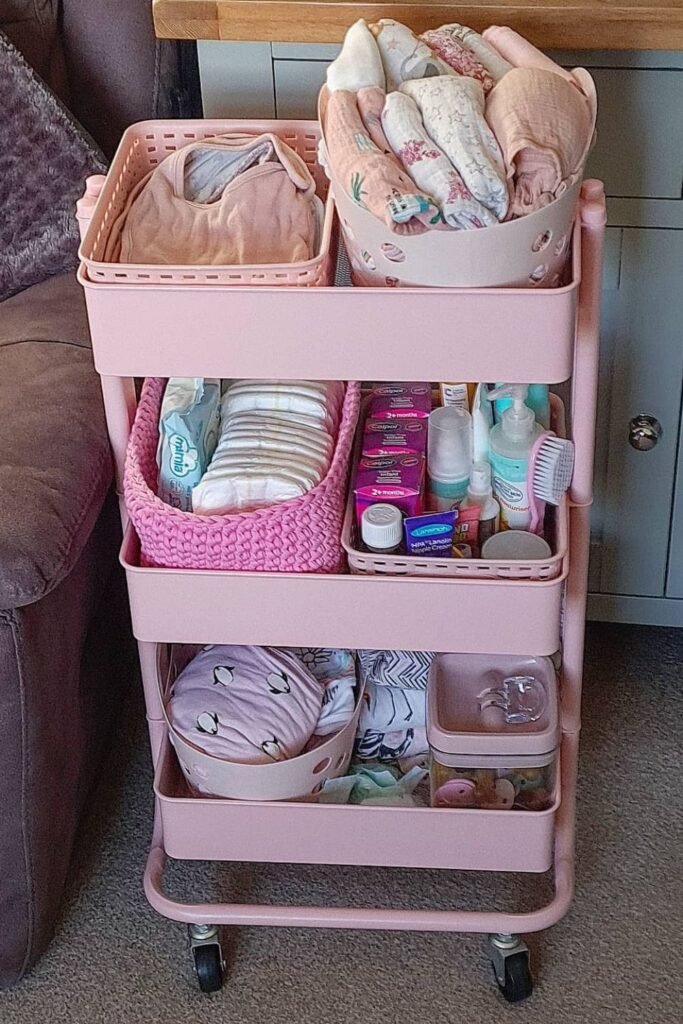
Late-night diaper changes feel a lot easier when every supply travels with you. A rolling cart solves that problem by turning one small station into a fully stocked mobile setup.
It can travel from one room to another when needed. Top shelves are great for things you use all the time, including rolled onesies, swaddles, or extra garments.
That are ready to be changed quickly. The center level can hold diapers, wipes, and creams, so all of the most important things are in one easy-to-reach place.
Extra diapers, pacifiers, and grooming things that don’t get used all the time but still need to be close by are great for lower shelves.
The station can roll next to the couch, crib, or bed without having to bring a lot of materials every time because it has wheels.
Credit: @steph_mamlife
Crib Organizer
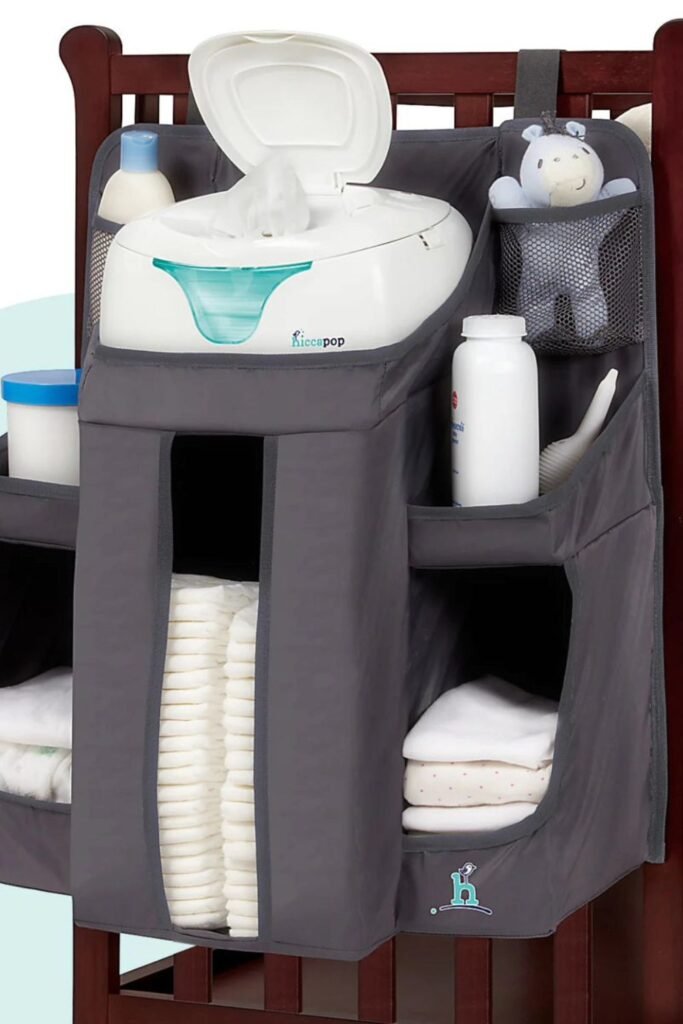
Late-night diaper changes get frustrating when supplies sit across the room. A crib-side organizer fixes that instantly by turning unused crib space into a mini diaper station.
The central pocket is a great place to keep diapers because you can get them with out having to unlock drawers or leave the infant.
Wipes, lotion, powder, or small grooming equipment can fit in the side pockets, so everything you need is in one little space.
This way of keeping things apart eliminates the usual chaos at the diaper station, when everything ends up on top of a dresser.
Soft organizers are the ideal choice for this purpose because they hang securely and don’t add sharp edges near the crib.
Credit: @twinklestarbabytoypartystore
Wall Rails
Closet space disappears fast once tiny outfits start multiplying. Mounting short wall rails creates an instant mini wardrobe that keeps everyday clothes visible instead of being tucked away in cluttered drawers.
A short look at the clothes reveals just which one to select, which speeds up getting a baby ready in the morning.
Baby clothing look best on short hanging rails because most of them are small enough to hang without hitting the floor.
Putting a shelf above the rail offers another smart layer where shoes, decorative items, or small storage boxes can sit neatly.
Putting two rails next to each other helps you organize your clothes by kind. For example, you can put your everyday clothes on one side and your sweaters or special outfits on the other.

Credit: @by.franny
Bottle Station
Bottle washing turns messy fast when clean and wet pieces scatter across the counter. A dedicated drying station keeps everything upright, organized, and easy to grab once it’s time to eat again.
Vertical stands let air flow around bottles, which helps them dry faster and stay clean. Laying them flat on towels doesn’t do this.
The separate prongs keep nipples, caps, and bottles apart, so small parts can’t roll away or get misplaced.
Also, keeping each item up off the ground helps water flow straight into the tray below instead of collecting around the bottles.
A covered design gives extra degree of protection by keeping dust off of freshly cleaned pieces while they dry.

Credit: @littleluxurylanee
Outfit Prep
Morning diaper changes get a lot smoother when tomorrow’s clothes are already waiting. Laying out a full outfit in advance removes the usual scramble of opening drawers and looking for things that fit while a baby moves around on the changing pad.
This works great with a simple tray or shifting surface.
Put the onesie, pants, socks, and any other items together so the whole outfit fits in one little bundle. Everything is still visible and easy to reach as soon as you start the transition.
Getting clothes ready the night before is especially helpful on busy mornings or when you have to take your child to daycare.
You don’t have to make selections when you’re half asleep; the clothing is already picked out and waiting.

Credit: @roses.interior
Clear Stacks
Bottle parts multiply quickly, and without a system they end up scattered across drawers and cabinets.
Stackable drawers with clear sides make everything neat right away by giving each item its own visible space.
You can see exactly where the nipples, caps, valves, and pumps are located instead of having to sift through a mixed container.
Keeping feeding elements separate by type makes it easy to put things together. One drawer can house bottle bodies, another can hold nipples and lids, and smaller drawers can hold pacifiers or pump accessories.
Clear containers are great because you can see what inside right away. You can see whats low right away.

Credit: @sleepchildomine
Bag Kits
Leaving the house with a baby gets chaotic fast when the diaper bag turns into one giant pocket.
Small zip pouches fix it right away by changing the pack into neat little kits. Each pouch holds only one category so you can grab it in seconds instead of having to look through everything.
One pouch may hold wipes, a couple of diapers, and cream, which are all diaper necessities.
Another can carry small grooming tools, sanitizer, balm, or other health and care supplies. A third pouch is great for toys, pacifiers, or other things that make outings more comfortable.
It’s even easier with clear or mesh pouches because you can see what’s inside without having to unzip them.

Credit: @thenappysociety
Bib Rack
Feeding time gets messy fast, and bibs tend to pile up in drawers where they disappear until the next laundry day.
Putting them on a tiny rack makes it easy to see and get to every bib as soon as a meal starts. No more looking through piles or hunting for a clean one.
This works great with short garment racks because bibs are light and easy to put on baby-sized hooks.
Also, giving them space helps them dry properly after washing, which keeps them fresh for the next time you use them.
Keeping the rack close to the kitchen or feeding area makes things go more smoothly. Before the dinner, get a bib.

Credit: @hibabyau
Corner Closet
Unused corners often become dead space in nurseries, but turning one into a mini wardrobe brings surprising storage power.
A simple hanging rail makes it easy for parents to get to their kids’ clothes every day without having to open a lot of drawers.
Baskets on open shelves next to the rail keep folded clothes and accessories neat. Each pair of socks, hat, blanket, or additional layer has its own bin.
This keeps items from being mixed up over time. Also, pulling out one basket at a time speeds up laundry resets because things go back to where they belong right away.
Shoes and tiny accessories that generally end up all around the room are best kept on lower shelves.

Credit: @ghjuseppa
Pacifier Case
Pacifiers always seem to disappear at the worst moment — inside diaper bags, car seats, or between couch cushions.
Putting it inside a compact protective case solves that problem by giving it a safe place to stay that’s easy to take with you.
Small cases are great for outings. Put one in the stroller pocket or diaper bag so the pacifier doesn’t touch anything else, like wipes or toys.
Many designs clip right onto bag handles or straps, making it easy to get to the case. Adding a short clip strap to the pacifier makes it much more organized.
When you tie it to clothes or blankets, it stops drops that send the pacifier straight to the floor.

Credit: @johnny.and.jax
Bow Dividers
Tiny accessories disappear quickly when they share a drawer with clothes. Headbands, bows, and hair clips need their own organized space, and small divided trays solve that instantly.
Each container holds only one style or color, so nothing gets mixed up. You can lightly fold soft headbands and put them upright in the sections.
That little method makes sure every item is visible from above instead of being hidden under others. A quick look instead of a search helps you find the right one.
This design works best with clear organizers because the full collection is visible as soon as the drawer opens.
Color groups also make it easier to find bows that go with outfits without having to move things around.

Credit: @bypattyorganizer
Feeding Cabinets
Bottle parts quickly take over counters if they don’t have a dedicated place to dry and store. Compact feeding cabinets solve that by creating a clean station where cups, bottles, and nipples can dry safely.
The enclosed construction keeps everything neat and safe from dust while not in use.
Separate cabinets are great for houses with more than one child. There is a station for each child, so their bottles, cups, and feeding instruments will never get mixed up.
The top surface is also handy for storing. You can keep vitamins, medicine droppers, and mini feeding supplies all in one place without making the kitchen messy.
Putting these cabinets close to the sink or the area where you prepare food makes things easier. You can wash, dry, and put everything right where it belongs.

Credit: @lilyandtuckerstudios
Cabinet Baskets
Changing stations often look tidy on top but turn chaotic inside the cabinets. Small storage baskets instantly fix that by dividing supplies into clear categories instead of letting everything build up on the shelf.
Diapers can stay in one big basket, while lotions, wipes, and creams can stay in separate baskets that are easy to pull out.
When you pull one basket forward, you can get to the specific item you need without having to search through the whole cabinet.
It is also easier to replenish when containers are the same size. It’s easy to see when a basket is getting low on goods since it looks empty.
This makes changing diapers easier because you don’t have to stop in the middle of a change to look for wipes.

Credit: @fabi_bartolli
Color Sections
Getting a baby dressed feels easier when the closet stops looking like a random mix of clothes. Sorting outfits by color creates natural sections that make finding pieces faster and keep the closet looking peaceful.
Everything becomes easier to scan in seconds when you put soft tones together and brighter elements close by.
Matching hangers help keep the structure since clothes slide easily and the rail stays equally spaced.
Keeping clothes of comparable lengths together also stops outfits from overlapping and hiding little pieces behind bigger ones.
Shoes on open shelves are easier to see than those in baskets, and little drawer dividers below can hold socks, accessories, or small clothes that might ordinarily go misplaced.

Credit: @fabi_bartolli
Door Storage
Closet doors hide a surprising amount of unused storage space. Turning that surface into a vertical organizer instantly creates room for accessories that usually get lost in drawers.
Headbands, bows, and clips can all fit nicely on mounted holders, where all the colors are easy to see.
Lower pockets are useful for holding little things like baby books, hair bands, or grooming products.
If you keep these pieces on the door, they will be easy to reach and won’t take up space on the shelves in the closet.
Double hanging rails within the wardrobe make the most of baby clothes. If you have short clothes, you can fit a second rod in the same place, which means you can hang more clothes.

Credit: @homeonthebrain
Towel Hooks
Bath time runs smoother when towels and washcloths don’t end up piled on the counter. Using the back of the bathroom door creates an instant storage zone where everything you need after a bath is ready and easy to get to.
Vertical organizers are great for this because they have little shelves and hanging hooks all in one narrow package.
The upper trays can hold baby shampoo, bath toys, or tiny care items. The lower hooks keep hooded towels and robes hanging nicely.
This manner of hanging towels also helps them dry faster than if they were in a laundry basket. The bathroom stays neat between baths since each towel has its own area.
This use of the door makes more room in the cabinets and turns an empty surface into an easy way to organize things for bath time.

Credit: @brightlyorganized
Diaper Bowl
Diapers become surprisingly messy once loose packs sit open on the changing table. A simple storage bowl fixes that by keeping a small stack neatly contained while still being easy to grab when things change quickly.
Instead than taking diapers out of a crinkly packet every time, a few are always ready in one clean place.
Round containers work nicely since the diapers spread out naturally in the bowl without folding in a strange way.
It’s easy to pull one out with one hand while the other hand holds the infant steady if you maintain the stack slightly erect.
Putting a tiny container for cotton swabs, ointments, or grooming tools next to the bowl keeps everything for changing diapers together.

Credit: @mamadera5
Caddy Basket
Diaper supplies scattered across different rooms quickly turn simple changes into a hunt for wipes and creams.
A small caddy basket makes it easy to take everything with you wherever the baby goes. Soft divided caddies are great since each portion naturally holds a different type of item.
You can store rolled-up burp cloths, extra onesies, pacifiers, lotions, and wipes without their being mixed up. A short look shows exactly what’s inside.
You won’t have to carry a lot of goods again if you pick up the basket and move it from the nursery to the living room or bedroom. You can transfer the whole diaper station in one trip.
A minor replenishment schedule also helps. At the end of the day, restock the caddy with diapers and wipes so it’s ready for the following round of changes.

Credit: @littletreehouselane
FAQs
How do you keep a baby changing station organized every day?
The simplest solution is to only keep the things you really need for changing diapers at the station.
Always have diapers, wipes, cream, and an extra outfit within reach. Extra supplies can be kept in nearby drawers or cabinets.
Use little baskets or trays to keep these things together so they don’t spread out over the table.
What should always be within reach at a baby changing station?
A well-organized station keeps the basics in a straightforward order so diaper changes go effortlessly. Diapers and wipes should be the easiest things to reach.
After that, diaper cream, cotton pads or wipes, and an extra onesie for accidents should be easy to get.
Many parents also keep a small trash can or diaper pail close by so they don’t have to leave in the middle of a change.
You may like to read!
