26 Small House Organization Ideas for 2026
If you live in a small house, you know the feeling well. One day everything looks fine, and the next your counters are crowded, your closet is bursting, and there is nowhere left to put the new things coming in.
Small homes do not offer much storage, so clutter builds up fast. And once every corner is full, the whole place starts to feel cramped and uncomfortable. The good news is that you do not need a bigger house to fix it.
You just need smarter ways to use the space you already have. With the right storage ideas, even a tiny home can feel tidy, open, and easy to live in.
In this article, you will find 26 clever small house organization ideas to use this year. They are simple strategies that help everything stay in its proper place.
Let’s jump in!
What Are the Best Space-Saving Storage Ideas for Small Homes?
In a small house, every inch matters. The best storage ideas are the ones that help you get more out of the space you already have.
Start with your walls. Shelves, hooks, or cupboards added to a wall free up floor space and make a room feel larger right away. Hidden storage helps a lot too.
Tuck the things you do not use every day under the bed, inside benches, or behind doors. Furniture that does double duty is another smart choice.
A bed with drawers or an ottoman with built-in storage does two jobs at once. Put these simple ideas together, and your home will feel less crowded and far more organized.
Save this article for later! 👇👇

Door Storage
Cabinet doors often hide one of the easiest storage upgrades in a small kitchen. Slim racks fitted inside the door instantly create room for spices, sauces, or small jars that usually crowd the shelves.
When you open the door, everything sits at eye level, so nothing gets lost behind bigger containers. This trick works for pantry cabinets, small kitchen cabinets, and even bathroom cabinets.
It only takes a few minutes to fit slim metal racks or stick-on spice holders. The shelves inside the cabinet can then hold bigger things like bowls, containers, or dry goods, while the door keeps tiny bottles tidy and easy to reach while you cook.

@aosomus
Vertical Laundry
Laundry areas rarely get much space, so stacking the machines frees up valuable floor room right away.
A stacked washer and dryer setup is ideal for compact homes, apartments, or utility closets too small for side-by-side machines.
When the machines go up instead of side by side, there is more wall space left for open shelving. Wooden shelves beside the unit make it easy to store laundry supplies, jars, and detergents that would otherwise pile up on worktops.
A small sink underneath comes in handy for washing delicate items or rinsing out stains. A hanging rod above the area lets clothes dry without a bulky drying rack taking up the floor.

@danielle_interiors_
Door Organizer
Closet doors quietly offer a surprising amount of storage once vertical organizers come into play.
Fitting a pegboard or rail system on the door turns that flat surface into a useful spot for small bins, hooks, and baskets. Pet supplies, cleaning tools, toys, and other everyday items stay visible and within reach instead of being buried on shelves.
Adjustable baskets make it easy to move things around as your storage needs change, while the shelves inside the closet can hold bigger bins. This setup is ideal for tight storage spaces, since it makes every inch of the door work instead of leaving it empty.

@neatmethod
Towel Rack
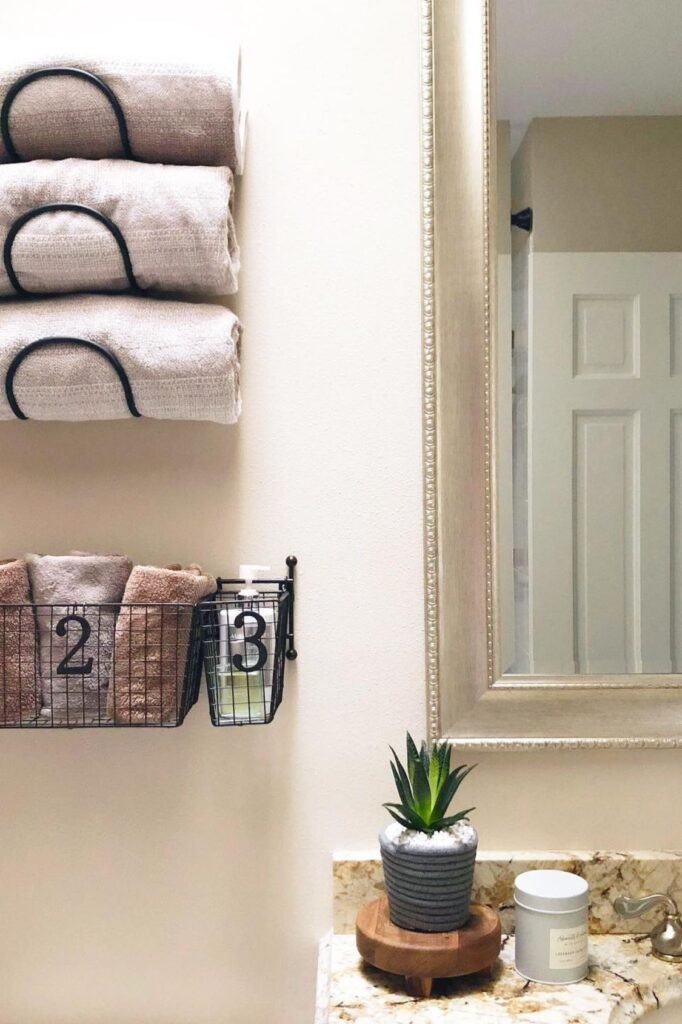
Bathroom counters get crowded fast once towels, hand cloths, and toiletries start piling up. Wall-mounted towel holders fix that by lifting bulky linens off the counter and lining them up neatly in a vertical row.
Metal brackets hold rolled-up towels securely, keeping them tidy and easy to grab after a shower. This helps most in small bathrooms, since it frees up wall space that would otherwise need extra cabinets.
Wire baskets underneath add another handy spot for washcloths, spare towels, and everyday items like soap and moisturizer. A simple rack over the sink or beside the mirror keeps things organized and leaves the counter clean and open.
@jessica.d.richard
Wall Shelves
Living rooms often run out of space once books, decor, and media items start piling up. Wall-mounted shelving turns an empty wall into a full storage system without adding big pieces of furniture.
Several small shelves stacked vertically can hold books, plants, and framed art while keeping the floor clear. A slightly deeper shelf in the middle makes a great spot for a TV or a compact media setup.
Books stay in order, decorative pieces give the room character, and everything is easy to reach. This works best in smaller homes, since vertical shelves can hold a lot without filling the space with heavy cabinets.

@dominomag
Wall Cabinet
Kitchen items do not always need large cabinets to stay organized. A slim wall cabinet with fold-down doors creates a compact storage spot for cups, small dishes, and everyday essentials without taking up floor space.
Everything is simple to reach when the doors are open, and it looks neat when they are closed. These narrow cabinets are great for small kitchens, dining areas, or even studio apartments where regular cabinets feel too big.
The inside shelves hold things you use often, while the outside keeps the room looking clean and simple. A tall but narrow cabinet on the wall adds useful storage without making the space feel cramped.

@quirkymoosecph
Pantry Nook
The unused gap beside the fridge often becomes wasted space, yet it can easily turn into a compact pantry zone.
A thin shelving unit fills the vertical space with room for jars, dry goods, and everyday items. Clear containers make it easy to see grains, pasta, and snacks so you do not forget about them at the back of your cupboards.
The open shelves above keep spices and smaller jars handy, and the drawers below pull out to organize packets or baking supplies. Woven baskets at the bottom are great for fruits and vegetables that need air to stay fresh, such as potatoes and onions.
Small wall racks or pegboards next to the shelves add even more room for spices and tools. This tiny pantry keeps cooking supplies organized without taking up much space.

@idgalleryinterior
Entry Storage
Busy homes often collect clutter right at the entrance — shoes on the floor, jackets on chairs, and bags scattered around.
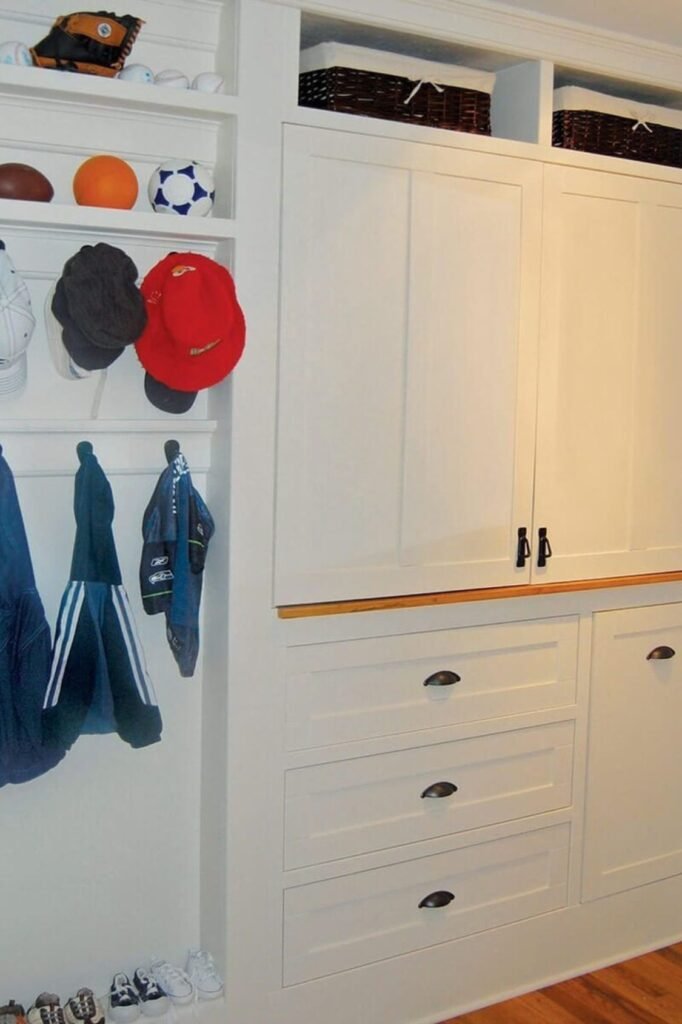
A built-in entry storage wall fixes that mess by giving everything its own spot as soon as you come in. The open cubbies at the top are great for baskets holding short-term items, and the hooks below make jackets, hats, and backpacks easy to reach.
Drawers and cabinets underneath can store gloves, scarves, and other everyday items that often end up near the door. Lower shelves give shoes a place to go so they do not spread across the floor. When storage sits right where things get dropped, entryways stay cleaner.
@jasonabalos
Stair Storage
The empty space under the stairs often becomes a forgotten corner, yet it holds huge storage potential.
Custom drawers built into the stair wall are a great way to store shoes, seasonal items, or household supplies without buying more furniture. Each pull-out drawer slides out easily, so you can see everything without digging through deep closets.
This setup works best near entryways, since it keeps shoes and other everyday essentials hidden but still easy to reach. Cabinet doors on the sides add even more space for bigger things like bags or cleaning supplies.

@csjoinery.uk
Coat Rail
Entryways turn messy fast when coats, bags, and shoes have no clear landing spot. A simple wall-mounted rail with hooks keeps jackets and bags neatly organized every day without needing a big closet.
The rail sits at shoulder height, so everyone can hang things up as soon as they walk in. That keeps seats and tables from becoming drop zones. A slim shoe rack on the same wall finishes the layout by giving shoes their own space instead of letting them pile up by the door.
This setup is ideal for narrow corridors and small flats, since it keeps everything against the wall, leaving the walkway open and making it easy to grab what you need on the way out.

@quirkymoosecph
Corner Shelves
Empty corners quietly waste some of the most useful space in a small room. Stacked corner shelves turn that unused space into a vertical storage area for plants, books, and decorative items.
Shelves that follow the curve of the corner fit snugly against both walls, so things can grow upward instead of spreading across tables or floors. This setup suits living areas, reading corners, and bedrooms because it adds storage without making the space feel cramped.
Mixing small plants or framed pictures in with the books is another way to keep the shelves from looking cluttered.

@reddoorhomesnj_pa
Shoe Closet
Shoes scattered near the door quickly make a home feel messy, especially in small spaces. A tall, narrow shoe closet keeps dozens of pairs organized while barely taking up any floor space.
Vertical shelves inside the cabinet keep shoes in a clean line, so each pair is easy to see instead of stacking on top of each other. Placing the cabinet next to the door or hallway makes it easy to use every day, since you can put your shoes away right away.
Closed doors also keep the room looking neat and tidy. This type of slim shoe cabinet is great for apartments or tiny homes where regular shoe racks would take up too much space.

@csjoinery.uk
Storage Cubes
Seasonal items, paperwork, and random household supplies quickly turn closets into messy piles without a clear system.
Cube shelving makes it easy to separate everything into labeled areas so nothing gets lost. Clear storage containers fit neatly into each cube, making it simple to see what is inside while keeping smaller objects safe.
Labels make it clear to everyone in the house where things go, which stops clutter from piling up again. The lower cubes suit heavy things like luggage, while the higher cubes are good for seasonal decorations, art supplies, or extra clothes.
This kind of cube storage wall turns one closet or storage area into an ordered system where each category has its own place.

@organizing.made.simple
Underbed Storage
The space under the bed quietly holds more storage than most closets. Low-profile drawers slide neatly underneath, making that hidden space useful for folded clothes, blankets, or seasonal items.
Flat storage boxes work well because they keep everything neat without stacking things up in wardrobes. This layout is best for bedrooms with small closets, since everyday items stay out of sight but easy to reach.
Adding labeled dividers to each drawer helps keep sweaters, extra bedding, and out-of-season clothing separate.

@storageworksusa
Doorway Shelves
Doorways usually waste a surprising amount of vertical space that could easily hold storage. Shelves fitted beside and above the doorway turn that empty wall into a useful storage area without blocking the way.
The tall, narrow shelves on the side are great for books, decorations, or small storage baskets. The cupboard above the door is a good place for things that are not needed every day.
This layout is best for small flats and rooms, since it adds storage without taking up important floor space. Keeping the shelves slim makes sure the pathway stays clear while still creating a full vertical storage system that blends in with the wall.

@lozi_designs
Bed Drawers
Bedrooms often struggle with storage once closets start filling up. Built-in drawers under the bed solve that problem by turning the bed frame into a hidden storage system.
Wide pull-out drawers keep everything organized and out of sight. They can hold blankets, extra bedding, sweaters, or seasonal items. The drawers slide out easily when you need something, thanks to wheels on the bottom.
Small bedrooms gain the most, since they do not need big dressers when the bed itself can hold extra things. Storing things away in drawers in an organized way also keeps the room from getting messy, which helps keep it clean and tidy without adding more furniture.

@masteryhome.au
Labeled Bins
Storage rooms quickly become chaotic when everything gets tossed into random boxes. A simple system of labeled bins solves that problem by giving each category its own clearly labeled box.
You can easily divide things like towels, linens, seasonal clothes, or craft supplies by sliding fabric or plastic storage boxes onto open shelves. The labels on the front make it easy for anyone in the house to find things without searching through lots of boxes.
Tall shelving units make the most of vertical space while keeping bins close at hand. This kind of system is great for utility rooms, closets, or small storage spaces where being organized makes life easier.

@ourheartourhome
Loft Storage
Raised sleeping areas open up valuable storage space that would normally go unused. A loft bed platform can easily double as a built-in storage zone by turning its base into neat divisions.
Folded clothes, gear, or seasonal goods stay tidy and easy to reach in each section. This layout works well for small homes, studio apartments, and tiny houses because one structure serves for both sleeping and storage.
Shelves along the side of the loft add another smart place for books, decorations, or everyday items. Ladders or small stairs that do not take up much space complete the design.
This kind of design makes every square foot work harder while keeping the living area below clean and open.

@tinyhousebasics
Utility Hooks
Cleaning tools often end up leaning in corners or cluttering the floor when they have no proper place.
A vertical hanger system inside a small closet keeps brooms, mops, and ironing boards neatly stacked against the wall. Each tool hangs from its own hook, so nothing falls over or gets tangled up.
This layout works best in laundry rooms or utility closets, since that is where you use cleaning supplies the most. Open shelves next to the hooks can hold baskets, detergents, or other household extras, keeping the floor clear.
Arranged this way, a small closet becomes a neat utility station where everything is easy to reach and out of the way.

@aluminium_glass_design
Closet Zones
Closets become easier to manage once everything is divided into clear sections. A simple zoning layout separates hanging clothes, shoes, and folded items so that everything in each category stays in order.
Double hanging rods make room for shirts and pants without losing vertical space. A center shelf is a good place for hats or everyday items, while tall side shelves are great for stacking shoes so each pair stays visible instead of hiding in piles.
The drawers underneath can hold smaller clothes, including socks or training clothes. Organizing your closet this way turns one small wardrobe into several storage spaces, making it easier to keep your clothes neat and find what you need quickly.

@liams.home
Sink Baskets
The space under the sink often turns into a messy pile of cleaning products and bathroom supplies. Sliding basket organizers transform that awkward cabinet into a neat two-level storage system.
Pull-out baskets keep toiletries, sprays, and bottles together so they do not get lost behind pipes and are easy to find. The narrow containers on top suit small things like brushes, towels, or personal care items, while the deeper bins below are better for bigger bottles.
This setup works best in bathrooms and kitchens, since sink cabinets normally do not offer much space. Pull-out baskets make it easy to get what you need without rummaging through the mess every time you open the cabinet door.

@yamazakihome
Pullout Pantry
Small gaps around appliances can quietly become one of the most useful storage spots in a kitchen.
Tall pull-out pantry cabinets slide out like drawers. Inside, narrow shelves keep jars, sauces, and spices in orderly rows. You can see everything from both sides, so you do not have to crawl through deep cupboards to find what you need.
Placing these slender pantry cabinets next to a refrigerator works really well, since the tall vertical space is often empty. The sliding design makes it easy to reach the back right away, and each shelf keeps everything separate.

@accurideus
Linen Cabinet
Linen closets often turn messy when towels, cleaning tools, and household supplies all compete for the same space.
Clear vertical divisions inside the cabinet make it easy to find things and keep everything in order. Storing brooms, mops, or ironing boards upright instead of leaning against the wall works great.
Shelves beside them make sure piles of folded towels, blankets, or cleaning cloths stay orderly. The upper shelf has baskets and containers that keep smaller items from getting lost in the cabinet.

@simplyspaces
Mudroom Cubbies
Busy households often struggle with jackets, bags, and shoes piling up near the door. Built-in mudroom cubbies create a simple drop zone where each family member has their own space.
Tall vertical sections with hooks keep coats, caps, and backpacks off the floor. The seat below makes it simpler to sit down and take off your shoes. Individual baskets or labeled bins in the lower cubbies are great for gloves, scarves, and other small items.
Extra storage bins for seasonal gear can fit in the upper compartments. When people come in, things have a place to go right away, which keeps entryways much cleaner. One wall can become a useful organization station.

@heidigruenke
Stair Shelving
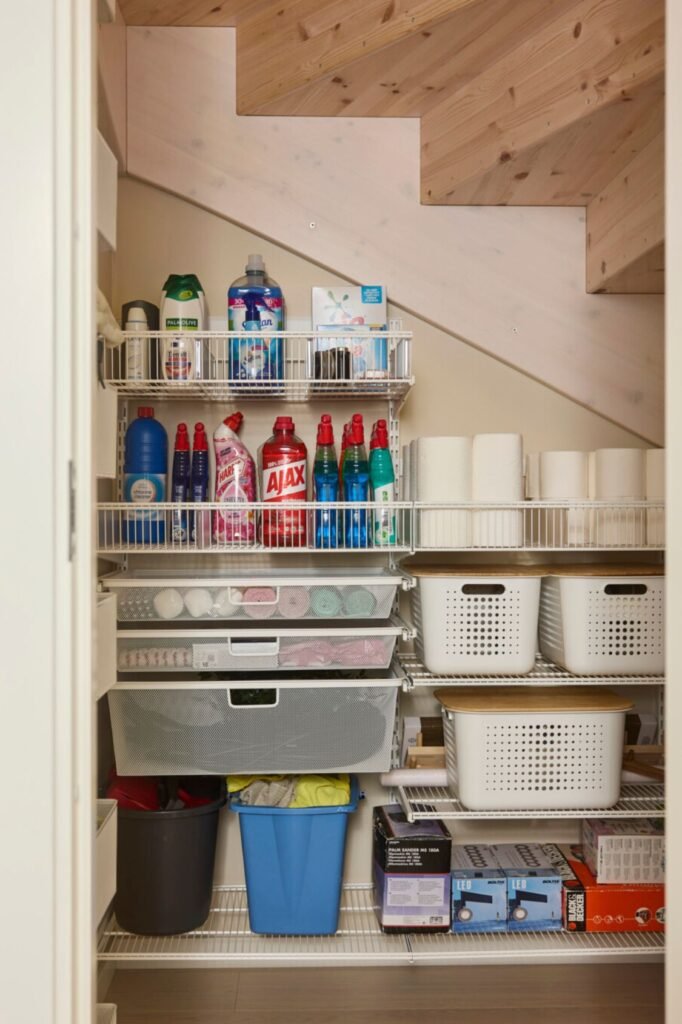
Sloped spaces under stairs often end up wasted because regular cabinets do not fit the angle. Adjustable wire shelving solves that problem by turning the whole space into a usable storage wall.
Open shelves make it easier to see and organize cleaning supplies, paper goods, and other household items. Pull-out drawers and baskets keep smaller things from getting lost under bigger ones.
On the lower shelves, you can store large goods in bins, while the upper shelves can hold bottles and everyday items. This kind of storage solution easily fits the contour of the stairs, so an odd spot can work as a full pantry or utility closet.
@elfa.international
Hallway Storage Nook
Even a narrow hallway can become a highly functional storage area with the right built-in design.
This small nook has open shelves, a place to hang things, and a small desk, making it a useful spot to work every day. Hooks keep jackets and bags nice and tidy, and shelves above and beside them hold books, plants, or decorative objects.
The built-in counter is a great place to work quickly, charge your phone, or drop off your keys and mail. Soft lighting inside the shelves makes the space feel more planned out and less claustrophobic.

@masteryhome.au
FAQs
How can I make a narrow hallway feel less cluttered when adding storage?
Instead of big furniture, use thin shelves, vertical cabinets, and built-in units that follow the wall line. Keeping the depth low and adding enough lighting helps keep the space feeling open and breezy while still giving you useful storage.
What items are best stored in a hallway storage nook?
Hallway nooks are great for things you use every day, such as jackets, bags, shoes, keys, mail, and small items. You can also add drawers or baskets for things like notebooks, gloves, and chargers to keep the area neat and easy to clean.
You may like to read!
