How Is Malt Vinegar Made? See The Surprising Origins!

I never expected to get curious about how malt vinegar is made — until I spotted an old bottle sitting at the back of my pantry.
A friend of mine who brews beer at home told me it is not only possible to make it yourself, it is surprisingly straightforward if you have time and patience. That one chat turned into a full project. I tried it, made a few mistakes along the way, and learned a lot.
So here is the whole process, explained the way I wish someone had explained it to me — plain steps and honest results.
What Is Malt in Vinegar?

This part confused me at first too. So what exactly is malt in vinegar? Put simply:
Malt comes from barley. The grains are soaked, allowed to sprout, and then dried — a process called malting.
That malt is then turned into beer, and the beer becomes the base for the vinegar.
Malt is what gives the vinegar its flavour — a gentle sweetness and richness that plain white vinegar just does not have.
That deep brown colour and smooth, mellow taste? That is all down to the malt. This is a vinegar that began its life as malted grain.
Is Malt Vinegar Halal?

One question I hear a lot is whether malt vinegar is halal. Here is what I found out:
Yes, it can be halal, as long as all the alcohol has been converted into acid during fermentation.
It is not alcoholic — even though it starts out as beer, fully matured vinegar contains no alcohol.
Time matters most. Let it ferment completely, usually for 6 weeks or more, to be on the safe side.
I talked it through with a friend who eats halal, and once I explained how the process works, he was happy to taste the batch I had made.
What Is Malt Vinegar Made From?
Malt vinegar is made from malted barley, beer, and a natural process that takes a little time.

Let me break it down clearly and simply:
- Malted barley – Barley is soaked in water until it begins to sprout, then dried. This step turns the starch into sugar, which is what we need later to make alcohol.
- Beer – The malted barley is mashed and brewed with water and hops, then yeast is added. The yeast feeds on the sugar and turns it into alcohol. Now you have beer.
- Vinegar – To turn the beer into vinegar, you add a “mother” or some raw vinegar. It carries helpful bacteria called acetic acid bacteria, which slowly feed on the alcohol and turn it into acid. That acid is what makes vinegar sour.
- Time – This is the most important ingredient of all. Good vinegar cannot be rushed. The bacteria need weeks to finish their work properly.
So in short, it is a two-step fermentation: first beer, then vinegar. It is science, but the kind that happens right on your kitchen counter.
How to Make Malt Vinegar from Beer
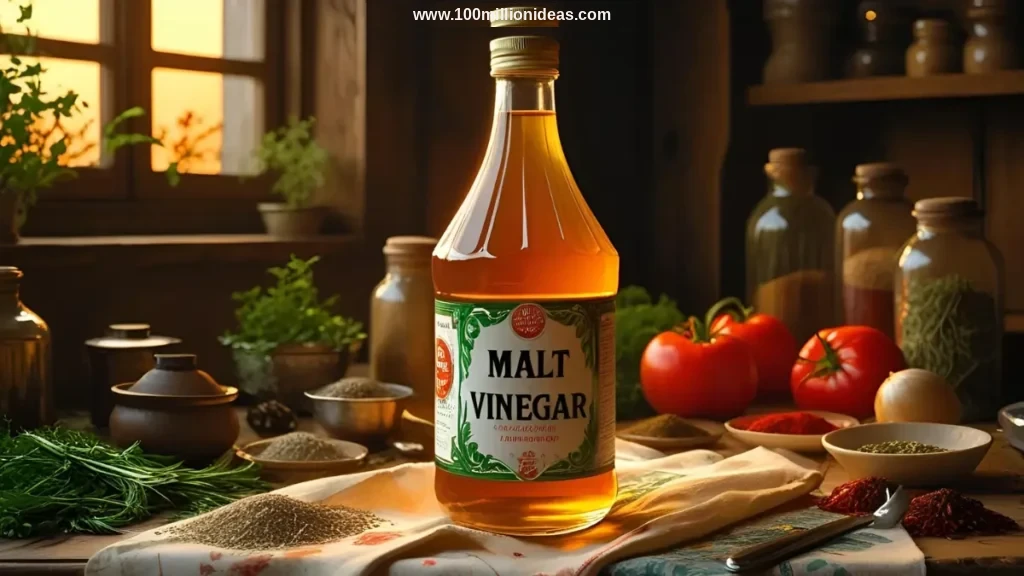
If you are like me and always seem to have a leftover bottle of beer in the fridge, here is exactly how I did it at home:
- Choose a mild beer – Skip IPAs and anything bitter. I used a pale ale, and it worked beautifully.
- Pour it into a wide-mouthed glass jar – A pickle jar or a large mason jar is ideal.
- Add raw vinegar – I added 2–3 tablespoons of unfiltered apple cider vinegar with the mother. This kickstarts the fermentation.
- Cover it with a cloth – I used a clean dish towel held on with a rubber band. You want air to get in, but bugs to stay out.
- Put it somewhere warm and dark – Mine went on top of the fridge, inside a cupboard. It stayed there for 6 weeks.
- Check it weekly – After 4 weeks, it started to smell more like vinegar than beer. By 6 weeks, it was perfect.
- Strain and bottle it – I poured it through a sieve and funnelled it into a clean vinegar bottle I had saved from the shop.
I now use it for chips, marinades, and even salad dressings. It has a much richer flavour than anything I have bought.
A Beginner-Friendly Malt Vinegar Recipe Using Malt Extract
If you cannot use beer, do not worry. I tried this easy method too, and honestly, it turned out even better.

Here is how it works:
- Boil 2 cups of malt extract with 6 cups of water. Let it cool down to room temperature.
- Add brewer’s yeast. Let it sit in a jar with the lid slightly loose for about a week. It will bubble and foam — that means alcohol is forming.
- After the bubbling stops, add vinegar with mother, plus 1/2 cup of apple cider vinegar to help it ferment into vinegar.
- Cover and let it sit. Use a cloth to cover the jar and leave it in a warm spot.
- Wait 6 weeks. Taste it around week 4. Mine was a bit too sweet early on, but by week 6, it had the perfect tang.
- It is perfect for dishes like roast potatoes or gravy.
Can You Make Malt Vinegar?

Let me tell you, you do not need special equipment or a science degree. You just need the ingredients and a little patience.
Once you make it, you will start to see vinegar as something living, not just a cooking ingredient.
Here is why it is worth trying:
- It saves money — it is made with leftover beer and can be used for months, even years.
- If you want it sweeter, let it age longer. If you want it stronger, add more malt or beer.
- Shop-bought vinegar sometimes has added preservatives or flavouring. Yours will not.
- It is a fun project — like brewing beer or fermenting pickles, it feels genuinely rewarding.
How to Make Malt Vinegar for Fish and Chips
I made a batch specifically for this purpose.
Tips to get it right
- Use a lighter beer – Pale ale or light lager is best. Avoid dark beers.
- Add sugar – Just a teaspoon. This balances the sharpness and gives a slightly sweet finish.
- Let it age longer – I found that 6 to 8 weeks made it smoother.
- Try flavour infusions – A bay leaf or a little garlic can give it a lovely taste.
- Don’t overdo it – You don’t want overpowering vinegar. Just enough to enhance the flavour.
How to Make a Substitute for Malt Vinegar

If you are in a hurry, you can make a decent malt vinegar substitute with what you already have at home.
None of these are perfect, but they will work in recipes where you just need a bit of tang.
Here are some quick swaps I have tried:
- Apple cider vinegar & soy sauce – It adds depth and colour. Use 2 parts cider vinegar to 1 part soy.
- Rice vinegar & a dash of molasses – Tastes sweet and rich, similar to malt.
- White vinegar & splash of beer – Let it sit for a few hours to blend.
Why Is Malt Vinegar Hard to Find?
I started wondering why malt vinegar is hard to find in some shops. These are some of the reasons:
That’s why making it at home is not just fun — it’s practical if you love it.
- It’s not as popular globally, and not everyone uses it often.
- It takes longer to produce.
- Low demand and low supply. So only a few make and sell it.
- Some people just don’t know how to use it, which means it sits on shelves less often.
How Is White Vinegar Made and How is It Different

To understand malt vinegar better, it helps to ask: how is white vinegar made, and why does it taste so different?
Here is what I found:
- Made from pure alcohol – Usually ethanol from corn or sugar beet.
- Fermented quickly – Often in just a few days, using special machines.
- Very sharp taste – It’s strong and has no extra flavours.
- Used for cleaning – It’s perfect for disinfecting or pickling, but lacks the mellow taste of malt.
- It does the job, but it’s nothing like the deep, comforting flavour you get from aged malt vinegar.
Final Thoughts
I can say making malt vinegar is one of the easiest, most rewarding DIY kitchen projects I have ever done.
It costs next to nothing. It helps you waste less, like using up leftover beer.
And the flavour is something you cannot get from shop-bought bottles.
So if you have a jar, a beer, and a few weeks of patience, give it a go.
You will be surprised how much better your food tastes — and how proud you will feel every time you use it.