Treat Others / Light the World Treat Tags

This post may contain affiliate links. As an Amazon Associate I earn from qualifying purchases.
December is a busy month, and it is easy to spend the whole of it thinking about our own lists, our own wrapping, and our own plans. A treat tag is a small pause in all of that — a tiny gift, left on a doorstep or handed to a teacher, with a short kind note attached, simply because someone thought of them. It does not need to be expensive, and it does not need to be elaborate. A few biscuits in a bag, a chocolate bar, or a small jar of sweets, with a tag that says something warm, is enough to make an ordinary day feel noticed.
The idea behind “treat others” and “light the world” tags is simple: do something kind for someone else, and let the tag carry the message. The treat is the excuse; the note is the point. This guide covers what to write on the tags, what treats to attach them to, who to give them to, and how to put them together so they look lovely and are easy to give away.

What Is a Treat Tag?
A treat tag is a small card, usually about the size of a gift tag, attached to a small treat or gift. It has a short message on it — a greeting, a kind thought, or a simple note of thanks — and the name of the person giving it, or no name at all if you would rather give anonymously. The treat itself is small: a biscuit, a chocolate, a small bag of sweets, a tea bag, or a homemade treat wrapped up nicely. The tag turns an ordinary snack into a small act of kindness, because it shows that someone thought about the person, not just the thing.
These tags work well for the people we see every day but rarely thank properly: neighbours, teachers, postal workers, carers, colleagues, friends, and family members who do a lot without being asked. They are also a lovely thing to make with children, because a child can understand the idea immediately — we are making something nice for someone else, just to make their day better — and they can help with every part of it, from choosing the treat to writing the note.
What to Write on a Treat Tag
The message on a treat tag should be short, warm, and honest. A few words are enough, and the best messages are the ones that sound like something you would actually say, rather than something copied from a card. Here are ideas you can use as they are, or adapt to fit the person you are giving to.
For a neighbour, try “Thinking of you this Christmas”, “A little treat, just because”, or “Wishing you a warm and happy Christmas”. For a teacher, try “Thank you for all you do”, “You make a difference every day”, or “Thank you for helping me learn this year” — the last one is especially lovely if a child writes it in their own words. For a friend, try “You are loved more than you know”, “Here is a little light for your day”, or “Just a small treat to say I am thinking of you”. For someone who has had a hard year, a gentle message works best: “Thinking of you”, “You are not alone”, or “Wishing you brighter days ahead”.
If the tag is part of a “light the world” idea, the message can reflect that: “Light the world with kindness”, “A small light for a dark December day”, or “Pass it on — do something kind for someone else today”. The last one is a nice touch if you want the kindness to keep going, because it invites the person who receives the treat to do something kind for someone else in turn.
Keep the writing clear and easy to read, and sign the tag if you like. A first name is enough, and a child’s signature in their own handwriting is charming. If you are leaving a treat anonymously on a doorstep, you can sign it “From a neighbour” or leave it unsigned — the mystery is part of the fun, and the message still lands.
What Treats to Attach
The best treats for a tag are small, wrapped, and easy to carry. A small bag of biscuits, a chocolate bar, a packet of sweets, a candy cane, or a small box of chocolates all work well, because they are already wrapped and they keep. Homemade treats are lovely too, if you have time: a few biscuits in a clear treat bag, a small jar of jam, a slice of cake wrapped in paper, or a bag of popcorn tied with ribbon. If you are baking, make a batch and divide it into small bags — one batch of biscuits can make ten or twelve treat tags, which is enough for a whole street of neighbours.
Think about who is receiving the treat. A teacher will appreciate something they can enjoy with a cup of tea in the staff room, such as a chocolate bar and a tea bag tied together. A neighbour with children will appreciate a bag of sweets the children can share. An older neighbour living alone might appreciate a small jar of homemade jam or a few biscuits, with a note saying you are thinking of them. A colleague might like a small treat left on their desk, with a tag saying thank you for their help this year.
Be careful with food that needs to be kept cold, food that goes off quickly, or food that could cause an allergic reaction. Stick to wrapped, shop-bought treats if you are giving to people you do not know well, and if you are giving homemade food, label it clearly with what it is and what is in it, so the person receiving it can decide whether it suits them. A short note on the back of the tag — “contains nuts” or “made with butter and flour” — is a kind and practical detail.
Who to Give Treat Tags To
Start with the people closest to you, and work outwards. Neighbours are the most natural recipients: the person next door, the older person down the street, the family with young children who you wave to in the morning. Teachers are another obvious choice — a child’s teacher, a teaching assistant, a music teacher, or a coach who has given their time all year. Then think about the people who help you without you noticing: the postal worker, the person who delivers your parcels, the carer who visits a relative, the cleaner at work, or the volunteer at a local group.
Children can help you make a list. Ask them who has been kind to them this year, and who they would like to give a treat to. Their answers are often surprising — a lunch supervisor, a friend’s parent, a grandparent, a sibling — and the list they make is usually a better one than the list an adult would make alone. Making the treats together, and then delivering them together, is a lovely December activity in itself, and it teaches children something that no amount of telling can teach: that giving feels good.
How to Make Treat Tags
Making treat tags is straightforward, and you can do it in an afternoon. You need the tags themselves, the treats, and something to attach them with.
First, choose your tags. You can print them at home, buy them ready-made, or make them by hand from card. Printed tags are the easiest, because the design is done for you and you can print as many as you need. Our Christmas Gift Tags — $3 (regular price $7) has 16 designs, which gives you enough variety to match the tag to the person — a cheerful design for a child, a calm design for an older neighbour, a warm design for a teacher. Print them on cardstock, cut them out, and punch a hole in the top of each one.
Next, write the message on each tag. Do this before you attach the tag to the treat, while the tag is flat on the table and easy to write on. Use a pen that will not smudge, and write clearly — a tag that cannot be read is not much use. If a child is writing the message, let them write it themselves, even if the handwriting is wobbly. A child’s handwriting on a tag is part of what makes it special.
Then, prepare the treats. If you are using clear treat bags, fill each one with a small handful of biscuits or sweets, twist the top closed, and tie it with ribbon or twine. If you are using a chocolate bar or a small box, wrap it in a little tissue paper first, so it looks like a gift rather than a shop purchase. Then thread the ribbon through the hole in the tag, tie it to the treat, and make sure the tag hangs flat where it can be read.
Delivering Treat Tags
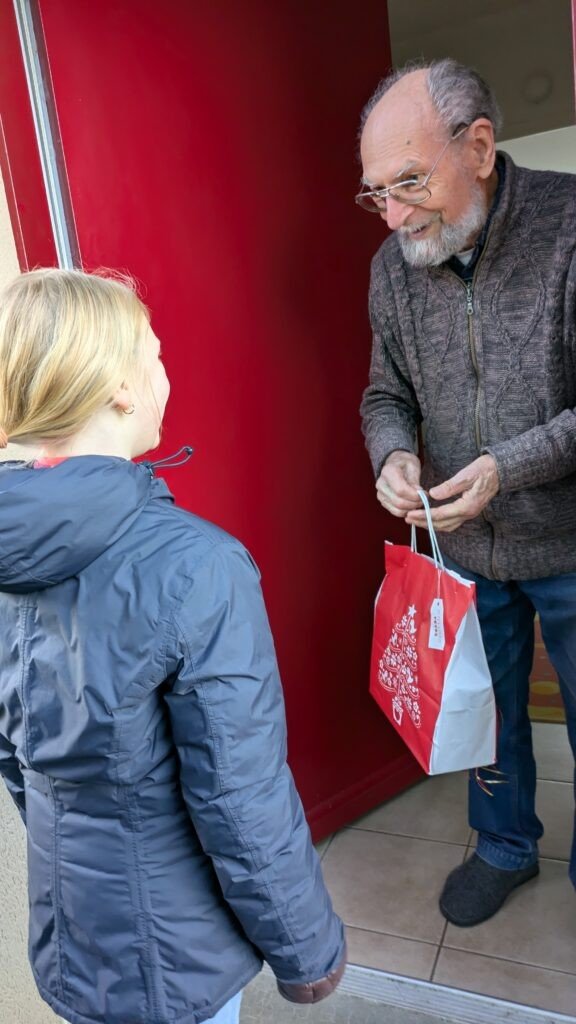
How you give a treat tag matters as much as what is in it. Handing one to someone in person, with a smile and a few words, is the warmest way to do it — and it gives you the pleasure of seeing their reaction. If you are giving to a teacher, leave the treat on their desk with the tag on top, or hand it to them at the end of the day. If you are giving to a colleague, leave it on their desk before they arrive, so they find it when they sit down.
For neighbours, leaving a treat on a doorstep is a lovely surprise, but do it thoughtfully. Knock, leave the treat where it will be seen, and step back — or, if you know the neighbour well, hand it to them directly. Avoid leaving food outside for a long time, especially in rain or heat, and do not leave a treat somewhere it could be a trip hazard. If you are giving anonymously, make sure the treat is clearly a gift and not something that could be mistaken for rubbish — a tied bag with a tag on it is unmistakable, and a loose sweet on a doorstep is not.
Children love delivering treat tags, so take them with you. Let them knock on the door, hand the treat over, and say “Merry Christmas” themselves. It is a small moment of bravery for a shy child, and a proud moment for a parent watching them do it.
Making It a Family Tradition
A treat tag is a small thing, but it becomes a bigger thing when you do it every year. Pick a day in December — the first weekend, or the weekend before Christmas — and make it your family’s treat-tag day. Bake together in the morning, make the tags after lunch, and deliver them in the afternoon. Keep a list of who you gave to each year, so you can add new people and remember the ones you might otherwise forget.
You can also extend the idea beyond Christmas. A treat tag works just as well in January, when the dark days feel long, or at any time of year when someone needs cheering up. The tag does not need to say Christmas on it — a plain tag with “thinking of you” works all year round. The habit of noticing people and doing something small for them is worth keeping, long after the decorations are packed away.
Frequently Asked Questions
How many treat tags should I make? Start with five or six, for the people closest to you. If you enjoy making them, make more — a batch of twelve is a good number for a street of neighbours or a class of teachers, and it is easy to do in one afternoon.
Can children help make treat tags? Yes, and they are the best helpers. Children can choose the treats, write the messages, fill the bags, and deliver the finished tags. Let them do as much as they can, and help only with the parts that need scissors or a hot oven.
What if I do not know my neighbours well? That is exactly who treat tags are for. A small treat with a kind note is a gentle way to say hello, and it does not ask for anything in return. Most people are delighted to receive one, even from a neighbour they have only waved to before.
Should I sign the tag? It is up to you. Signing with a first name is warm and personal. Leaving it unsigned is fine too, especially if you are leaving the treat on a doorstep and want it to be a surprise. Either way, the message matters more than the signature.
For tags to print at home, our Christmas Gift Tags — $3 (regular price $7) is a good place to start. With 16 designs in the set, you can choose a different tag for each person you are giving to, print as many as you need, and have them ready for your treat-tag afternoon.


